Earlier in 2015 Electronic Music Malta (EMM) founded itself out of Maltese music enthusiasts, and yesterday night we joined friends for a performance in St James Cavalier, Valletta. Before appreciating the performance itself, I was impressed by St James Cavalier itself and how "the war machine has turned into a cultural center", with a sparkling cultural life in the walls of the old gun battery. It reminded me of the of B-05, just that of course in the middle of a beautiful city like Valletta, such efforts are by far more easy going. For the electronic music itself, I found the electronics more fascinating than the music at first. Most of the equipment in use, is built and assembled by the artists themselves, and it is far ahead of anything you may think of when it comes to entertainment audio equipment or commercial DJs. The repertoire was covering legends like Jean Michelle Jarre, a piece from Pink Floyd's Dark Side of the Moon, Kraftwerk to Depeche Mode and others. I can't say, it is my kind of music. But without it, there would be no electronic dance music either. And without that there would be no pop music the way we know it. So, I appreciate electronic music as a research lab with all its experimental features which go beyond creating only tones by electronic means.

Bajja Ta' Fomm-ir-Rih
During all the past weeks we have been spoiled with a bright blue sky, and today on the third of Advent, the rain set in. Every drop counts to replenish the groundwater table of the arid islands, and we enjoyed the rainy day as much as the sunny times. The flora immediately stretches out for the water and the smell of fennel and thyme raises into the air. In the morning we joined friends for a walk to the beautiful North-Western coast of Malta and went down to Il-Bajja Ta' Fomm-ir-Rih. It is a very picturesque trail along a geological terrace where porous limestone formations are moving backward on harder Miocene Greensands which form the cliff. You literally walk on that edge. By public transport you can reach quite close by taking Line 109 to Il-Bahrija.

Malta neighborhoods
During my first week at Malta University, I received to kind invitation and honor to join the Congregation for the Conferment of Degrees in the Jesuit Church in Valletta, just beside the old University campus and opposite the Maltese headquarter of the Order of Saint John of Jerusalem Knights of Malta. The whole place was breathing history and to my surprise I was told that the odd height of the steps to the library were because in the past the knights used to go up there with their horses. The congregation itself was a very graceful event and paid honor to the graduate's achievements, not just by the marvelous setting, but also the well chosen words - out of which some were in Latin.

Marsaxlook fishing village
On Saturday we explored the South of Malta, and returned to the fishing village Marsaxlook, this time not for the Sunday fish market but to explore the neighborhood. On Sunday we were shown around some North-Eastern villages of Malta by my University host and friend. It is easy to fall in love with Malta like this. The morning started with picking up the catch of the day of Lampuki (Maltese Dorade or Mahi-Mahi) at the vendor beside our residence. And we kept enjoying the wonderful day, strolling though the villages and having the island's best octopus.

Catch of the day. Half of that is our dinner.
Welcome to Malta
We arrived in Malta and are exploring the premises. Already found all we need: grocery, library and post office. And there is an archery club, which needs a trial. Food is wonderful, the sky is mostly blue, and people are very friendly.

Malta University Residence as seen during the morning exercise.
Hong Kong
"One country, two systems" was one of the mantras and rules of the hand over of Hong Kong, a former British colony, to the People's Republic of China (PRC). One country, two systems means Communism (with Chinese characteristics) and Capitalism in a special administrative region. This gave the PRC a capitalist experimental zone, and it gave Hong Kong the chance to develop into a model zone for application in other Chinese cities. But while the Mainland's development breathtakingly performed the largest economic development in human history and dragged hundreds of millions of people out of poverty, the autonomous Hong Kong failed to deliver many of the results expected. It could not translate its prosperity into quality of life, did not develop models showcasing applicable examples to PRC. Instead, it turned into a frightened local society, with no significant culture, a one cylinder economy, a lack of entrepreneurship and an overall fading capability to lift itself out of this situation. In the best case, Hong Kong is a well managed high density storage and logistics system for about 7 million life human bodies - or a free trade zone in the Southern suburbs of Shenzhen. Given the expectations, what can be achieved with the experiment of Hong Kong, it is a compete system failure. Now some Hong Kongers might ask: what about the rule of law, the low levels of corruption, the superior education system ...? Sure, that's good. Make something out of it. And do not just maintain it, but bring it to the next level. Other Hong Kongers will blame it on the Mainland China. But the simple reality is, that non of the problems of Hong Kong has been induced by the Mainland. All self made problems. Just the opposite: without Mainland support and good will, Hong Kong would be gone by now. Hong Kong has nobody to blame, but itself.

The Lippo Center seen from one of my secret ways, from campus to the lecture halls at Admiralty. I developed my ways of moving around in Hong Kong, avoiding the buzz and staying in a nice environment. I call these the "Academic Ho-Chi-Min Paths".
We have spent the last two months in Hong Kong. I have lived before in a remote corner on Lamma Island, a small island in the South China Sea. Here there are no cars and no greed. And from there I watched Hong Kong and five years of my life passing by. Sometimes, back then sitting at the waterside with a cold bottle of Tsingtao beer, we joked that we are the third system in the one country, two systems debate. Now, when we return to Hong Kong, we stay on campus of The University of Hong Kong. The faculty guesthouse is again an island, remote from the reality of the buzzing city: on the slope to the Victoria Peak, hidden behind large Bauhinia trees. From here ambulated in the Academic Bermuda Triangle, spanning between library, lecture hall and long walks. And we got lost there for two months. It is always enjoyable and interesting. And more so, it feels like an important contribution to one of the last outstanding strengths of Hong Kong, which is education. So, we will return for that next year.

The Robert Black's College Guesthouse. Our temporary home in Hong Kong. Here is where visiting faculty and the Swire Scholars stay. It has the best fun breakfasts with consistent food choices (which never change), and a very nice team taking care of it all.
The Bauhinia tree outside my window
When I step on the balcony these mornings, I am greeted by a Bauhinia tree, which is also called Hong Kong Orchid Tree. Its flower is the symbol of Hong Kong, and you see it also on the flag of the city. It is an indigenous plant which does not grow naturally in many other places. But it is cultivated in tropical and sub-tropical botanical gardens. When you travel a lot, it is always good to have something in the morning, reminding you where you are. This tree nearly touches my window in one of the rooms of the Robert Black College Guest House on the campus of The University of Hong Kong. The morning walk up to the Victoria Peak is an easy one, but it brings you to another world above the busy city. Many people take this as a start into the day. Some just for fitness, others to practice an instrument (which they can't do in their small flat), and again others to read the newspaper or finalize their bet for today's horse races. You never know what the new day brings. And it is good to start it up here.
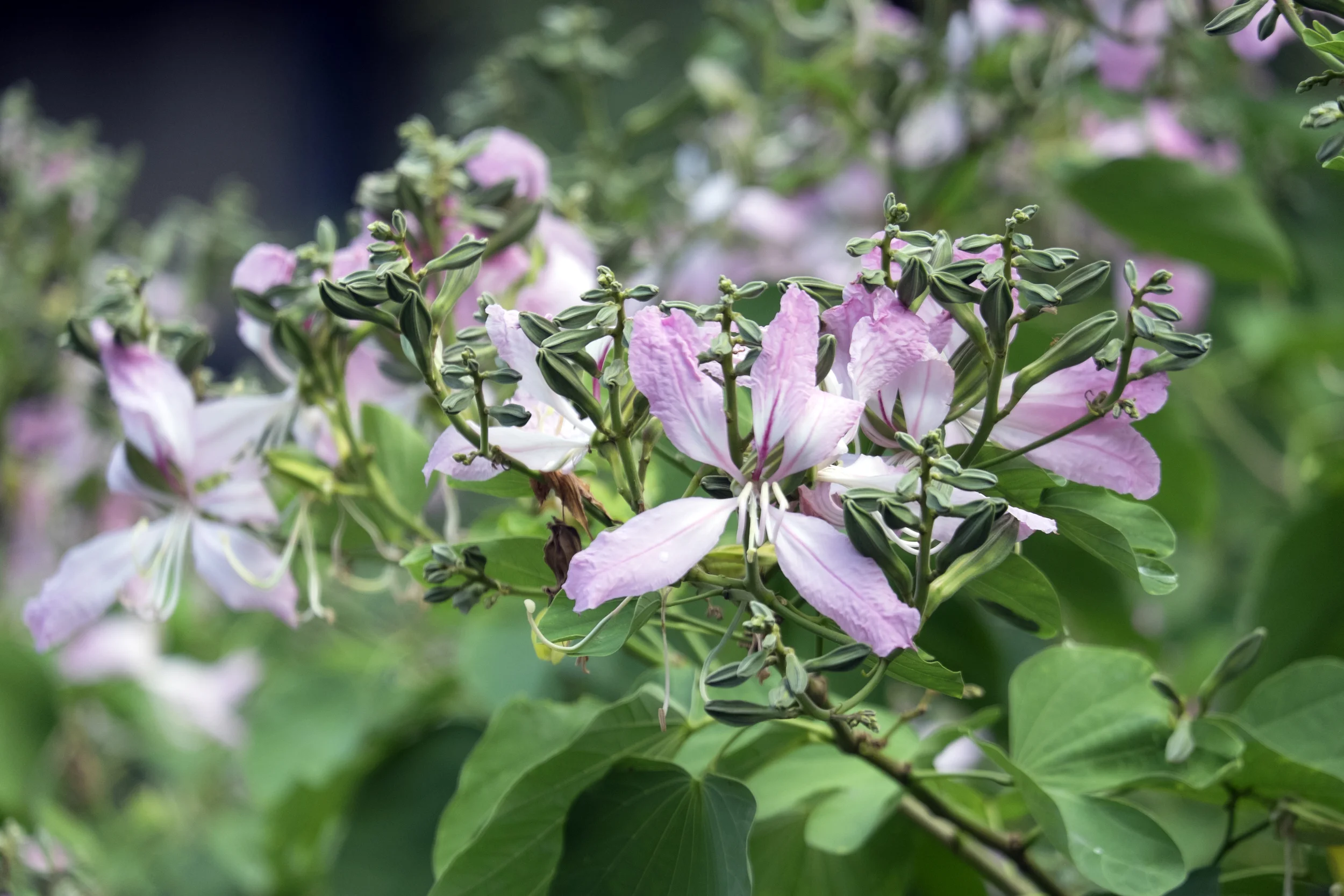
Bauhinia tree on the campus of The University of Hong Kong.
Bitcoin
When I go to museums, may they be attached to the history of the Roman Empire or Chinese Dynasties or whatever, there is always one department, which I find utterly boring. It is the one with coins. It is not that I find payment systems irrelevant. But those representing thousands of years of royal counterfeits, presidents, dictators and governments, are just too much of the same for me. Sovereigns try to centralize money on themselves, their central banks and treasuries, as a means of control. Only few "currencies" stay independent from that. For example gold, diamonds and alike, which can be transferred pier to pier for payment - if accepted. They are mined, processed, traded and change ownership. There are markets where you can sell them for "money" which is accepted in the grocery store (can't pay with diamonds in mine). When they are lost, they are gone. Nobody exactly knows how much is around. Besides, they also finance wars and crime for example in the form of blood diamonds. But don't think the Petrodollar does not do that.
Very similar work a new set of digital currencies, also called "cryptocurrencies" or "virtual money", of which Bitcoin is the most prominent representative. And this one is quite interesting.
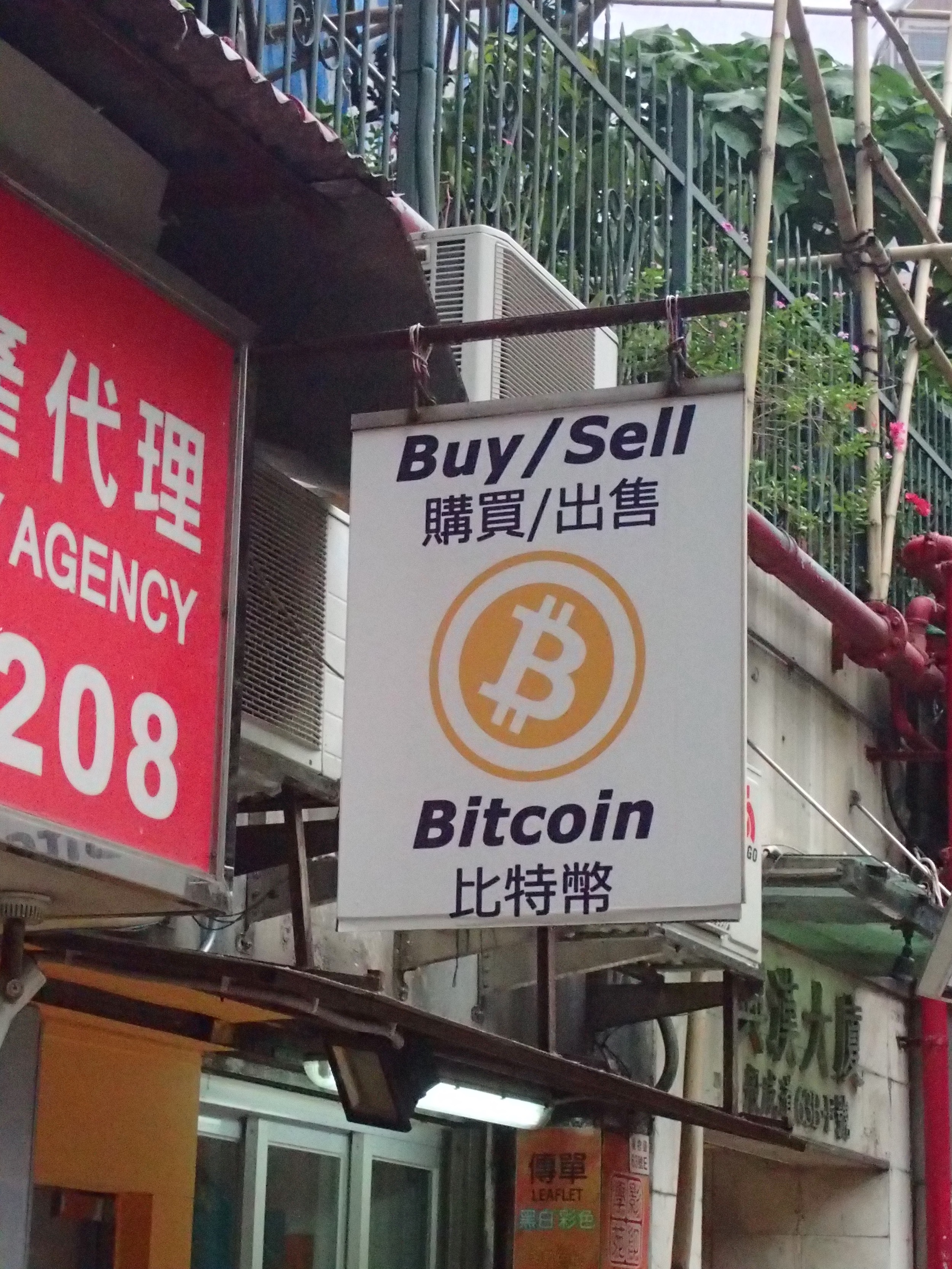
The sign is still up (October 2015, Bonham Road, Hong Kong)
It is said that Bicoin goes back to Satoshi Nakamoto who created the open source software for it in 2009. It is not publicly known who he is, and not even whether he exists, is a person, or a group of people. All Bitcoin transactions (clocks) are publicly recorded in a log called block chain. As the block chain grows longer over time, the pier to pier transactions can take a few minutes. There is no bank between the vendor and buyer, and charges are payed by the buyer only. Like this there is an incentive for vendors to accept Bitcoin. And the charges are very small, compared with the 2-3% which are for example imposed by credit cars companies. All you need is to open a Bitcoin Wallet. It is like an account. This has an address, equivalent to IBAN and BIC of conventional bank accounts. Should your computer break or get stolen, your wallet is protected by "Wallet Words" and for everyday use, you can simply use a password. There are different wallets available, which run on computers, tablets or smart phone. I use Multibit HD, which is easy to set up by following a simple online tutorial. There are also hardware wallets available, which are for example called TREZOR, and much safer than running a wallet on your computer or phone.
Once you are set up with a wallet, it is like an empty bank account. There are all kinds of silly ways of earning Bitcoins, but the most obvious one is to buy them for a start. You can for example do this with your Paypal Account, and you may find this website useful. By now you already came across the currency appreciations used for Bitcoins, which are for example BTC or XBT. One Bitcoin contains 1 000 000 bits. So, you do not have to look for "small change". There was a bitcoin hype in autumn 2013, but now the price is around 250 USD per 1 bitcoin. You might think, this is risky. But actually compared currently with a lot of currencies from emerging economies, the bitcoin is doing ver well. And just imagine 1 billion of Indians might want a stable currency and free access to world markets leaving behind their official currencies etc. This is interesting.

Bitcoin versus USD
The money supply of Bitcoin is not controlled by a central bank. Like gold, they have to be mined. This happens in the form of solving mathematical problems with computers which are specialized in doing so. The ultimate number of bitcoins is limited (like gold) and the more has been mined already, the harder the mathematical problems get (like gold mining). So, if the demand continues, the value of bitcoins will increase. Now, the mining itself seems a complicated process and I will for now not go into that.
Bitcoin can be only called "money" if they are accepted for the purchase of goods or services. So, who accepts them, and what can I buy with them? There is already a long and list of vendors who take advantage of the fee structure and accept Bitcoin. A nice geographical representation of these, you find here: http://who-accepts-bitcoins.com . To make it short: you can buy anything from a flight ticket at Expedia to a sandwich at Subway.
Of course, Bitcoin are more common to use in internet trade. But then there is a whole virtual world, where all prices are in Bitcoin. It is the "deep internet", which is sometimes also referred to as "dark net". Many people are not aware that beside the mainstream web, there are also very other forms of internet. The dark net is one of them. And then there is also still Usenet, from the time when there was an Internet but no web yet. You access the Deep Internet, by using the Tor-Browser, which you can download from the Tor-Project site: https://www.torproject.org/projects/torbrowser.html.en. You will also need a PGP key to make use of it. And you might also run it in a virtual computer on your main machine (or even on a separate computer) because you never know what happens. Rule number one of the dark net is, not to talk about the dark net. So, why not let somebody else talk about it: Jamie Bartlett on How the mysterious dark net is going mainstream.
Tilburg and the Netherlands
A few months ago, we received a surprise invitation to do some work in the University of Tilburg, teaching a course in the Master in International Management. It is a small University with a very academic focus in social sciences, and it's Faculty of Business and Economics is now expanding its education stronger into practical matters. I enjoyed my time in Tilburg a lot. The city is the former "Wool Capital" of the Netherlands and went through changes away from its textile industry heritage. Seen as a resident, it is one of the successful examples of such transformations. It is a very livable city. Small enough to reach any spot (by bicycle) and big enough to support a fully fletched University and some cultural life in town. It is well located also, to hop over to Antwerp in Belgium for example, or to the other cities in Holland. My overall impression of the Netherlands was, that it is a calm and well organized place, with a practical mindset. It is not generally "entrepreneurial" though and sometimes feels a bit like an "island" in the buzz of the world. However, there are many cultural "entrepreneurs" in the Netherlands and we got an impression of that through meeting friends who are for example documentary movie producers. It is sometimes good to have a completely non-challenging environment to get some work done. And then again you need to go out. Now we are in Hong Kong. Another kind of "Island". I already taught my first EMBA Global Asia Block week on "Turn Around Management and Corporate Restructuring", and I enjoyed it a lot.
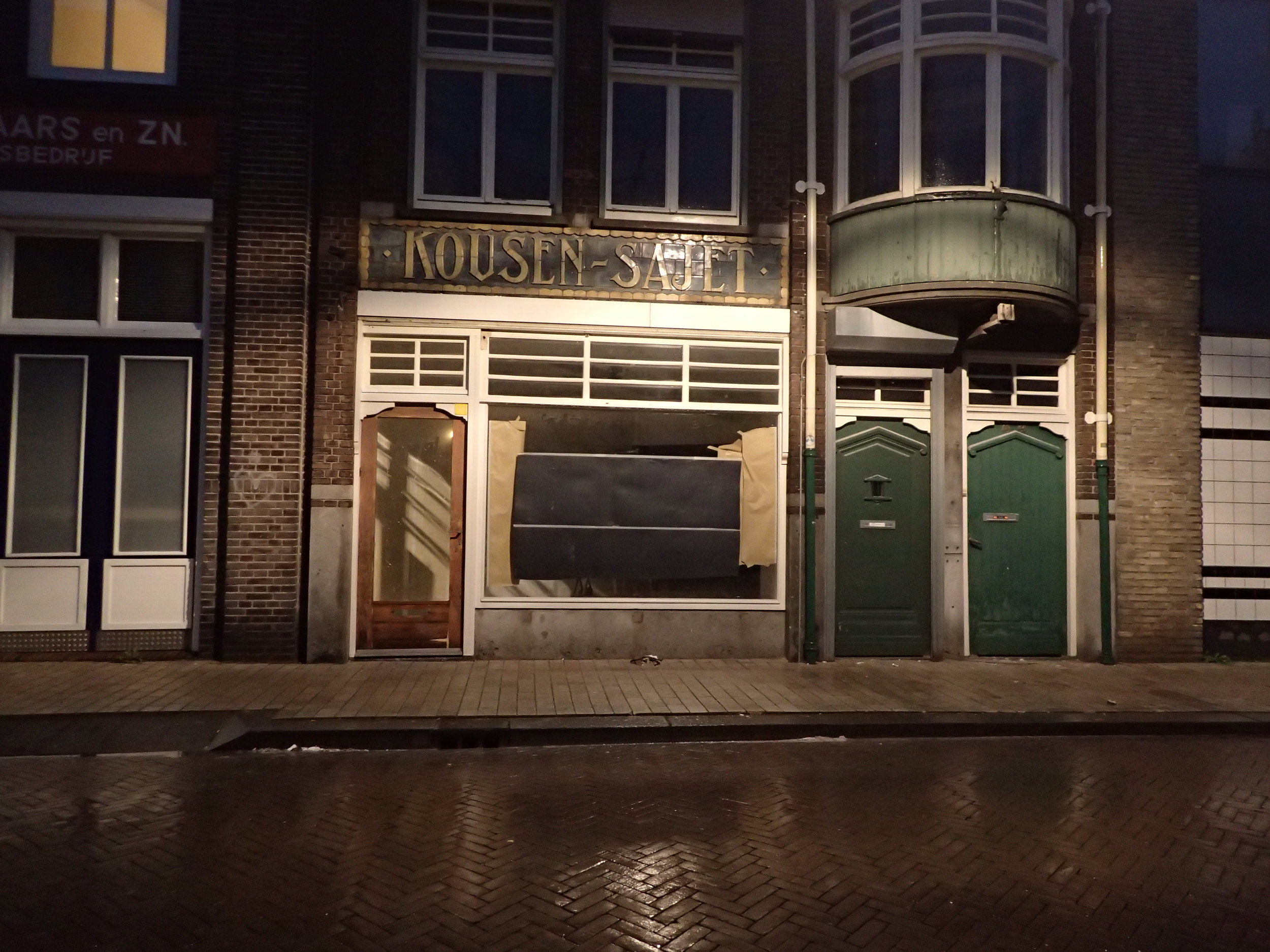
Downtown Tilburg (Netherlands)
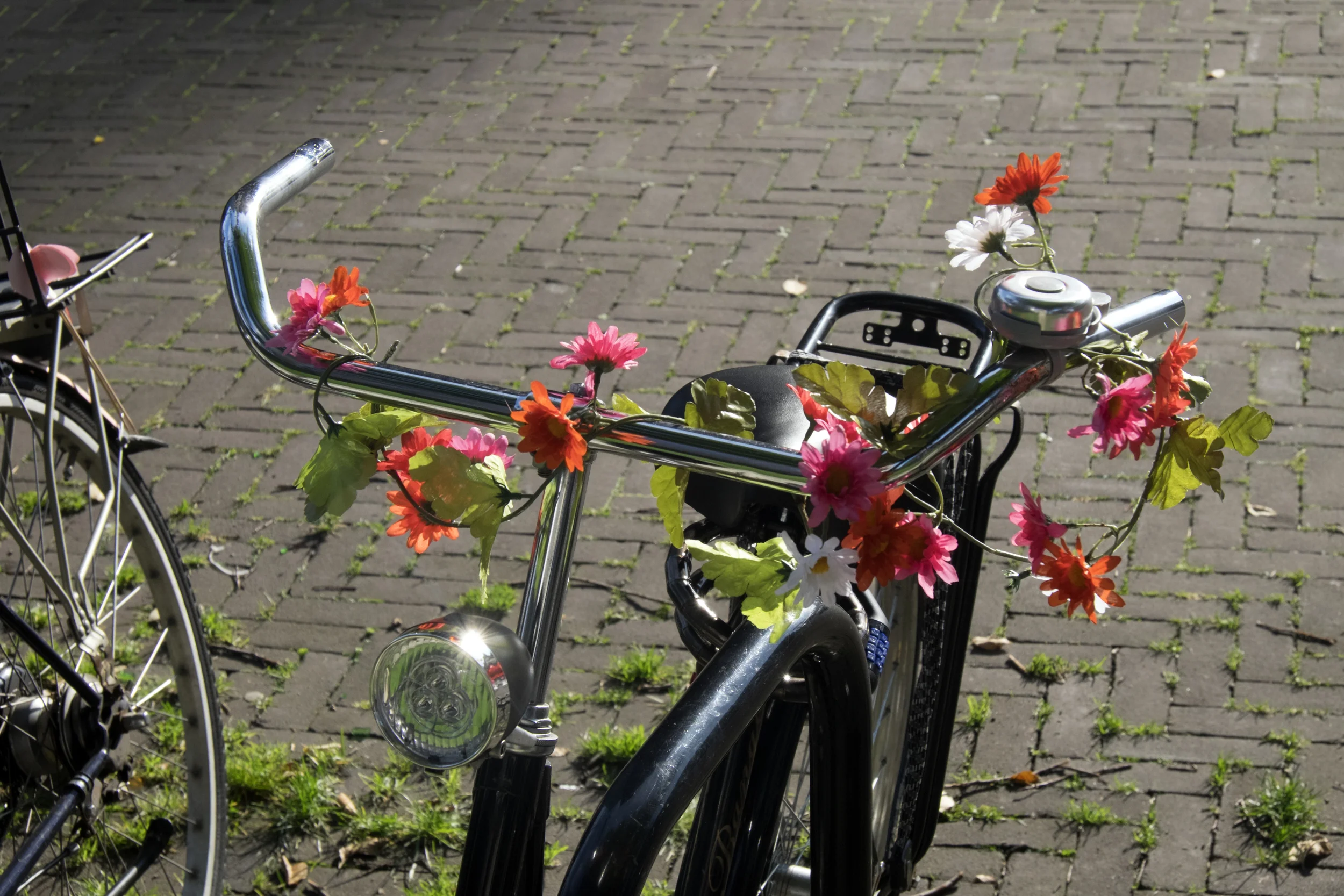
My favorite form of urban transport.
Arrived Tilburg
A few months ago, I received a surprise invitation to come to Tilburg University and teach in the Master in International Management Program. Luckily the program team could schedule the course very compact in one month, and after I cleaned up my calendar own a bit, we could fit it in. A few days ago, we arrived from London, had a very warm welcome and are very happy to be here. In the Netherlands, Tilburg University is, aside the Erasmus University of Rotterdam, very well represented in global economics and business research. It is a small place with a big punch. Already in my first days here, I experienced a very nice and open working environment, and taught my first lectures to very bright students. What is further remarkable, is the high degree of interaction, and the resulting spirit. I have been to the Netherlands as a visitor before and was in contact with people and culture. But this is the first time, I have a little bit of a deeper insight into the work life. And it is very enjoyable, practical, strait forward, and well managed. The city of Tilburg itself, also is also in this spirit. At the end of the 1800s it developed into the "Wool Capital" of the Netherlands and build up a strong textile industry. It was only in the 1960s that this industry collapsed and the economic mix is now leaning towards services - mainly logistics. During the first phase of economic and urban renewal, many old buildings, including monuments, were demolished. These measures seem very disputed until today. But for me, who does not know the old Tilburg, the city has its charm and represents a very successful case of such transitions. We definitely enjoy being here.

A morning view on the Tilburg University campus
Six Island Weeks in Britain
We have spent 6 weeks in Great Britain (not really that great), also called the United Kingdom (neither really a kingdom, and not united at all). For that period we have been splitting the time of our stay about equally into a hideaway period in Western Scotland and a very active one in London. In the latter, Feibai joined a Summer School at The London School of Economics (LSE) for qualitative research methods. It is very interesting and being a "number person" and seeing how artificially sometimes quantitative methods are applied to problems in social sciences and business. Good to learn more about better methods that make sense of data which does not mathematically add up. I spent most of my London time in the Royal Geographic Society (RGS) and worked in the reading room, or strolled around the University Campuses, where during the summer break I often had the library nearly for myself. In a lively and vibrant city like London, you need to know your islands of solitude. Otherwise it gets tiring. London is a great cultural place and one of my favorite cities. But we only like visiting it, and living not here.

St. Paul's from Tate Modern. Our first neighborhood in London.
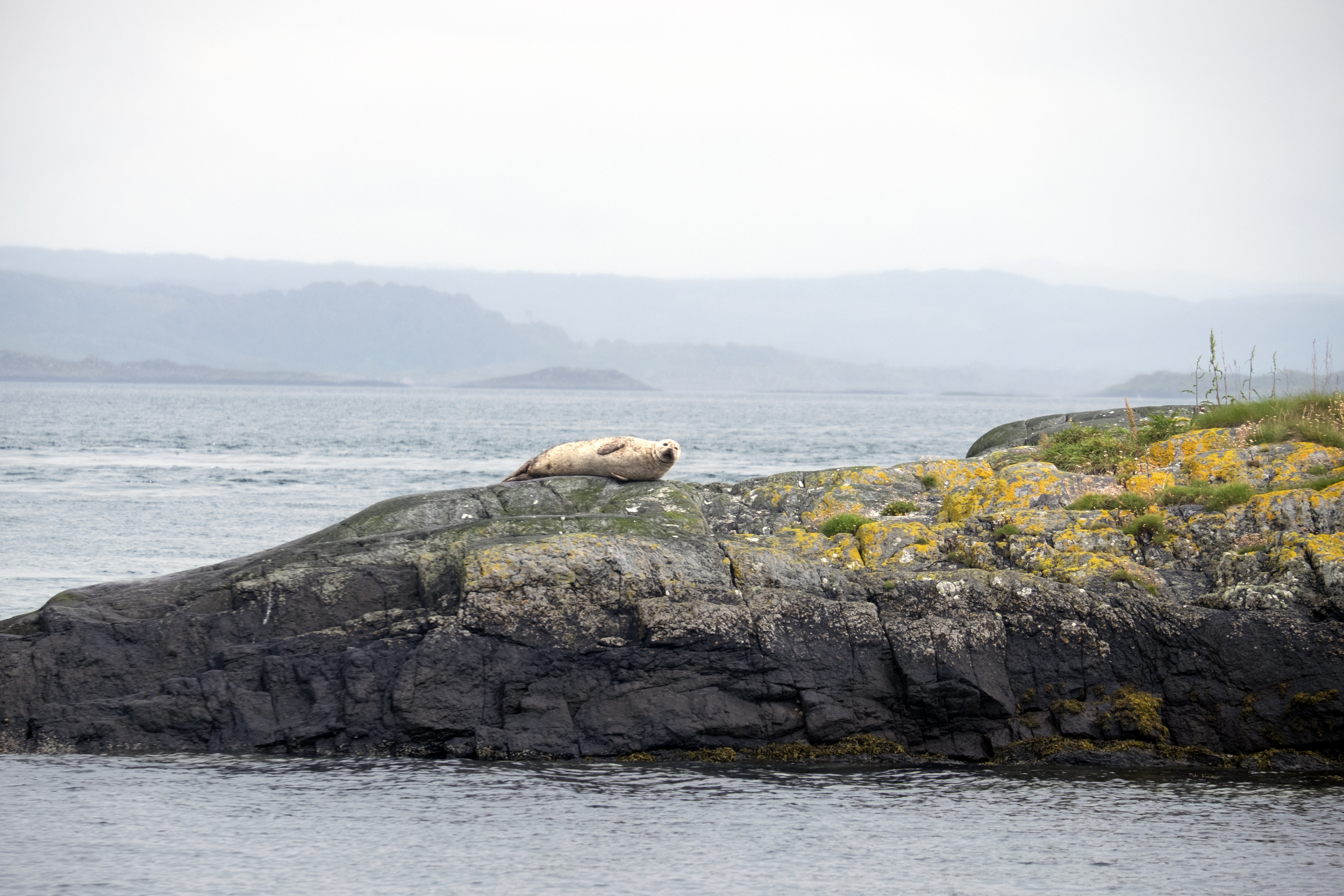
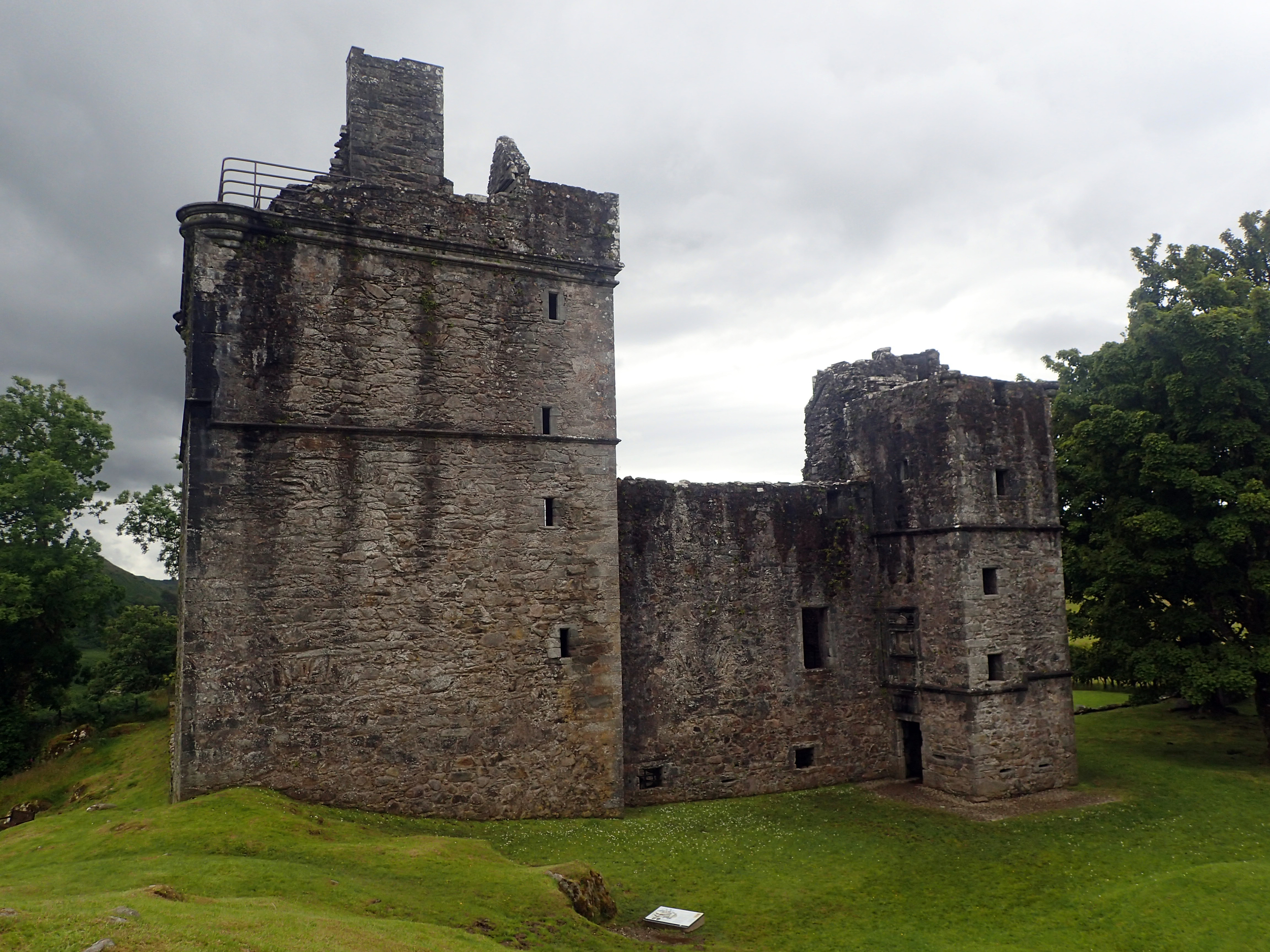
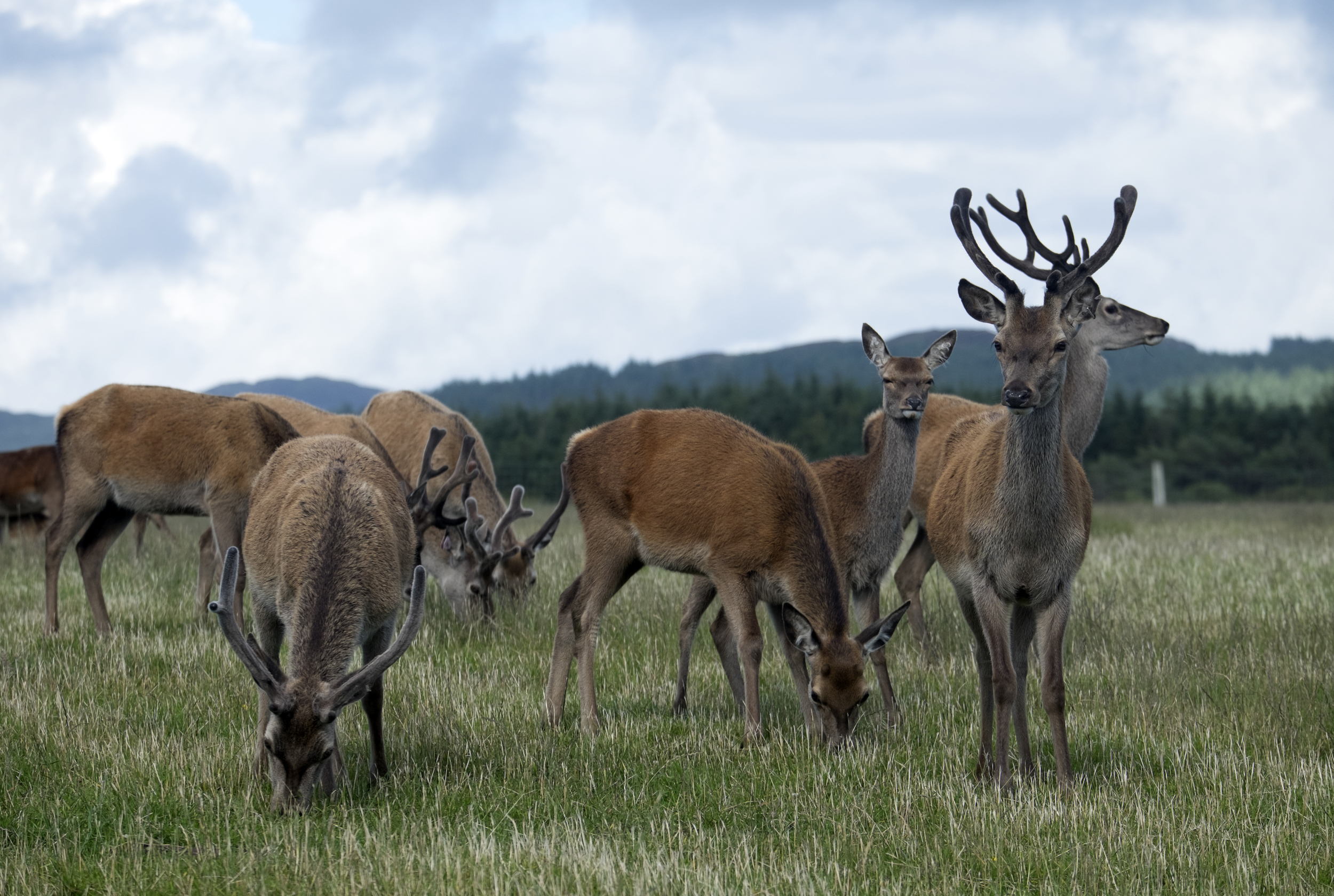
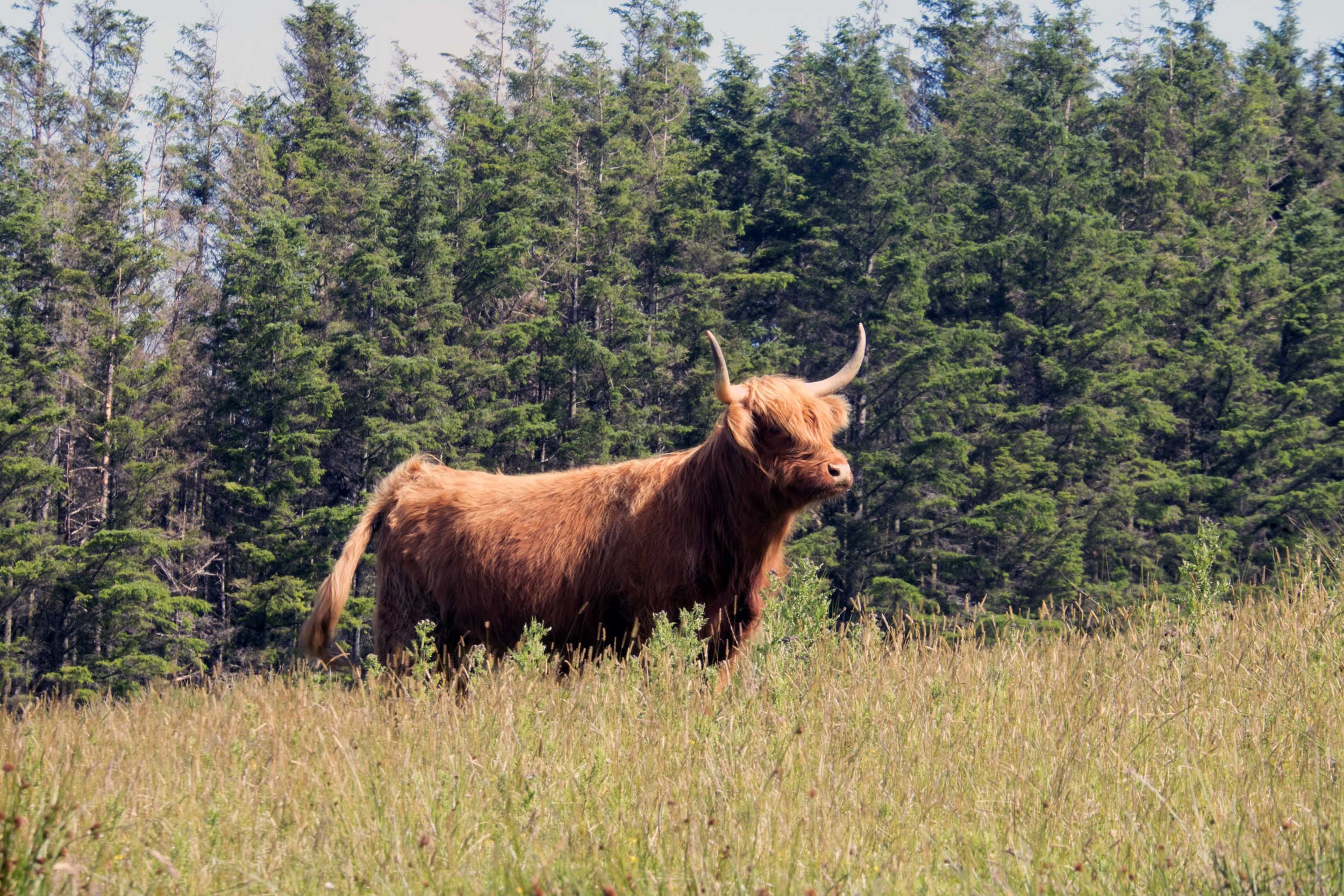
We also spent 2 very remote weeks in Kilberry, in an old stone cottage called The Gables. It is located North of the Mull of Kintyre in West Scotland, and was part of the Kilberry Estate, which still has the remains of a castle. It is a wonderful place with a rough coast line. No no sand beach, few tourists, no mobile phone network, no internet. The next grocer is a 20 kilometer drive to the South. That's what I call being offline. But there are dolphins, seals, and even whales, in a beautiful and wild landscape. We enjoyed that a lot. It was nearly like a retreat. Also we spent a week in Glasgow, for ambulating on paths of memories when I did field work there in the Motherwell coal mine, about 25 years ago. The mine is closed. But Glasgow has still the same character of a broken city. When the retailers become the largest employers, that usually is the end. And that's what it is there: my true and only friend, the end.
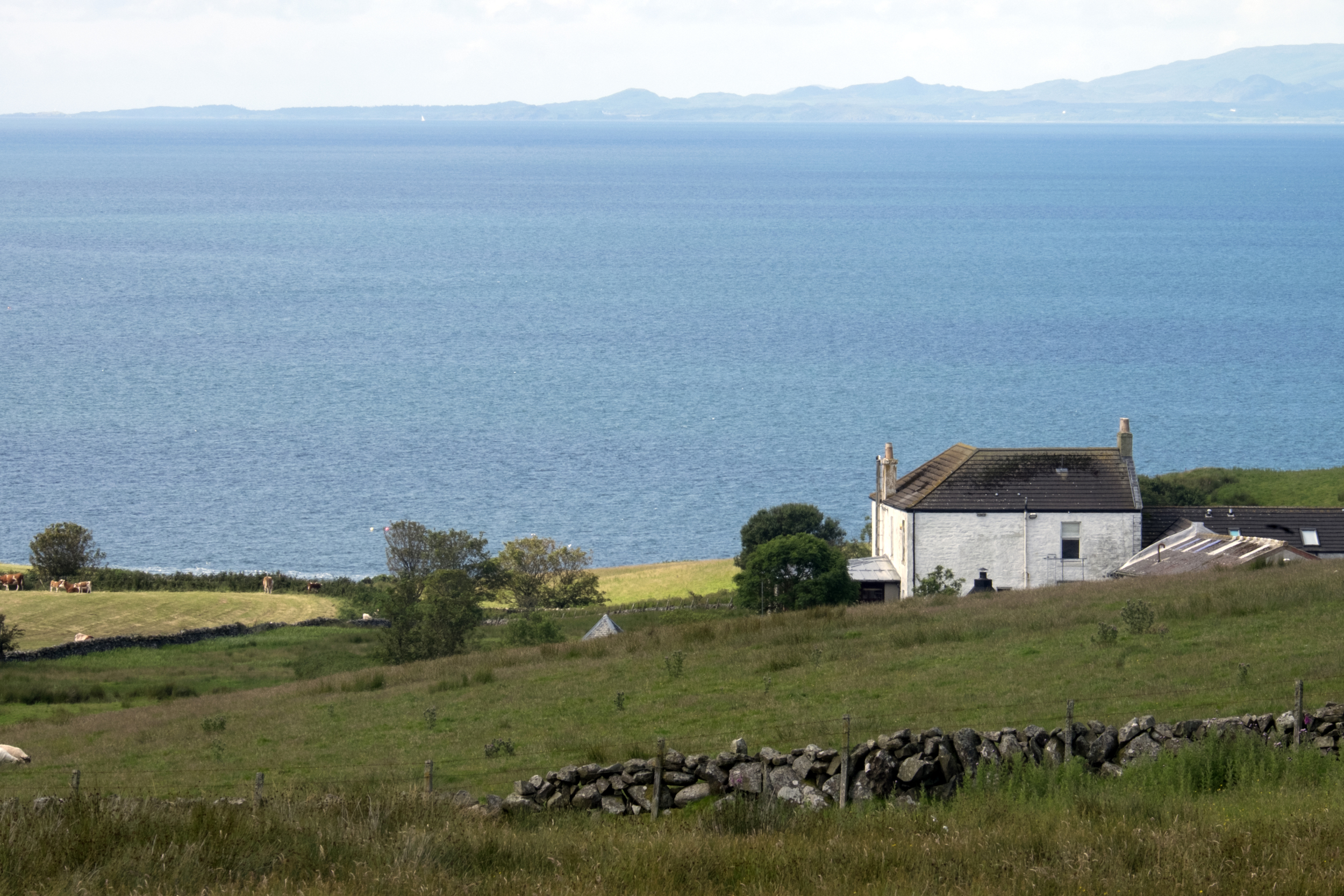
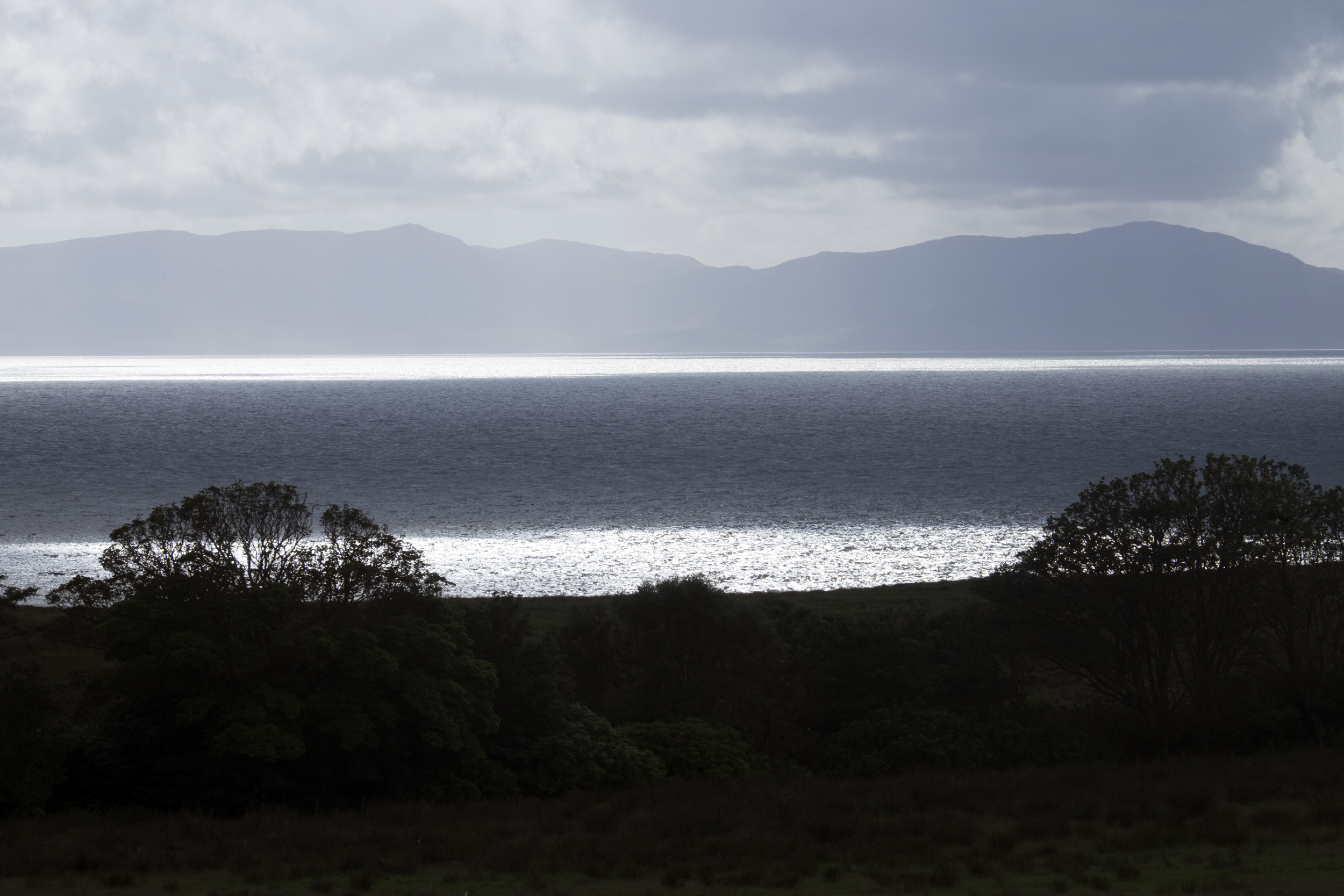
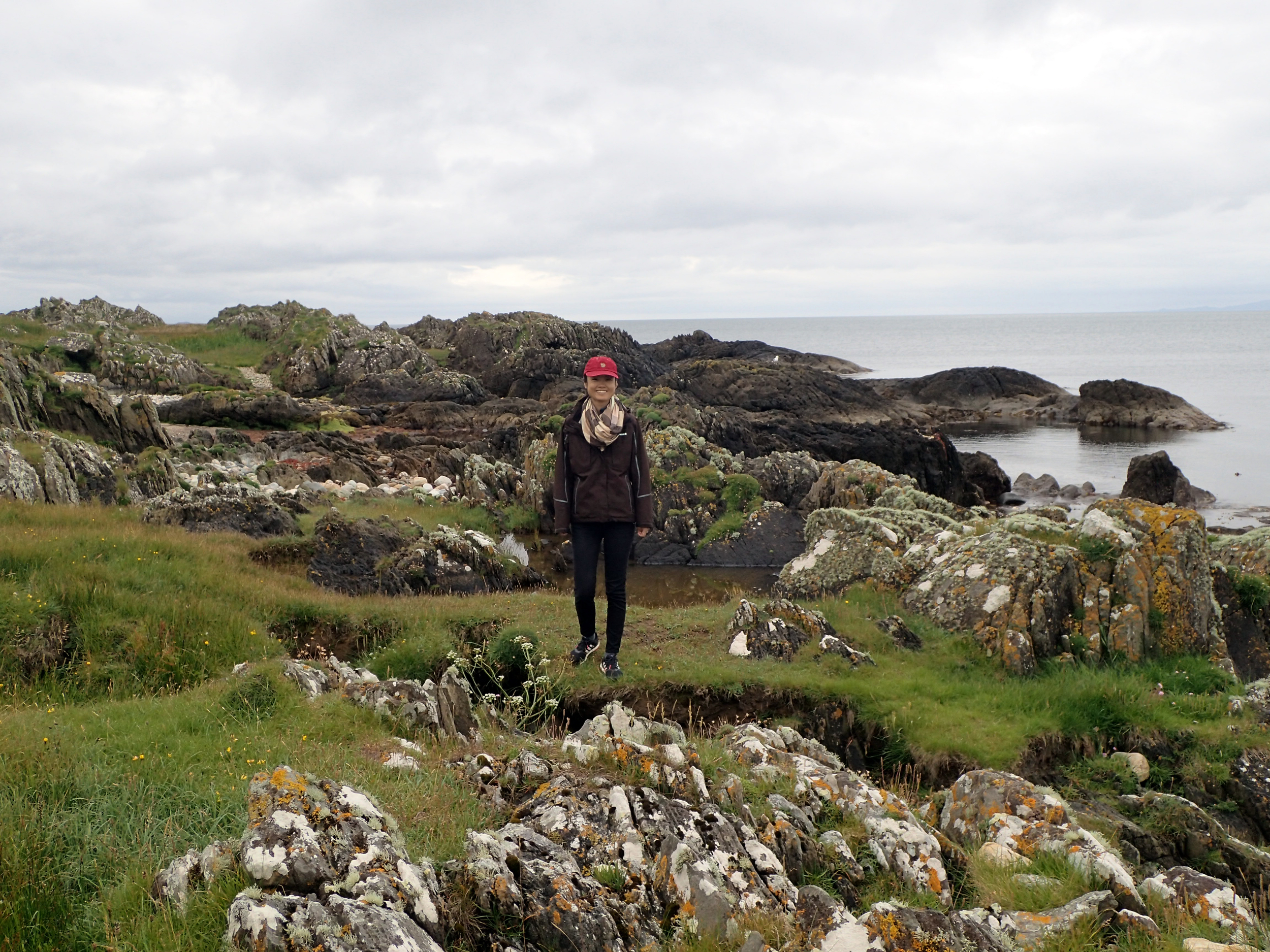
Captain Linnaeus Tripe's photos of India and Burma, 1852-1860
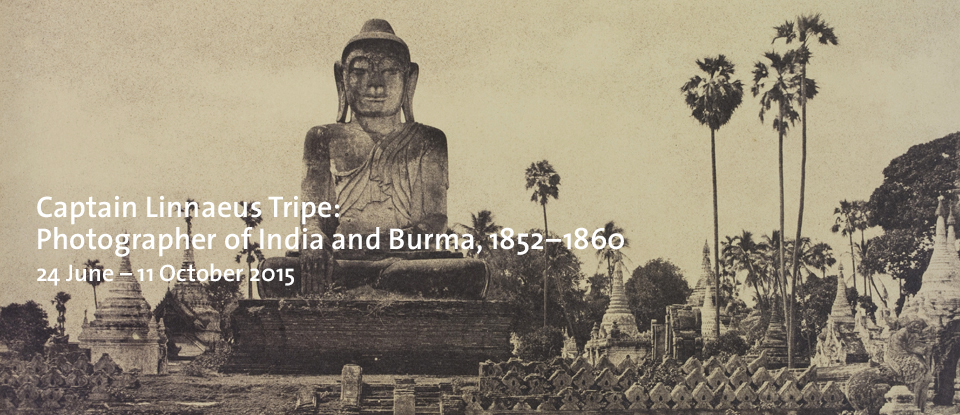
The banner of the Linnaeus Tripe photo exhibition in the Victoria and Albert Museum.
How often over the years, did I run into an officer, a teacher, or priest who turned out to be an excellent anthropologist, archeologist, zoologist or photographer? And this list of professions and fields of expertise is far from being complete. To my surprise very often these people are English, Welsh or Irish. This might have to do with the places I went and a correlation to the parts of the world they explored historically. But I gained the impression, that there is something in anglo-saxon culture and history which appreciates the development of excellent amateurs with wide fields of interest and amazing skills in some fields. If you don't know what I mean, join an English bird watching society.
Today I ran into another one of these gifted "amateurs" by accident. I wanted to drop into the Natural History Museums Coral Reef exhibition in London before my lunch break from the Royal Geographic Society. But the waiting line was so long, that I found it much easier to have another look myself when I go diving at the Great Barrier Reef next time, than standing in the queue with school kids and tourists. So, as these days I commonly have the soup of the day in the Victoria & Albert Museum for lunch, and it was still a bit early for that, I dropped over to the other side of the road and bumped into another one of these people. This time a historic figure, and officer and in service of the Eastern India Company: Captain Linnaeus Tripe. The rather small exhibition of his photography in India and Burma kept me for 2 hours enjoying every photo shown. It spans from his beginning of picking up photography in England after his return from a first period of military service, until the end of his career which was the result of a budget downsizing in the Eastern India Company. It is a small, but very enjoyable exhibition and still on until October 11th. The photos are both: a record of Burma and India of that time, and also excellent pieces of fine art photography.
What I found most striking, is that the impression of many scenes, monuments and landscapes on his photos remain exactly the same until recent times. You often feel, he is just standing there today and takes the photo.
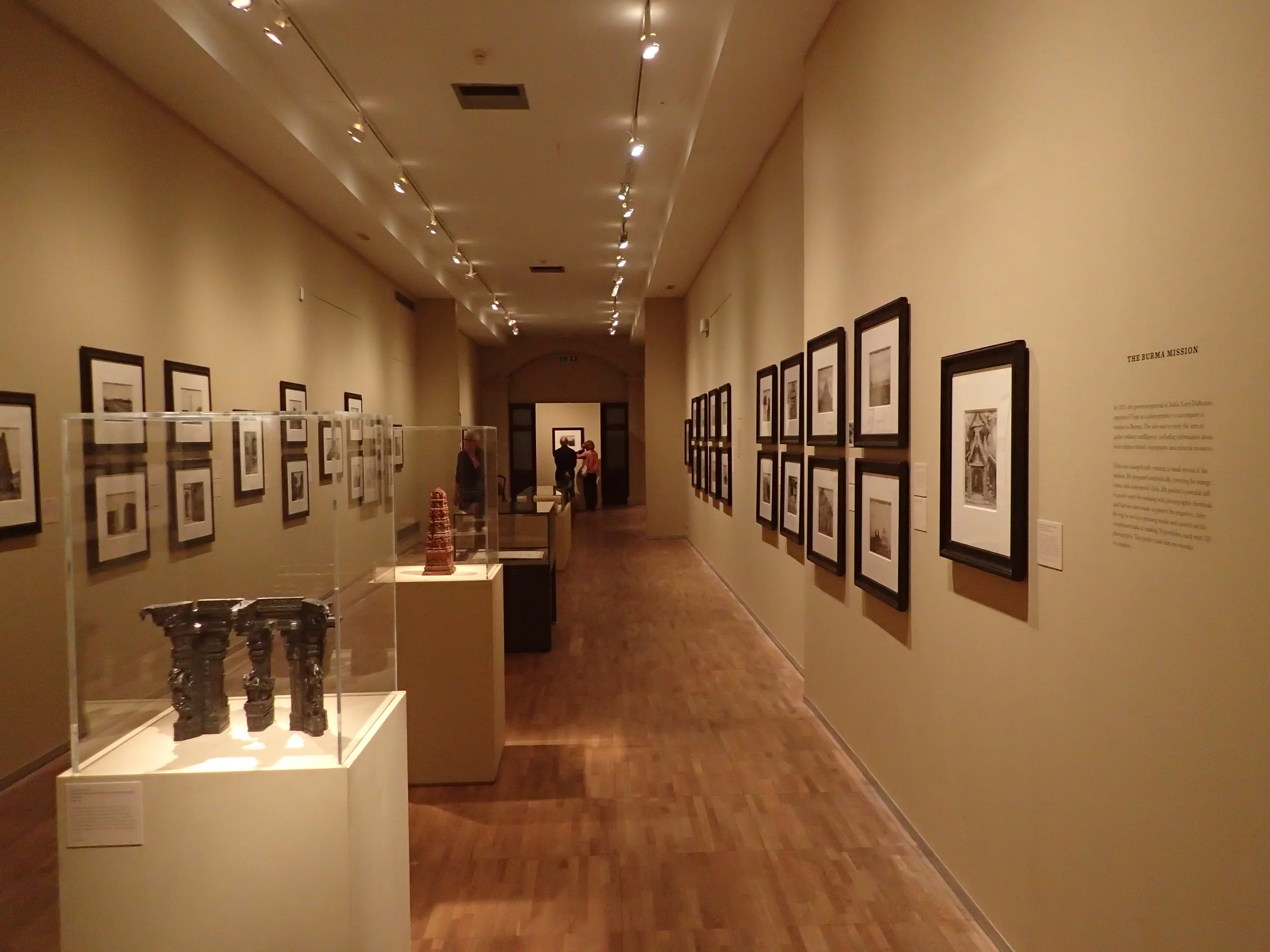
The exhibition hall of the India and Burma photos of Linnaeus Tripe in the Victoria and Albert Museum.
Travel Photographer of the Year 2015 Exhibition in the RGS (London)
In a busy city like London, you need to know your islands of solitude. For me, one of them is the Royal Geographic Society (RGS) in Kensington, of which I am a lifetime fellow. It has everything I need: an excellent collection, a good creative spirit living in the walls, quiet corners, and of course interesting fellows to talk to. Until September 5th, there is also the Travel Photographer of the Year 2015 Exhibition on show. Admission is free. The exhibition has attracted nearly 130 thousand visitors in the last three years. It is an interesting setting, because beside the excellent photographic work on parade, also the way of making this partly a rainproof outdoor exhibition in the Society's garden, is quite creative. From the desk I sit during the days, I can observe the visitors walking through the courtyard. There are always nice scenes in front of me, when I take my eyes up from the texts and maps in front of me and refocus. The photos are excellent. The submissions are from photographers all over the world. Also, the way the competition is structured, is very interesting. Perhaps some of you want to enter next year?

Shot with my Blackberry
The Glasgow Effect
We spent a week in Glasgow, before heading for the Western Scottish countryside. There we will hide in an old stone cottage for two weeks and crunch numbers on our laptops. About 25 years ago, I have been doing fieldwork in the Motherwell opencast coal mine, monitoring the particle emissions from excavation, haul trucks and blasting operations. I remember that I had to give up my running shoes to what I thought was a vicious dog. It stopped me rather fiercely in my running exercise. But it just liked to play with these shoes, and when I left them behind, it did not attack me further. Now I was back for a few days. I don't really know why. We just thought: why not? And knowing that this will be a bit of a rough place, we went to have a look. Of course we knew, it will not be pretty. But it is interesting. And here is why.
The so-called "Glasgow Effect", is a term describing the interestingly poor health of people in this city. Premature mortality rates were in 2010 about 30 % higher than in similar cities, like Liverpool and Manchester. In 2008 the male life expectancy in Carlton, was down to 54 years. Alcohol, drug abuse and violent gang crimes, were often attributed to this. But also Vitamin D deficit, and poor nutrition was hypothesized to play a role. Generally, people seem to make very unhealthy lifestyle choices. Obesity is a problem in all Scotland though (even the entire UK), not just in Glasgow. To see the situation in numbers, I found the Glasgow in Indicators Project very insightful. But also, I found it a bit depressing. What's wrong with this place? If you don't look at it scientifically, it nearly feels like it is haunted with something.
But then there are the lovely sides of Glasgow's culture too. The roughest looking guys maybe "good lads" when you talk to them. Grannies which can't move their little fat bodies, but help somebody in a wheelchair mounting a public bus. And also to mention the little "romances" between the tire fitting and tattoo shops, when he takes her out to the "Blue Lagoon" (you don't want to know the menu). The Glasgow Effect has attracted a lot of attention, and is well researched, even though not fully understood. There have been improvements. But still it is hard to translate facts into policies. It would be interesting to have a view, perhaps not of a statistician, but of a writer like George Orwell on today's Glasgow. Something like a contemporary The Road to Wigan Pier. Even though, I don't think you can treat it with the same logic. Perhaps this even already exists. I have not followed contemporary English literature in recent years. I will have a look. Might be better than another spreadsheet.
White nights in Tallinn
Since June 21st the nights are getting longer in the North again. But still in Tallinn ours were short and only very briefly around midnight to three in the morning, it fell dawn (not dark). Now is July and we spent a week in Estonia. Holidays, festivals, cultural events, eating out in the mild sun and being out with friends in the white nights of Tallinn - all this is concentrated in this month. When the wind turns North again, then the temperatures will drop sharply and another long, freezing and dark winter is ahead. That's pretty much true for every Scandinavian country. But here we felt it most. Now you might think, this sounds harsh. But somehow it isn't. We have met the most wonderful and kind people, experienced warm hospitality, and have seen a great and defiant culture.
Estonians generally don't talk much. But if they do, they know what they say. Reaching independence from Soviet occupation in 1991 by what is called the Singing Revolution (have a look at the trailer of a documentary), was a start for everybody with empty pockets. Now Estonia is a prosperous little country, member of the European Union and the Eurozone, and has one of the smartest governments when it comes to economic policy and public administration. From the beginning everything was set up paperless. And in 2011 Estonians even the first time has elections where you could vote by SMS.

View on Tallinn
Tallinn, Estonia's Capital, has a very pretty old town which shows traces of all the powers which came here and left again. Only the Soviet occupation luckily did not leave many traces in the old core of the city. But it did, in the suburbs where you find the kind of architecture which was left by the communist rule. However, the buildings are made good use of. And of course the housing capacity is needed. So Estonia made the best out of it. A few years ago, there was a discussion whether Tallinn would be flooded by Casinos and franchise and chain stores destroying the pretty atmosphere. But the main Casinos integrated quite well, and so did the CI of the stores. The centre, which is also UNESCO World Heritage is protected very well. Even after 10 a.m. cars are not allowed in.
By invitation to visit Silport, we also had a quick visit to Narva Castle, which was founded by Danes in 1256. In 1346 it was purchased by the German Livonian Teutonic knights order and converted into a stone castle. It stayed Teutonic German for most of the time. It is a very nice place to visit, around two and a half hours by train from Tallinn.

Just across the Narva River, which marks the border to Russia, there is Ivangorod Fortress which is a medieval castle established by Ivan III in 1492. Borders to Russia often look quite empty on the other side. But here you see the town of Ivangorod which is the partner city of Narva in many respects, when it comes to the well organized border crossing. However, this border is heavily observed and guarded, not just since the Ukrainian conflict. Similar to Easter Ukraine, there are Russian speakers living in Estonia. But unlike Ukraine, they have a much better economic conditions in Estonia, than they would have in Russia. So there are currently more Russians who would like to immigrate into Estonia, than those who have a radical urge to return to their motherland - luckily.

Ivangorod Fortress established by Ivan III in 1492 (Russia).
High Tech Estonia
Some people say, that developing a successful high tech cluster needs the weather of California. Obviously, it doesn't. Talents don't care about the weather, and also investors don't. You could even argue that a short summer and a long freezing and dark winter does the trick, by making your lab the only cozy place to be. But what ever it is, here we have a small country in Northern Europe, which started in the 90s by not even having telephones at home, re-gained freedom from Soviet occupation by The Singing Revolution, and headlines its heritage in its History Museum with "11 000 years spirit of survival". Welcome to Estonia.

The Skype Headquarter at the Tallinn Technical University
A few weeks ago, sitting over breakfast in Palermo, an article on Estonia's start up culture caught my attention (The Economist, Jul 11th 2013), and I decided to go and have a look. Thankfully, Holger Weiss fueled my excitement and helped opening doors. And so I went there, had an an interesting time, met wonderful people, discovered challengers in the old industries, as well as the movers and shakers in the new ones. It is a distinct way of moving and shaking though. Estonians generally don't talk much. And only do it when they know what they talk about and when it makes sense. This is already the first difference to Silicon Valley, you will notice.
Feibai and I went together, but had different missions. She is looking for diversification options and potential investments for a large Chinese building material conglomerate. And I wanted to know how things work, in relation to my projects related to the set up of high tech parks. We had a week of back to back meetings, and talked to a wide spectrum of people, from "start up kids" to technology millionaires, from CEOs to advisors to the Prime Minister. We saw start up incubators, university initiatives to commercialize research, the Investment Agency and the EU's closest port to Russia, which has a free trade zone and transit facilities.
For my research on the success factors of Estonia as a technology hub, this was an excellent visit to form hypotheses. One of the most interesting paradigm discussed, was that if a country has a small number of citizens, it needs to make sure it has a large number of users. And technology is one way to achieve that. A thing to watch, is for sure the Estonian e-residency, which is also available for non Estonians in any country where Estonia has an Embassy. Just apply online by clicking here, puck up your chip card from the nearest Estonian embassy (does not have to be yours), and then register an Estonian company in 10 minutes online. Corporate tax only on dividend, income tax flat, no National debt ... Here we go.
Now the verification of ideas and the number crunching starts. And quite a few Skype calls to follow (the core code of Skype was made in Estonia). But we will be back in person also. Thanks to everybody for now.
Our new Winter Residence will be Stockholm in Summer
A few weeks ago, thinking about where to potentially settle for a while, I drew the preliminary conclusion, that there are places where you can work productively, and distinctly other places where you can trade. "Nylonkong" (New York, London, Hong Kong) would be the kind of market places: busy, expensive, noisy, high demand, but also high competition. By contrast a mountain village in Sicily could be a production base: quiet (well not so, always), timeless and slow. One aspect missing in the mountain village, would be inspiration by others who are in the same trade. This is something New York and London definitely have, just by the fact that they attract a lot of talent. Hong Kong not so much, because it is only a hub between the worlds. Now all these thoughts, as said, were preliminary. And there seems at least one place, which has it all: Stockholm.
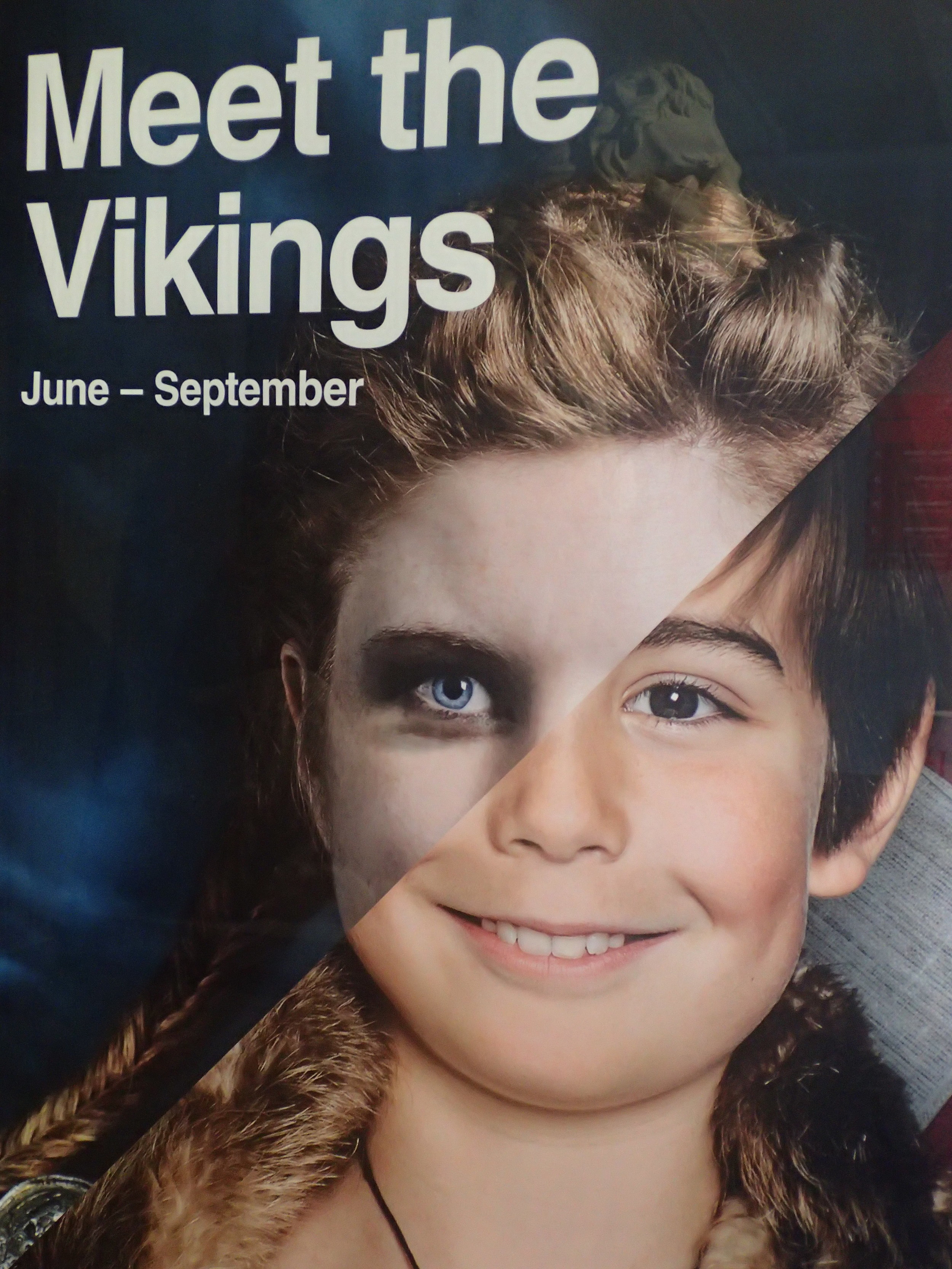
Detail from the 2015 summer season poster of the Viking Museum in Stockholm
I actually also liked Copenhagen during our visit in December 2014, dropping by the Copenhagen Business School, where we met friends who inspired us to explore Scandinavia a bit more. And this was a brilliant idea. I can well imagine that Stockholm is "one of a kind", and other Scandinavian cities have similar qualities - or Baltic ones, which we will explore next week.
We are staying in the South of the city of Stockholm in the flat of Karin Skelton, a yoga teacher who is out of town, and kindly let us her home. It is a very nice place and we spend many hours of exercise and work here and around the nearby lakes, before we sometimes take the short subway ride to town.

Stockholm (in July 2015). I like entering cities from the seaside and not from the airport.
Earnest Hemingway once said, that he can work anywhere, where people don't interrupt him. And in Stockholm nobody bothers you. But people are very friendly. Just they don't talk more than necessary. That was something, I also enjoyed in Amsterdam: the minimalistic directness with a very low "power distance" (which means competence goes before hierarchy). But here it has a bit more nonchalance than in the Netherlands. What I professionally really like here, is that people know their stuff. Even amateurs reach levels, which you don't see many professionals operate on in other places. And I see people having very (very!) good ideas. Perhaps this is because they actually can think cross disciplinary, as they know more than just one thing. It is a "no bullshit place". Of course my impression might be a bit superficial, in such a short time and with limited exposure. But then let's just call it "my first impression".
The only thing which would scare me a bit in Stockholm, is the darkness in winter. Not the temperatures. They are fine. But the long darkness. The winter is very different from the summer (you may take the sunrise equation to make your own calculations). But then, while we walked along the inner city harbor, it suddenly made click. There was anchoring the large sailing ship Sea Cloud II from Valletta - another city we like very much. A sign, haha. Perhaps the combination can work. And we thought, should no other obligations arise during the year, then we could try it out. Sounds like a good plan. Let's see, how the year proceeds.

The sailing vessel Sea Cloud II from Valletta in Stockholm harbor (July 2015).
Nick Brandt's "On this Earth a Shadow Falls Across the Ravaged Land"
The exhibition of Nick Brandt in the Fotografiska Museum Stockholm is absolutely magic. I walked in with "wildlife photography" in my mind. But this is far beyond just that. The exhibition is on until September 13th, and if you are interested in photography and have the chance to see this, you must go. I have been to these places. But the way he took it, is really humbling for anybody who holds a camera looking at the same scenes.

A snapshop in the exhibition ""On this Earth a Shadow Falls Across the Ravaged Land" by Nick Brandt. Please go to his website for more.
The Fotografiska Museum in Stockholm is a very fine place. I also liked Inez & Vinoodh's "Pretty Much Everything 2015", even though fashion photography is not my thing. But I liked the take on it: "At its best, fashion makes it possible for a wider audience to discover what contemporary art and design is all about". Nice also to see the exhibition of photos by Andreas Zorn, of whom I was only aware of his watercolors, but not that he also was a keen photographer.

Andreas Zorn: Sommarnöje, 1886 (copyright public domain)
A looping is not a crash

Call Options: Beijingers "trading" sons and daughters for marriage (Temple of the Earth Park, on a Sunday in 2014)
China runs its largest casino not in Macao, but at the Shanghai Stock Exchange. In about the last month the CSI 300 Index dropped around 1500 index points. It is still 80 % higher than same time last year. It is estimated that 85 % of the money in the Chinese Stock Market, is not form institutional investors, but from the retail market. Now, who cares when gamblers in a Casino loose money? Normally only the gamblers (and the casino is happy). As this is mostly secondary market, the impact on companies which are not just now raising capital by issuing shares, is nearly non. Looking at the numbers, this merely looks like a downward "correction" of an overheated retail market. No "crash". It's a looping. There is a lot of shrieking, but it won't hit the ground. That's the fun of it. Otherwise its a tragedy.
The Chinese Government did everything last week to support the stock market. And first it does not appear obvious why. IPOs were suspended! Sounds like a serious measure? Why should anybody, who is sane, go for an IPO in such a market downturn? Further measures were not just the drop of interest rate by the central bank, but also the "instruction" for state owned companies to keep their stocks, or even to buy. It went so far that even Social Security Funds claimed not to sell, which should not make a big impact, as most of their portfolio is not in stocks anyways - I hope. All these claims, had the purpose to look invincible, but also caused quite some panic, because it put the focus on the "seriousness" of what is happening. Not clear to me why the Chinese government's intervention was verbally so heavy. Perhaps to show support to the "common people" who now maybe loosing a lot of money. "Harmony", social stability, are terms which are very high up on the agenda. And loosing lifetime savings, does not help harmony too much. But what can you do, when people put all they have into a risky gamble? It is very clear that the Chinese stock market is pretty detached from fundamentals, and as long as these kind of trades take place, it will be hard for any government to protect people form their own foolishness. The bad news is, that this money which is now burned, could have well been used in real investments, or even just consumption, and not speculation. On the other hand the Chinese stock market is an excellent tool to take money out of the system, which has been pumped into it before.
The stock market is a boring topic, and I promise not to comment on it too frequently. In China it is though, quite a form of entertainment. Like the horse races. Just not that stylish. The easiness with which top managers, often drunk, spread insider information at the dinner table, and people immediately act on this with their smart phones, is quite exceptional. I mean, that's as illegal in China, like anywhere else. But nobody cares. Buy on rumor, sell on facts? There are just rumors to buy and to sell on. So, just listen to the drunk guy and spread his wisdom on WeChat. Then it becomes some form of truth. And even when there are facts, not many understand them anyways. One thing is right about that: facts don't matter very much. That's even quite good. Because the fundamentals of many Chinese enterprises are pretty bad. But that's another topic, much less entertaining than the stock market. Though much more serious. And changing that, is much more interesting.
Sicily
We have spent a month in Italy, out of which three weeks in Sicily. A week in Rome, was a nice start. Always good to have a stop over in the Eternal City. Then we took the train to Palermo and stayed there for a week, spending a lot of time in the magnificent library. But the major part of our escape to Sicily we spent in the island's South, in the village Cianciana. We were kindly invited to stay in the studio of our friends Elizabeth Briel and Roy McClean, who have been refurbishing the old village house into an artist's studio. It is a wonderful place and here I got more work done, than in the months before.

One of the three entrance doors to ElizabethBriel's studio in the old part of Cianciana.
There is a lot to learn from an artist's life style when it comes to productivity, not just creativity. When I think of the dimension, in which I will create my future work space, it will be a blend of a studio, a laboratory and a library. I have learned in the last two weeks what a studio can do to you. My summer project is to sort my photos. Not quite finished yet, but I am working on the photos every day. It is a very long and deep journey back to far away places and far away people. Also this website had quite a make over, and I prepared lectures and laid the foundation for a research project on what some people call the "Silicon Valley Business Model" - but this time from a quite different angle.

Morning hike in the surroundings of Cianciana
Cianciana is located in the South of Sicily and North of Agrigento, and is part of the province called after that town. You can actually reach it by bus, but we decided to rent a small car for our time here. This allows also to see the little corners around, and the other lovely mountain villages here, like Sant Angelo Muxaro.

Surroundings of Cianciana. Sicily is a quite large island and there is lots to discover. But we mainly stayed in this area.
One place to visit for sure, is the Valle dei Templi at Agrigento. It is a Doric style temple cluster founded 580 BC which is in the United Nations World Heritage List. Another site with Greek remains is Selinunte, which is about 90 minutes drive of Cianciana. It is based on population of the Sicilian Greek colony Megara, daughter city of the Greek Megara. Founded between 628 - 654 BC. Captured by Carthage in 409 BC and destroyed around 250 BC. There were later Arabian fortifications and even use of the Acropolis by the Barbary Pirates in the 16th century. But city has never been rebuilt.
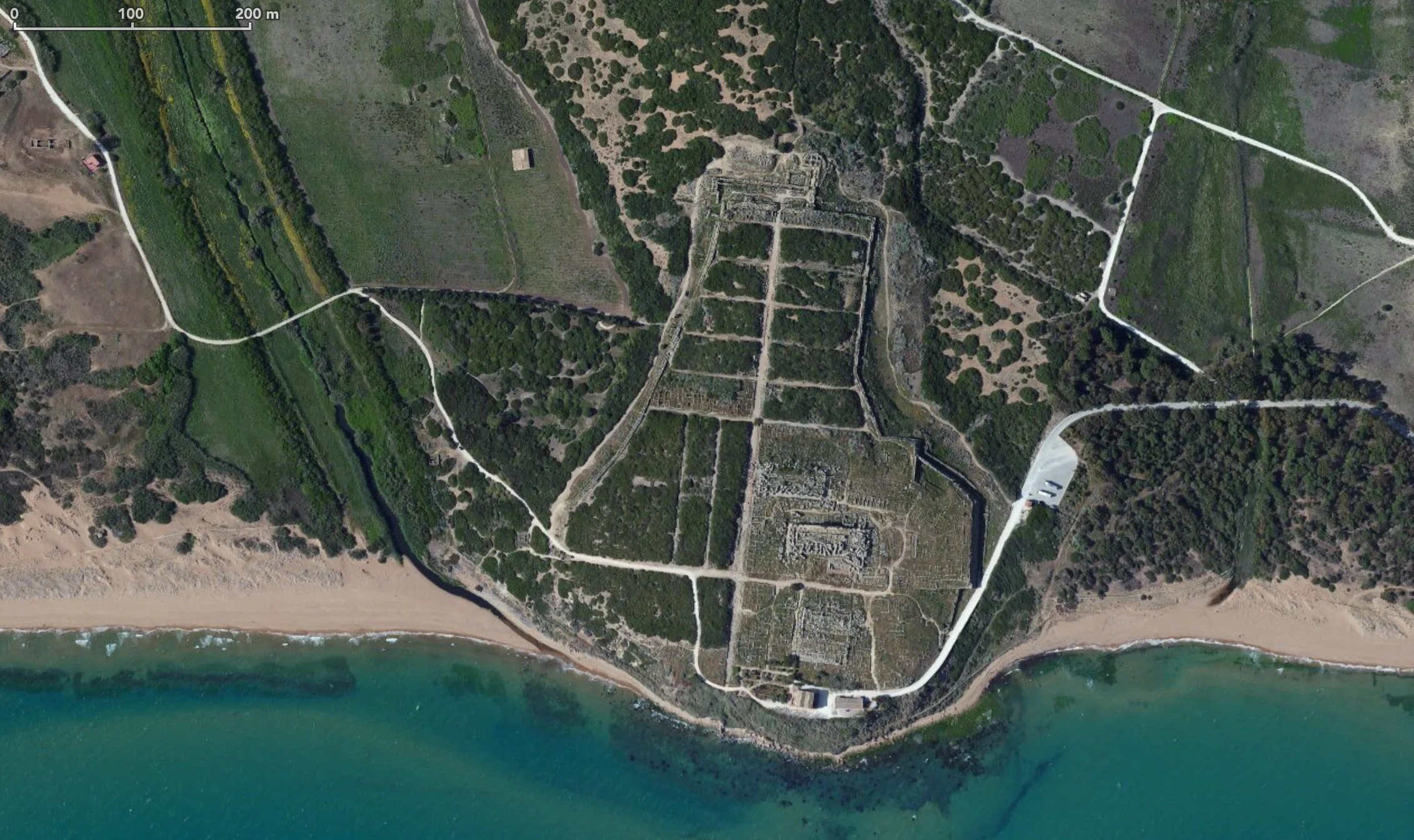
Satellite view of the Selinunte Archeological site. You see the two main temples, the Agora, the city settlement and fortification.
We will not drive over to the Etna this time, as it is a three hour drive and we have many things to do in our village. But we are very confident that we will come back to Sicily and have other opportunities to do so. Perhaps later this year, when we also stay in Malta.

Who is living in these walls?

Palermo's (former) National Library
I am spending my mornings in the Public Library of Palermo. You first have to overcome quite a Cerberus who is guarding the entrance to the reading hall. He will do everything to make you go away. But if you don't, and insist, he will welcome you as a friend and even take care of you and your belongings (which is important in Sicily). This library reaches back into a time where Sicily contained a dual kingdom which reached up to the middle of what we call Italy today. That's when it was the "National Library". The chairs are crappy and the Internet is fast (sometimes). But this is not what makes this place special. After sitting there for ten minutes, you will not hear the two stoke powered scooters and the honking cars on the street any more. You will be gone from this time and this planet. It is wonderful. Over the morning, the reading room will slowly fill with students reciting basic analysis and function theory. It will not fill up though. There must be an exam coming up on that. If I only could tell them, that reciting this does not help. My Italian is too bad. You have to understand it! Repeating it useless. I tried to tell one, that for praying there is a Cathedral next door. The poor guy thought, I meant he is too loud. He was not. Never mind. Misunderstanding. They will figure it out. Maybe not.
I was reminded of the TED Talk Elisabeth Gilbert gave, and how she elaborated on how we can guard ourselves from the responsibility of having good ideas or not, by projecting this to someone else who is fictional. In Ancient Greek times, she says, they were called "genius" and lived in the walls. Or they were called "muse", and had the ability to spark creativity and inspiration. Feibai was also working somewhere in the library (close to a power socket, as her laptop battery was getting weak earlier). By that, the muse was given. Now I am wondering who lives in these walls.
