Sad news in Hong Kong

I arrived in Hong Kong. Watched two movies on the flight. One was "Steve Jobs". I think I could follow the plot quite well, because I know most of the Apple products and versions of the company's early days. Also, I read the Steve Job biography before, even I don't fancy very much what I know about his personality. I have my own experiences working with assholes, who blow their technical incompetence into the genius miracle saga orbit by an aggressive ego. But I have no first hand experience with Steve Jobs, so I can't say anything about him. The other movie was the latest James Bond, called Spectre. Car was okay (Aston Martin DB10), bond girl also (Lea Seydoux). Then I fell asleep a few hours.

What struck me upon arrival, was the message that our good friend Peter Olaf Looms suffered a fatal heart attack in Argentina. He was travelling to visit family with his wife Clementina. Last thing I saw from him was a question on how to reduce evaporation from a water reservoir. Then the communication halted on October 2nd. He died October 3rd. I am very sad about this. In April this year, we all still were greeting summer with a glass of wine, over the Grand Harbour of Valletta. We strolled around Malta and Gozo together and took a shaky boat into the Blue Grotto. 

We met Peter the first time at the breakfast room of the University guesthouse. He was a new arrival to the other Professors who were meeting there every morning. I remember, that I asked Feibai who he was, and she said: "I don't know. But he is a very intelligent man". Peter became Feibai's mentor and choached her for her research proposal for the Frankfurt School of Management and Finance, where she is now doing her PhD. No matter where in the world the other one was, these two were on WeChat every day - exchanging papers, and thoughts and questions. Slowly I learned, how much energy Peter had, and how committed he was to guide his mentees. And I also slowly grasped how many of them there were, and over how many years, and where on the planet. Everywhere. Some of them turned into respected intellectuals and scientists. Others into political dissidents. From Bolivia to China, Peter shaped ideas and lives. He was in the end even my mentor, because I admire how he did that. Now he is gone. Not just, he did not come back to our little circle in the breakfast room, where we all have been expecting him. He is away. I am really sad. Everybody is. 

Morning walk after a rainy night in Pokfulam. Taifun warning signal #1 hoisted today.

Morning walk after a rainy night in Pokfulam. Taifun warning signal #1 hoisted today.

I am staying away from the buzz of Hong Kong these days. The touch down in the guesthouse was a good start. Then moved to hotel closer to Cyberport for a week, for practical reasons. Hotels rarely have an atmosphere I really like. It is a nice hotel. But I think, if you travelled a lot, you might know what I mean.

It's Friday. The English leftovers and new arrivals are getting drunk in the hotel bar by this time of the week. The prostitutes from Shenzhen are preparing for a hard working night. And the sun has set over the Lamma Island Strait.

Evening view from Telegraph Bay to Lantau Island.

Evening view from Telegraph Bay to Lantau Island.

Städel Museum Frankfurt

The Städel Museum is one in a row of museums on the Southern bank of the river Main in Frankfurt. But it is for sure the most outstanding one, and among the top arts museums in Germany. We took the chance for a visit on a still relatively sunny day, having also our "annual sandwich lunch at the river" this time at the Main. This comes in the row of Northern Canal in Beijing, Trent, again Northern Canal in Beijing, and the river Lahn. The museum really has an impressive collection. And also the attached book shop is of a quality which most of today's museum bookshops don't reach. Only little disappointment was, that Vermeer's Geographer has been lent to a partner museum in Russia until next year. Another good reason to come back.

"The Geographer" (1669) by Johannes Vermeer (copyright: public domain)

"The Geographer" (1669) by Johannes Vermeer (copyright: public domain)

Fiona Tan's "Geography of Time" (Geographie der Zeit)

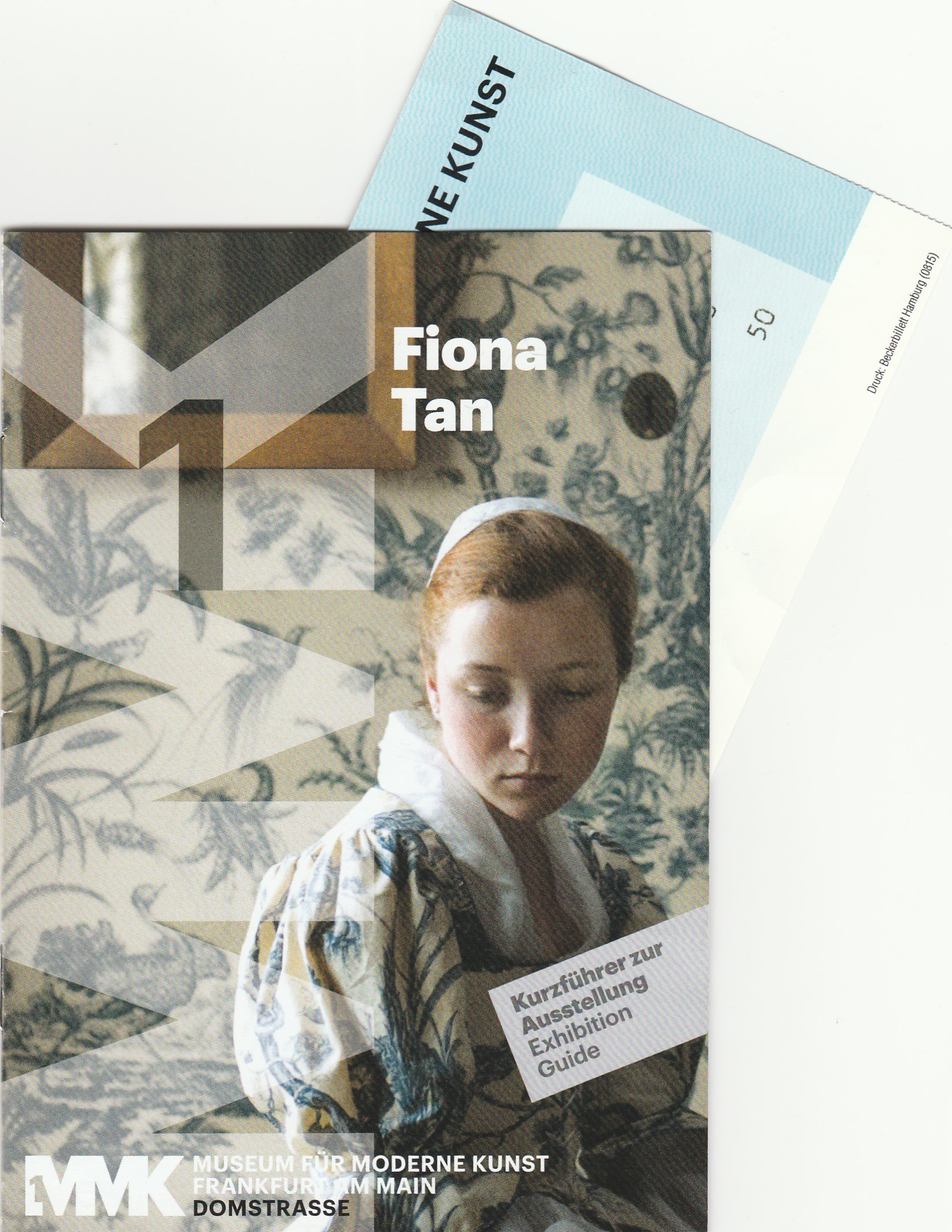
"Geography of Time" was a solo exhibition which made me want to visit the Frankfurt Museum of Modern Art (Museum Moderne Kunst). Fiona Tan was born in Pekanbaru (Indonesia) and lives and works in Amsterdam and Los Angeles. I liked her installations and videos around the topics time, memory and identity. Still somehow my morphology of time is different, and found it hard to connect. Also I strolled through the rest of the museum, which is a quite concise one. Liked some of the photography work shown, but most other things I do not fancy too much.

Fiona Tan's solo exhibition "Geography of Time" (Geographie der Zeit) can be seen in the Frankfurt Museum of Modern Art (MMK) until 18th of January 2017.

Fiona Tan's solo exhibition "Geography of Time" (Geographie der Zeit) can be seen in the Frankfurt Museum of Modern Art (MMK) until 18th of January 2017.

Getting ready for the Robots

Today I went to the branch of the German Postal Savings Bank, called “Postbank” in German. My first bank account was with them. It was opened by my grandparents for me, when I was a child. It came with a little book, in which all my savings were tidily recorded and each booking was sealed with a stamp and signature. I have stayed with the Postbank for nearly 50 years. I paid my driving license from these childhood savings, then I deposited what was left of my slim Army payments there, and this helped me during my first year at University. Once, I was even allowed a little overdraft for a few weeks to purchase my textbooks for the new semester. They somehow did not charge me any interest, and I think it was one of the people in the post office who turned a blind eye on it. Thanks for that. I don’t forget these things.

Now, I will not leave the Postbank, but I went to the branch to say farewell to its people: shook hands, hugged the little fat one who will retire soon, and wished the younger ones all the best for their future. They were never really competent and sometimes they even made me angry. But hey, nobody is perfect. It’s okay. Best wishes.

Now, the robots are coming. Let’s see how perfect they will be. From November my experience at Postbank will look differently. I received a letter, which I nearly regarded as advertisement and wanted to throw it away unseen. But then it turned out that if I don’t change to a pure “online account”, I will be charged a quite handsome fee. No matter how much money I have deposited with them. No matter how good my good credit rating is. And it also does not matter how long I have been banking with them. Soon the robots will take care of my little household transactions, and I will never ever have to go to a Postbank branch again. That’s fine. I am a “tech guy” and I speak their language.

Postamt, Frankfurt Bockenheim. 

Postamt, Frankfurt Bockenheim. 

Already time to leave Tilburg again

My Tilburg visit is already over and I have to say, this time, it was too short due to other travel arrangements and my delayed arrival. Students and colleagues were great and it was a real pleasure and privilege to be here. I am looking forward to come back to campus in 2017 and also to explore the Netherlands again a bit more then. Now it is nearly time to head for Malta with a short stop over in Frankfurt. Still no sign of autumn here, which is very exceptional this year. 

Exploring the land of canals from the waterside.

Exploring the land of canals from the waterside.

Tilburg arrival

Unfortunately, I arrived a week delayed in Tilburg due to my Malaria. And I find the recovery of fitness is going rather slowly. Of course, this is not a complaint, as this kind of Malaria is still a life threatening disease and it seems no surprise that a full recovery is not done in days but weeks. I am visiting Tilburg University and Lecture in the Master of International Management, as I also did last year. It is a very enjoyable environment with bright students, nice colleagues and good infrastructure. It is an amazing late summer this year, while in the same period of 2015 I was taking pictures of a commencing autumn here. Most of Northern Europe is experiencing record temperatures these days. And of course many people see this with pleasure and concern at the same time. 

I am also looking a bit deeper into the economic development of Tilburg, including the recovery from the time after the decline of the textile and leather industry. One of the newest achievement is that Tesla has opened an assembly plant, in the commercial zone. The city revived after depression with services, logistics, food and beverage production. It is experimenting with "unconditional minimum income" for every citizen, no ties attached. And it turned itself, not into an architectural beauty, but a modern and clean habitat, which in many ways appears like it could serve as a model for others and future cities. This fits into a research topic I am going to deepen in 2017 with some projects.

Tesla at Tilburg. After a great test drive of the Model S (photo snapped by Jeroen Kuilman).

Tesla at Tilburg. After a great test drive of the Model S (photo snapped by Jeroen Kuilman).

How to maximize health care provision in small island states

Recently Sandra Buttigieg, Frank Bezzina and I have been starting to analyse the Economics of the Maltese health care system, and asking the question how it can maximize health care provision for its citizens. The task was to find out, how to combine the value chains of the public health care system (namely the health centres and the Mater Dei Hospital in Msida, modelled after the UK's NHS) and those of private clinics, in a way that the overall output and quality of care is at its best and accessible to everybody. As of the different shareholder and stakeholder interests, classical private-public partnerships might not be the best solution. But we found more and more that there are other ways of potential collaboration between the systems. So, we are looking into the promotion of medical tourism to boost up case numbers, increase specialization and make investments into laboratory support and infrastructure feasible. There is also other evidence that the kind of contracts doctors are operating on (private practice allowed or not) have an impact on the failure rates of medical procedures. Lastly, every patient who decides for private sector treatment, saves the public sector provision of capacity. The question is whether this potential public saving could translate into a financial incentive for citizens to pick up private health insurances. 

I am happy that the results of the initial work we did together, have been published in the Health Economics Section of the Frontiers in Public Health. Thanks to Sandra's restless editorial work for the Frontiers, it is free to download here. We will continue on this path, and hope not just to make a contribution to Malta, but also to learn from this model for other small states. If you like to join the discussion, you are very welcome.

Malaria tropica

The most likely infection period for a malaria was before August 15th, while staying in Homabay and at Lake Victoria. On August 25th, I developed a high fever and was advised to approach The Centre of Inner Medicine, Department for Infections, HIV and Tropical Medicine of the Clinic of The Johann-Wolfsgang Goethe Universität in Frankfurt Main (Building 68, 1st floor for reception). The quick test immediately showed a positive result for malaria and the microscopy diagnosed a malaria tropica with a 0.6 % density of Plasmodium falciparum. From there is was only a short way, one floor down, where I spent 5 days in stationary treatment. I am not aware, I had more than three mosquito bites during the potential infection period, as I was extremely careful, using net and extra strong repellent at all time. And all of these three were during daytime (when the anopheles is not active). But I must have missed at least one. 

Treatment was with Riamet at 0, 8, 24, 36, 48 and 60 hours. Additionally, because the white blood cells shot up and there was a secondary infection suspected, I received 5 days of IV antibiotics. Malaria of this kind in a very draining experience. But I was surprised, how fast the symptoms faded and also the plasmodium count dropped. Be prepared for hot and cold sweat, fever way above 40 Celsius, attacks of trembling and hallucinations. To make it short: it's like in the movies. 

Well, I learned that in high risk regions it is better to take the malaria prophylaxis (even der side effects are strong). As my friend Erick said on the evening arriving in Kisumu: "Here you are just one bite away from a malaria". He was right.

Plasmodium falciparum (Copyright under Wikipedia Commons license).

Plasmodium falciparum (Copyright under Wikipedia Commons license).

"The gods must be crazy"

I was offline for a while and just returned from Kenya to Germany. We visited friends, drove from Nairobi to Homabay villages, then to Kisumu, and through Narok for a short visit to Massai Mara. Then returned to Nairobi for an appearance in Strathmore University. The main purpose of the visit was to support and get a closer impression of www.maklweta.org, which has been founded by Dr. Erick Komolo to support girl's education in rural Kenya, specifically in Homabay.

Students and parents engage together at a mentorship day in St. Mary's Kachar Secondary Girl's School.

Students and parents engage together at a mentorship day in St. Mary's Kachar Secondary Girl's School.

This is a very extreme challenge. The region we have been to, has been also chosen by research centres to do field work on diseases and epidemiology. For that you cannot think of a "better" condition: highest HIV penetration in Kenya, very high malaria risk, cholera, diphtheria, typhoid, hepatitis of all kinds, rabies, tetanus. The list is much longer. Even very basic management of these, is rudimentary. Birth rate and teenage pregnancies remain high. So does the number of AIDS orphans. Antiviral medication is available, sometimes not applied properly and in other cases said to increase the spread of HIV, simply because the patients live longer and do not change sexual behaviour. Every village is full of children. Contraception is available, but not consistently applied. Domestic violence and alcohol go hand in hand, as everywhere, but on a presumably very high rates here. There are infrastructure challenges, like transportation and market access. But the lack of money seems more a constraint than a pure root of the problem. There are many things which could improve the situation with no funding at all, by just doing it. I was even joking: "What's a guy digging a well, while 5 drunk Africans are laughing that they found an idiot doing their work? It's a volunteer".

Classroom converted into a dormitory.

Classroom converted into a dormitory.

Erick has chosen to support girl's education first, because they are extremely vulnerabel. But also, they seem more reliable. Cash given into the hands of most guys on the street is likely to end up in a pub, brothel, or some self brewed spirits. If this vicious circle of Homabay can be broken at all, then it has to start from the girls and their education. It needs role models, mentoring and examples of what is possible. Erick himself is such a role model, making his way from a local school to the University of Nairobi and to his Law PhD at the University of Hong Kong, which is where we met first. Now he is practising law in Nairobi, is engaged with academic research and is committed to use his own example to improve his home province with www.maklweta.org. And I think, he has a very good strategy, how to crack this case by bringing a network of people and very targeted funding exactly to the point where it has to be applied. I would be happy if Erick finds soon a larger base of support. If you like to help, please take his organization's website (which is under construction just now) as first point of entry. It will be highly appreciated by the people of Homabay. This is not immediately a "feel good" or "baby hugging" exercise, though. Many of the faces you will see, might find their premature death within the next five years. This is a long haul project, not a low hanging fruit.

Dr. Erick Komolo revisiting the desk of his primary school classroom.

Dr. Erick Komolo revisiting the desk of his primary school classroom.

A left behind textbook in a classroom.

A left behind textbook in a classroom.

La Traviata in Schloss Engers

The open air performance of La Traviata in Schloss Engers on July 31st was really at risk of rain. But we were very lucky, and there were only a few drops, minutes before the the opera started. The set up was in the court yard of the former hunting palace, which is located strait at the Rhine river. It was quite some fun, in the original sense of opera: entertainment, a very nice dinner in the palace, and an audience in a happy mood - nothing snobbish. Sometimes the local church bells rang, or the pilot of a sports plane decided to do an extra round to see what is happening down there. But this only caused amusement on all sides. We stayed in the palace guest house and drove back to Bonn on Monday morning. 

The weather in Bonn then gave us a few days of more or less constant rain and I could have worked efficiently indoors, would I not have been plagued by severe vertigo. I still relate this to the rabies vaccination, of why I received the last shot of a 0, 3, 7 - scheme of Rabipur only 4 days ago. Still, I manage to do some work, plan the coming trip to Kenya, and prepare my lecture material for Strathmore University (Nairobi). It just goes slow, when everything spins around.

Follow up on recovery works in Northern Fiji

Back in April, I posted the donation link on behalf of my friends Lina and Thomas Bauer from Dundee Park (Mission Beach, Queensland, Australia) a request to support their initial recovery work in Lina's home village Savulotu (Ra Province, Viti Levu, Fiji). The village was wiped out by a category 5 tropical cyclone earlier this year. Thanks to those who supported Lina's work. Please now find her file of what has been done so far by clicking here.

Selaginella lepidophylla

Have been traveling through Alsace, Lorraine, Luxembourg, Eifel and Westerwald. Now back to Malta. I brought a few new toys. One of them a Selaginella lepidophylla, a resurrection plant, which I found in Maria Laach Abby (Germany). It cannot store water, and looks like a dead part of a bush. But when water applied, it opens into a star shape flower after a few hours. Then it needs to dry up again and retracts. The process can be repeated many times. I will store mine in the wardrobe first, as it is supposed to repel bugs also. And I will play with it in winter and I am planning to make a time-laps video clip of the opening. It seems that the plant can stay even for years in the dry condition. This is one difference to a similar plant from the Middle East and North Africa, called the "Rose of Jericho", which only lasts one year. Mine comes from the Mexican desert. Obviously, this is a plant which attracts quite a bit of symbolism, and has common names like Flower of Stone, Rose of Jericho, Resurrection Moss, Dinosaur plant, Siempre Viva, Stone Flower, and Doradilla.

Selaginella lepidophylla under dry conditions

Selaginella lepidophylla under dry conditions

Stopover at Hochschule Neu-Ulm

Left the Alps, then, en passant to the North, stopped over at Hochschule of Neu-Ulm. It is a very new University campus in a region, which was former home to the US Army based in West Germany. It was a base for Pershing nuclear missiles, which were supposed to keep us safe during the Cold War. Like many other places, this is one, which was left open after the German reunification in 1989. The withdrawal of the US Army though usually took until the mid 90s, leaving abundant space, a large shift in local economies, and sometimes a phase of unemployment among the civilians providing service to the troops or simply catering into the US community needs. Neu-Ulm managed to overcome this period very well, and the land use (with exception of a protected heritage of a concrete water tower) does not remind us of how it looked like here before. The Hochschule Neu-Ulm is expanding, not just in student numbers and faculty reputation,  but also into a new campus building, which will be completed in 2018.

Long distance views

Time flies in Germany. Have been busy. First in Bonn to help preparing the "B+L Zukunftsforum 2016", which then took place in the BMW World in Munich. It is an event dedicated to the construction material supply industry and where numbers are crunched and approaches and views are explained and discussed. It was my first time to join, and I found it really interesting and at a very high level of expertise. I still finalized my own topic before traveling to Munich, which was to evaluate the impact of the digitalization on the business models and distribution channels of the construction supply industry until 2030.

We spent another day in Munich. In the "Deutsches Museum", besides visiting some artifacts of my childhood memories, I saw the first time in my life Jupiter and Mercury by a glimpse though the telescope of the Eastern Tower Observatory. We also tried Capella in the constellation Auriga. But during daytime, this is not easy. I think, I saw it. But not sure. In the evening we had dinner in the "Zodiac" which is a new venture of my friend roObin Golestan, which he started with his partners from far - as he is living in Beijing. Excellent Pizza and a really nice ambiente. You have to try (click here for more and directions).  

Deutsches Museum, Observatorium im Ostturm.

Deutsches Museum, Observatorium im Ostturm.

Going with the flow in the Isar River (Munich)

Going with the flow in the Isar River (Munich)

Next day we drove to Walchensee to spend the weekend in the Northern Alps. The first the weather was beautiful and we went up to the Herzogstand, enjoying the marvelous views. Sunday then, it was raining. We drove to Garmisch-Patenkirchen, but did not go up to the Zugspitze, as it was within clouds. Lunch break we had in Murnau am Staffelsee and then went back. The rainy day, gave me time to read carefully the news about "Brexit". What an unwise decision. I looked at article 50 of the Lisbon treaty, to understand a bit better what  procedure is likely going to come now. Long term, I guess, England will be completely marginalized, and even maybe even stripped of Scotland and Northern Ireland (maybe Wales). Short term, the currency devaluation may help their exports a bit. But what do they want to export? The Queen, Harry Potter, Burberry raincoats? Really silly. At least it will give us some work to do, to relocate UK companies to Continental Europe. But this is not something, I am going to be very happy about. 

Hannes Lindemann's Klepper Aerius II

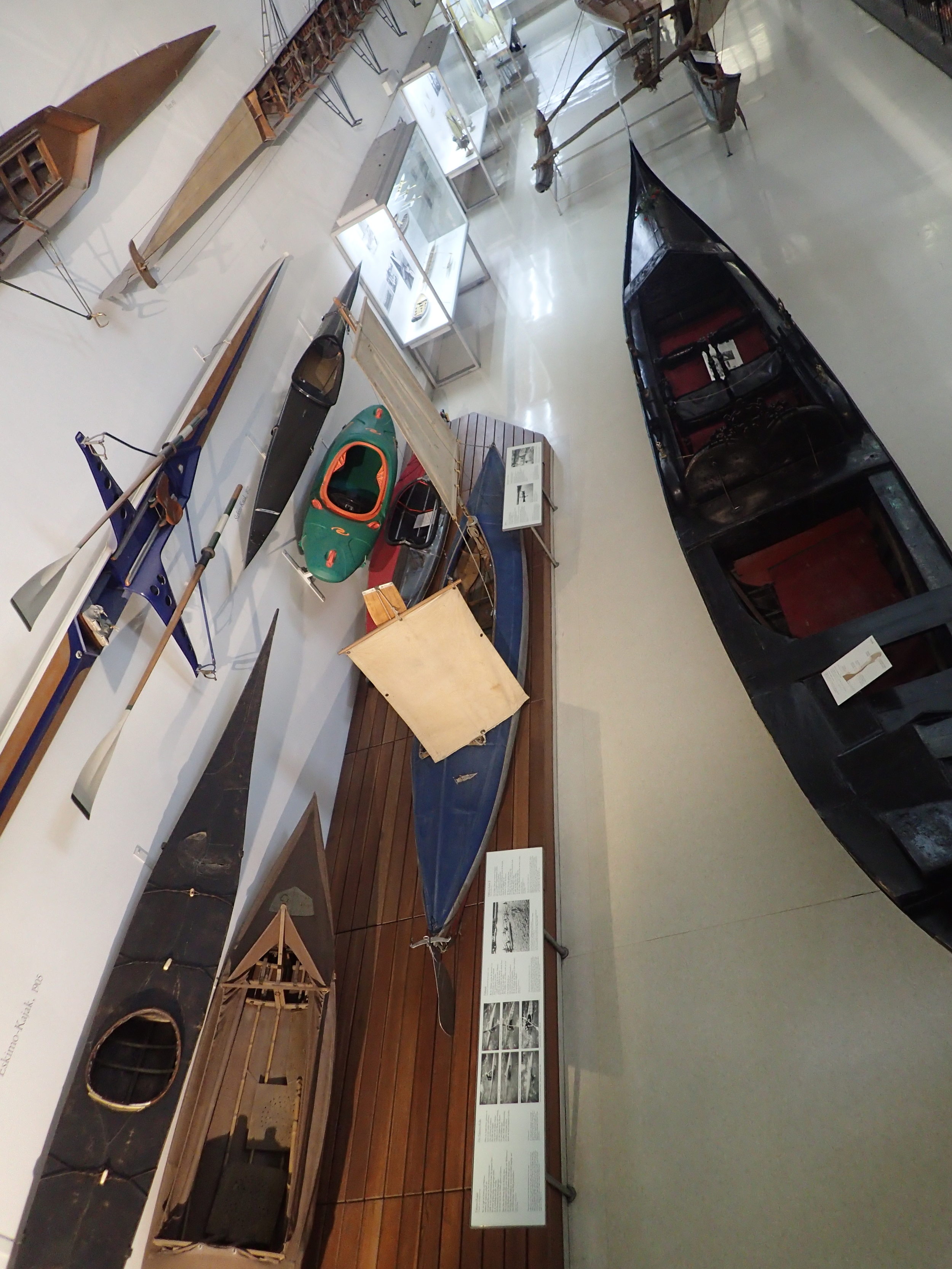
It is not easy to find a point to take a picture of Hannes Lindemann's Klepper Aerius II in which he crossed the Atlantic Ocean in 1957. It is exhibited in the "Deutsches Museum" in Munich, and crowded together with other exhibits. You may want to go to the first floor of the nautical section, to have the best view from the top looking down the atrium. I know the Klepper Aerius from kayaking on the rivers in Germany as a teenager. I am not easy with such claims, but it is designed by a genius. The list of world records is a long one and many of them are still standing. The boat gains a lot of its stability from the air tube around the upper body. The moment this tube dives into water, it pushes the boat back and prevents a deeper dive. Hannes Lindemann (1922-2015) was a medical doctor in Bad Godesberg and a man who liked self experiments. His experiences from the Atlantic crossing are described in "Allein über den Ozean" (Alone at sea). I met him twice in events on autogenic training in Bonn, a field he was very active in. It is a relaxation and body awareness exercise, which is not very popular outside Germany. In principle, it seems to me a form of meditation. I never really actively picked it up, but found it interesting. Today it is most commonly applied for stress relief. I have no real idea, why people have stress, and what it actually means to have it. But good, that a good old explorer's technique helps even people dwelling in a cubical these days. What ever their adventures may be. 

The Klepper Aerius II in which Hannes Lindemann crossed the Atlantic ocean in 1957. Exhibit in the Deutsches Museum (Munich).

The Klepper Aerius II in which Hannes Lindemann crossed the Atlantic ocean in 1957. Exhibit in the Deutsches Museum (Munich).

Rinella Bay after Sunrise

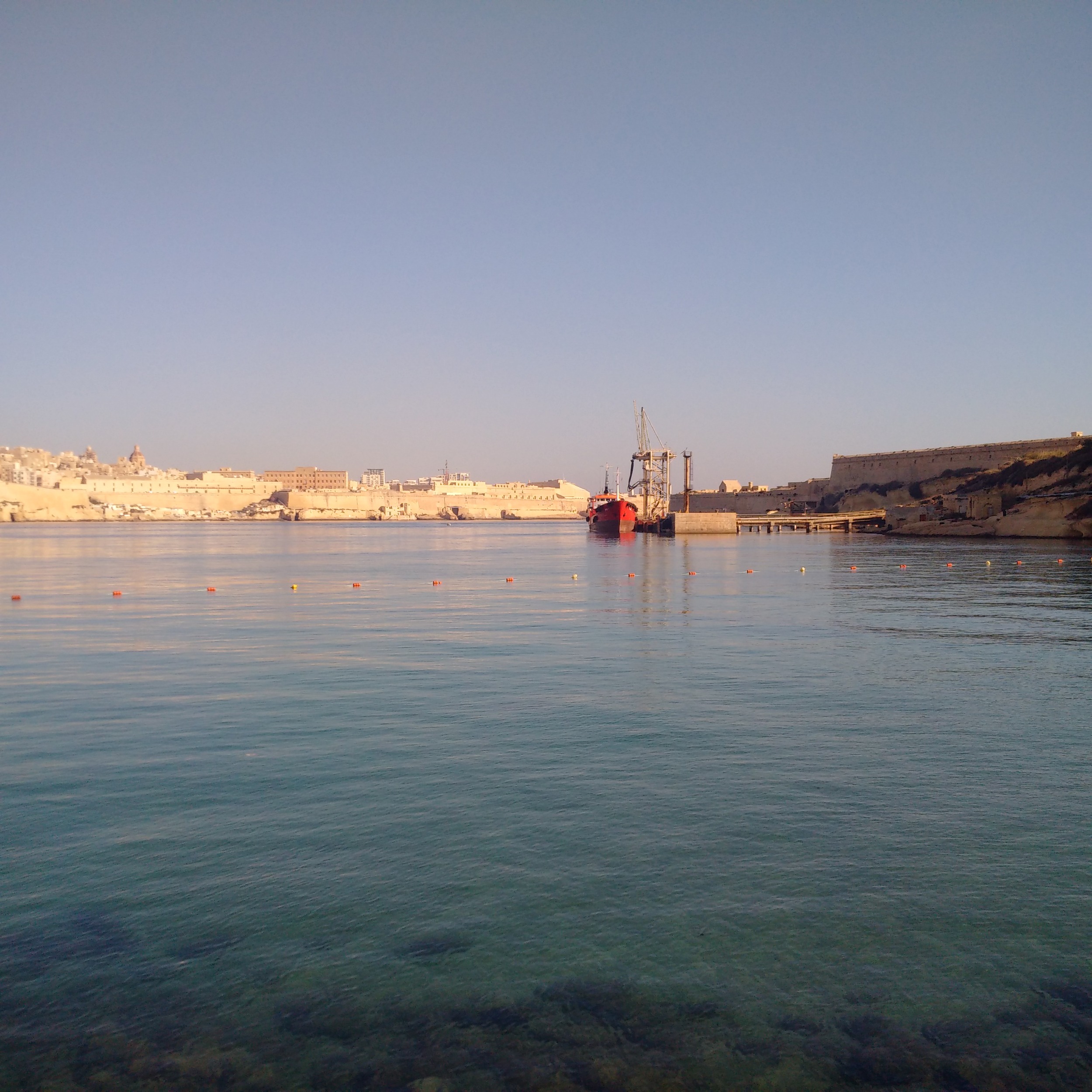
Rinella Bay is one of the few sandy corners in the mainly rocky coastline. It invites for a swim, and is on my morning path. On summer weekends, it is a gathering place for families from Kalkara. Also, beach parties are not unknown. But in the early morning all is quiet again, and the view is clear, over to Valletta.

Rinella Bay (Malta) on an early morning in June 2016

Rinella Bay (Malta) on an early morning in June 2016

Turing Test for Hubots

When Alan Turing developed his test in the 1950s, to measure the extend of machine intelligence and to distinguish between humans and machines, there was still such line of distinction. Since then, not just machines became more human, but also some humans became more like machines. You could even argue that a new class of creatures emerged: a human-machine hybrid. A form of Siri on a biological host system. Let's call them "Hubots". In them, large parts of the Neocortex has been taken over by electronics. Natural sensors, intellectual and social capabilities are heavily reduced. Don't expect a conversation with a Hubot beyond pure functional exchange of data. Hubots are mainly digital: ones and zeros. Any poetry will be a wasted. The best thing is, to talk to them like you talk to an automated call center. They have the intellectual capabilities of an online banking platform.

There is no Turing Test for Hubots. Alan Turing himself, with all respect to his genius, did not anticipate the Hubots coming. But you can use a few indicators which help to distinguish humans from Hubots:

  1. Hubots need computing power and data connection to perform very simple administrative tasks (like looking at their calendar, basic calculus etc.)
  2. They have to google the answer to most questions, because they only keep a very small on site memory.
  3. They prefer electronics also for short distance communication.
  4. They maintain multiple and redundant electronic channels ‎to exchange irrelevant information with other Hubots.
  5. The electronic narrative of what they do is more important than doing it.
  6. They feel "Nomophobia", which is a form of stress symptom when the electronic brain is not available.
  7. They care more how they appear in the electronic world than how they appear at the dinner table.

‎Hubots are not machines. They deserve respect of humans, even they might treat you rather disrespectful. Don't be surprised, when they send you birthday greetings by an e-card or message. They actually mean well. Even it is not clear to me, what "meaning" is for them. You can't educate them. They are rather hard wired. You have to train them. Just a form of "upload" will do. That's something they can cope with. Don't try metaphors. It will cause confusion and a complete system breakdown. Same to humor. Don't tell them a joke. They won't understand. Show them a funny clip on Youtube. They will enjoy that much more. You also can't care for them. You can only feed them. Buy them a data flat rate and they are happy. And there is nothing better than to have happy Hubots.

What the heck is 'Time Management'?

Every idiot can drive around the Nürburgring race course (or any other of these sites). To make it complicated, you have to do it fast. Not every idiot can go to the South Pole, or fly to Mars. It does not matter how fast you do it, as long as you make it at all.

I normally would not even think about 'time management' as anything special. Time is just one of the dimensions we move in.  But today I rejected a very kind invitation to give a lecture on this subject, which I honestly have never really thought about. Somebody must have had the impression that I am doing it very well. Thank you. And there seem to be a lot of people who want to know about it. Puzzles me. I would rather listen to a mountaineer talking about moving in z-direction above sea level (climbing), or a diver doing the opposite below sea level (diving), than to somebody talking about behaving on the time vector. How boring!

You can build a ratio of many things by time. For example speed is distance by time, and power is work by time etcetera. These ratios are often perceived as measures of performance. But when you are in the business of doing complicated things, then the real point is whether you can get something done at all. Ever! How fast? Who cares? In your lifetime, if you are lucky. Sure, sometimes it is good to be first, because of 'Intellectual Property Rights' or fame and other ways to capitalize your findings. But in the end, if somebody else can solve the problem before you, you were not too slow but your problem was not hard enough.

Okay, timing is important. You don't want to go to the South Pole in the stormy season. Time is a useful dimension to synchronise with your environment and the  society. But how could I give a lecture on that, when not even knowing the overall problem to solve? Are we flying to Mars, programming a website, or cooking lunch?

Salt Pans around Fort Rinella

It is a short walk from Kalkara across Rinella Bay, passing the obsolete radio antenna masts. They once served as a relay of the BBC to Libya. Under one of them is a small restaurant, where some taxi drivers have a few beer before work. Turn right, up the hill. Then before reaching Fort Rinella, turn left. There is a chapel and a cemetery. Behind them is my favorite place to watch the sea.

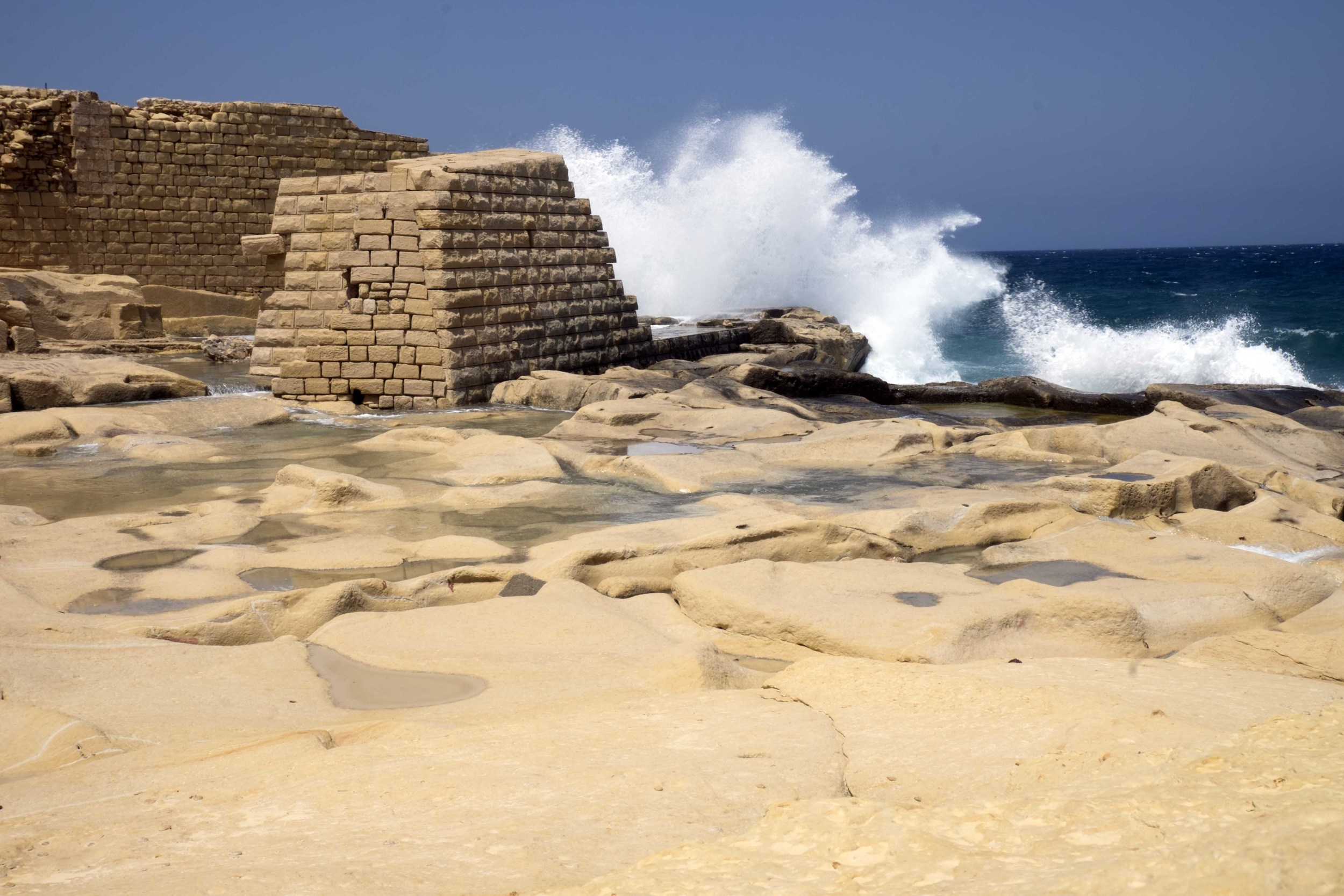
View North from one of the pillboxes at the Eastern coast, North of Fort Rinella.

View North from one of the pillboxes at the Eastern coast, North of Fort Rinella.

From close the salt pans are a very sophisticated terraced system, in which fresh water splashes in on days like this and then the basins are drained to the best level for evaporation of the sea water. What's left on a hot day, is the salt. 

From close the salt pans are a very sophisticated terraced system, in which fresh water splashes in on days like this and then the basins are drained to the best level for evaporation of the sea water. What's left on a hot day, is the salt. 

View on a salt pan behind the ruin of the observation tower.

View on a salt pan behind the ruin of the observation tower.

Julie Zahra and the Trio Lakota

We went to the recital in the Robert Sammut Hall yesterday. It is a venue where they offer frequently nice and short performances of about an hour. It is a nice way to start an evening with friends. So, we did. Julie Zahra sang a mix from Scarlatti, via Mozart, Puccini, Franz Schubert to Richard Strass, and also three pieces by the Maltese composers Joseph Vella. At the piano was Charlene Farrugia. The Trio Lakota played three pieces by Alexey Shor. Back in 2004 Julie Zahra represented Malta in the final of the Grand Prix Eurovision de la Chanson (for some also known as European Song Contest), and as a result was a very known pop singer in Malta and beyond. Given that, I was actually very surprised by her versatility and we really enjoyed the evening.