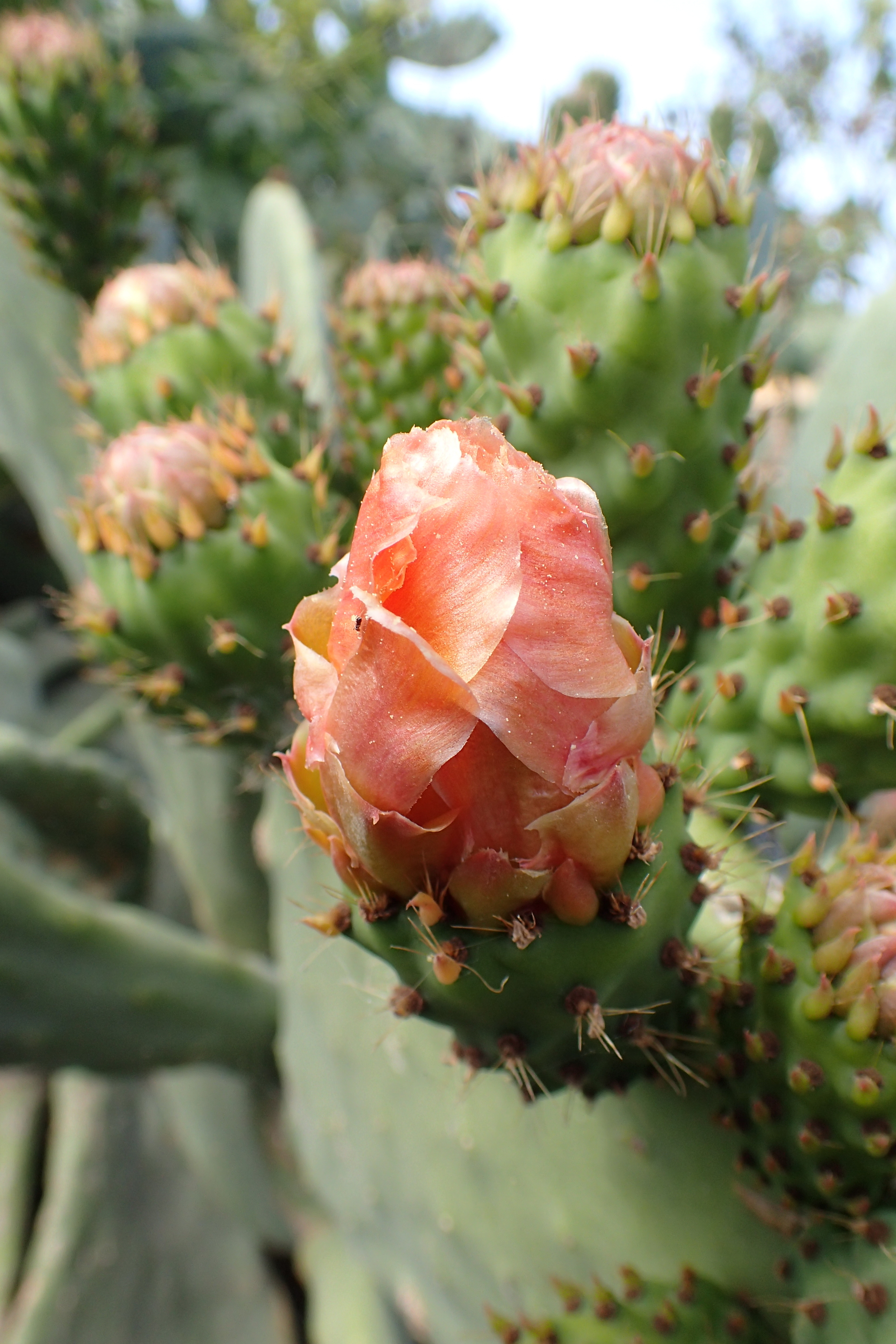
The "Prickly Pear" is not a pear but the fruit of the cactus Opuntia ficus-indica which is very common in the Mediterranean. Its origin is from Mexico though. You can eat it with its stones, and I was told in Morocco by a Berber that it helps when suffering from diarrhea. But I never confirmed that. He also told me that when I get bitten by a scorpion, I have to catch the animal, burn it and scratch the bite with its ashes. This advise also puts the diarrhea treatment into perspective. Back to the Prickly Pear, be aware of the little thorns on the fruit when you pick and peel it. They will stick in your fingers for quite a while, and they will break if you try to remove them. You can also make a jam from the fruit or even distill it to a spirit. Now in Malta, the cactus starts blossoming, which is a very nice sight. I enjoy every flower these days, because soon the island will get very dry and hot.
"The Pen is Mightier Than the Keyboard"
With all the praise of technology (meaning digital media) I was always wondering how students manage to take meaningful notes with a laptop of my blackboard elaborations. I need to draw to think. For mastering the blackboard I specially remember Bruno Fautz at Cologne University, who was able with a box of coloured chalk to develop explanations of complex problems in front of my eyes. He was an artist, even in a science classroom. You would get it, and never forget it. And then there were the ones shooting satellites into space, and the most sophisticated media were USENET and the blackboard again. That's why I personally never fully understood the purpose of Microsoft Powerpoint in a University, if it is not about delivering work to a client or at a conference.
Today I came across an interesting paper of Pam Mueller and Daniel Oppenheimer from Princeton and UCLA: "The Pen is Mightier Than the Keyboard. Advantages of Longhand Over Laptop Note Taking", published in Psychological Science, 2014. I was not too surprised about their findings. They did not look into quite commonly known issues of distraction and multitasking and their negative effects on attention, understanding and memorization. Their research suggests that, even distraction is eliminated, laptop note taking is still "impairing learning because their use results in a shallower processing". It seems that laptop note takers are occupied with a transcription mainly and not with making the thought their own.
I noticed for myself, that if I transcribe and type during a meeting, my memory and understanding of the event and topics discussed is much worse. In some cases, I really had to re-read my notes to remember what I was typing. And aside cognitive effectiveness it is of course very rude manners to sit in a meeting or lecture and type on a laptop. So, I decided already early that this is not for me. When you look allocation of brainpower to different body parts you will find that hands and the visual cortex are so dominant, that I thought it might not be a good idea to cripple them by a keyboard and a display. Tablet computer note taking, I tried a few times. But it always felt like being an ape who writes with a banana in the sand. Perhaps that will be changing with the next generation of tablets and laptop hybrids. Let's see. I still enjoy my pencils and sketchbooks most.

Photo taken at the exhibition Thinking Tools at the Museum für angewandte Kunst Frankfurt (Museum of Applied Art), which was sponsored my the pen manufacturer and brand Lamy (27th of November, 2016)
Amphibious
Please don't think that I would be looking into the neighbor's garage to benchmark my ego. Not at all. I always found cars rather boring, and my neighbors also. But this thing here caught my attention: a two seat Hovercraft. Of course, you remember larger versions your former Channel crossings, military landings or search and rescue operations. On top of that, I recall that I once wanted to build one as a teenager. I already had the drawings, but not the budget. And as "Business Angels" (neither did I know what business was, nor angles) have not been invented back then, I opted for building a remote controlled submarine, for which I used utrasound instead of radio waves. This is by far superior for deeper dives.
But now the Hovercraft is back on my mind. Regulators don't know exactly what to do with it in terms of "driving" licence and such stuff. And when you search for drawings, you will first run into toy models. But the electric car was also a toy, before it became a life size possibility. So, I will keep looking. Specially in Malta, where the roads are bumby and congested, taking a seamless shortcut over water could be an interesting choice. The picture below shows a Hovercraft, made by "Universal Hovercraft" (click here to see what it can do or here). It is a Renegade IQ distributed by www.nauticalventures.com. And now I am off to the engineering library. Let's see what they have.

A Renegade IQ Hovercraft in the marina in Cospicua.
Fujifilm RAW and Windows 10
Just installed a new desktop computer running on Windows 10. Unfortunately, the Codec does not support by default the RAW formats of my Fuji cameras, namely Fujifilm X-E2 and Fujifilm Finepix X-100. For example, it does not generate thumbnails in the file explorer. There might be different ways to fix this, but I decided to install a copy of the Codec of www.fastpictureviewer.com. I already ran this on my Windows 10 laptop and it works perfectly with my camera formats. The current Codec is version 3.8.0.96 (click here to download and purchase a license code). Fully recommend it.
Organ Recital in the Robert Samut Hall, Floriana
The Robert Samut Hall (35°53′30.8″N 14°30′11.8″E) is the former Floriana Wesleyan Methodist Church, which has been handed over to the Maltese Government and converted into a cultural centre in 1975. It is a neo-gothic architecture, built by the architect, illustrator and poet Thomas Mullet Ellis, which has been originally completed in 1883 and was the first building in Malta using electric lighting. It is equipped with manual pneumatic Willis organs from 1950. We went to a recital, but it was unfortunately performed on an electronic instrument. Roberta Bugeja played a mix of pieces from Buxtehude, Guilmant, Messiaen, Bossi and Gigout.

Willis organ in the Robert Samut Hall. Not well maintained though.
New neighborhood in Kalkara
I have been offline for a while, and I did (!) read Die Enden der Welt since then. It is a little better than Deutschlandreise, has its nice stretches, but is not impressive. Fair enough, it is written by a young Roger Willemsen, who has not seen much. It is more that for him travel is a medium to explore himself, than to explore the place he actually goes to. For those who don't know him, perhaps it is fair to say that he is more an Alain de Botton than a Paul Theroux. I have a third book of Roger Willemsen which I brought from Germany. It is Momentum. But given the first two I read, I will put it aside for a while.
The reason for not posting was that we moved into our new home in Kalkara, and that there was quite a bit of construction work to be finished off, utilities to be installed, and Internet came very much at the end. The result is very nice, and I enjoy to start the days with the view over the harbor and Valletta on its other side. I can already put aside the power drill for some times, but there are still a lot of things waiting to be screwed up. We also explore our neighborhood. It is a very nice little community, and just a ferry trip from Valletta. A swimming bay in the crystal clear Mediterranean water is just a short walk away. Now it just needs to become a little warmer and the swimming season will begin.

Sea view on a walk in the neighborhood.
"Deutschlandreise"
As I am on a trip to Germany, I took Roger Willemsen's "Deutschlandreise" as my pocket book of the week. Roger Willemsen, passed away recently and far too early. This is why the publisher, reprinting in a haste, forgot to print the title on some of the book covers and fixed this in the post production with a sticker (I bought them as paper versions for reasons of nostalgia and even overcame my aversion to contemporary bookshops for half an hour). I really like the author for his interviews and other productions. But "Deutschlandreise" I found shallow. Perhaps it is, because his observations in Germany were too common for me. Two more of his books I have in my bag though: "Die Enden der Welt" (The ends of the world) and "Momentum".
Particulate Matter Island Models
Islands often served for the development of models. May it be a social one, like Thomas Morus (More) Utopia, or about agricultural economy in Heinrich von Thuenen's The Isolated State (1826). Islands allow simplification and neglecting outside influences, like in a laboratory. Not a surprise, that analyzing air pollution data in Malta is leading to similar thoughts. Even though Libeccio winds sometimes carry particulate matter from the Sahara over, still we are in the middle of the Mediterranean Sea and the masters of our little island environment. So, let's see what the world can learn from us.
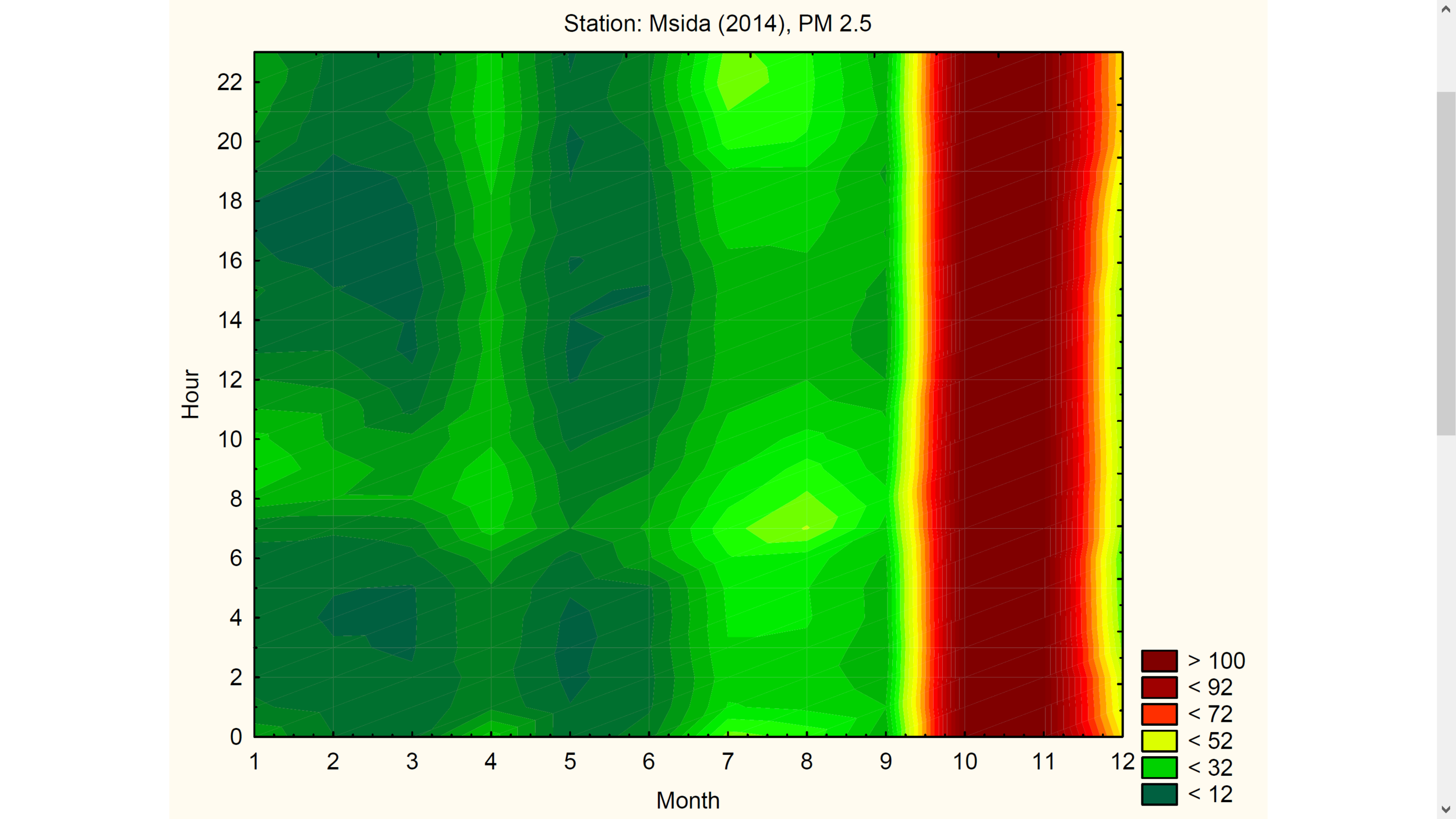
Rush hours and seasons in an urban location.
Tuition fees need to be paid in Homa Bay, Western Kenya
During my last few years of visiting Hong Kong, I became friends with a young lawyer completing his PhD successfully at The University of Hong Kong. We shared not just ideas, but also the same accommodation at the Robert Black College. Dr. Erick Komolo (PhD) now returned to Nairobi, where he joined the faculty of the University. But Erick told me about another mission which is very close to his heart: supporting the education of girls in his home village. For that he has founded maklweta.org chaired by Mrs Margaret Greene. Erick is now raising funds to finance tuition fees for school education for girls in Homa Bay, Western Kenya. Feibai and I support his work financially to cover fees for the coming year. Please visit http://www.maklweta.org/ and consider a donation or any other form of support. Any amount will be a big contribution.
(Sittin' On) The Dock of the Bay
It is an old Otis Redding song of which I was reminded by a friend, and it now hums in my mind every time I sit on "my" morning bench: "(Sittin' On) The Dock of the Bay", recorded in 1967. After so much travel in the last year, it is nice to have favorite little landmarks again. And this is really one where I like "Sittin' in the mornin' sun".
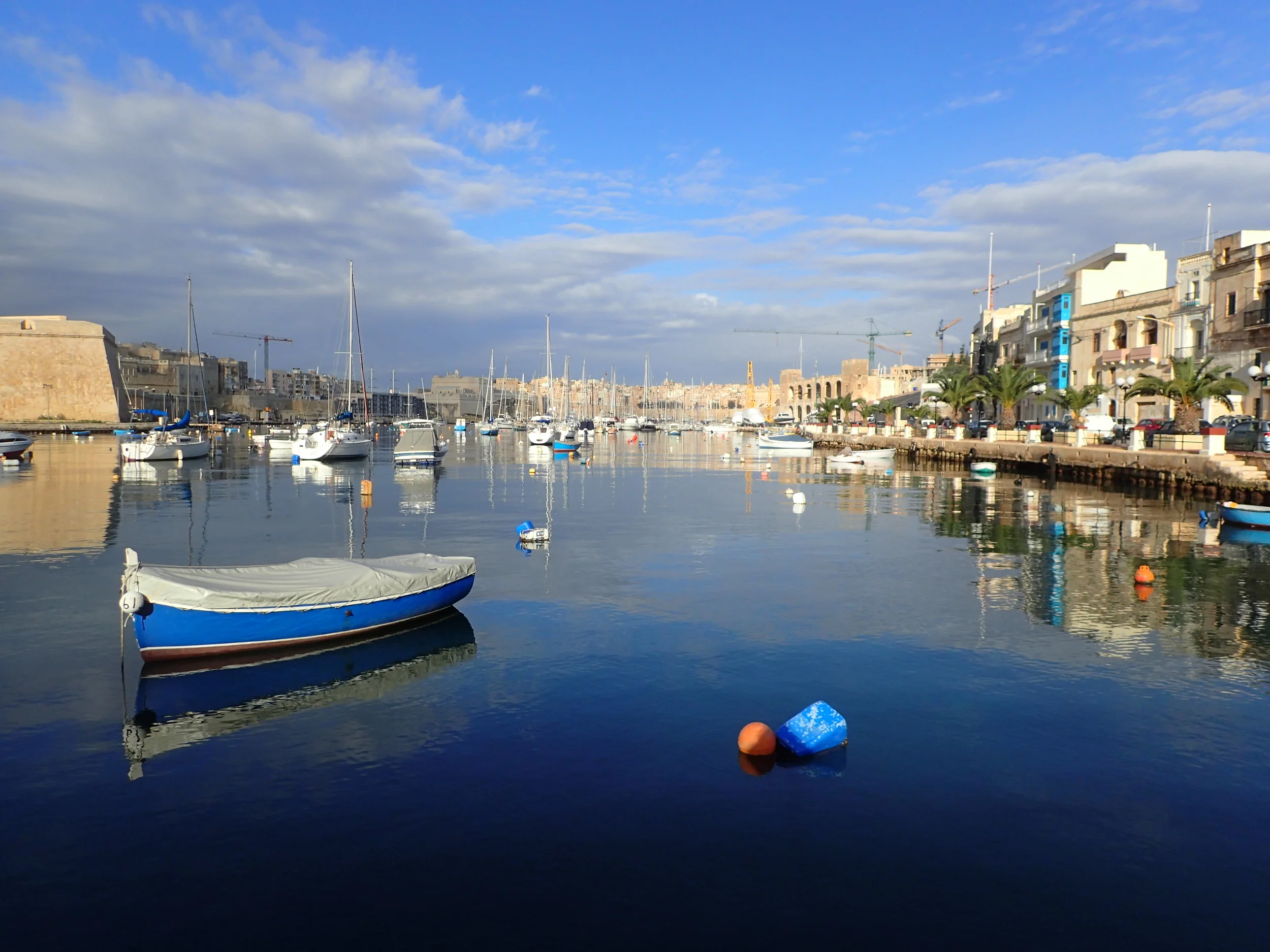
Morning view in Kalkara.
Dunning-Kruger Effect
Charles Bukowski for example, put it like this: “The problem with the world is that the intelligent people are full of doubts, while the stupid ones are full of confidence”. I guess, everybody who deals with confident people, will have an opinion on this phenomena. Only in 1999, the researchers David Dunning and Justin Kruger have described this scientifically in Kruger, J & Dunning, D. (1999), Unskilled and unaware of it: How difficulties in recognizing one's own incompetence lead to inflated self-assessments. Journal of Personality and Social Psychology, Vol 77(6), Dec 1999, 1121-1134.
Basically, they describe two effects, and let me put it a bit into my own words which are scientifically highly inaccurate. First, if you are dumb, then you are also likely to be too dumb to know that you are dumb and you end up confident about your abilities. Just think of the stereotypes of a teenager, a stock trader, a management consultant, or an American Republican President. You know what I mean. In this case there is also no reflection on abilities, which protects the subject from hitting the wall. They tend to go for a "Blitzkrieg" and have the advantage of surprise, without thinking through what made them successful in the first stage and how to sustain it. But not all dumb people are like this. Most of them are lovely, and many of them very lazy and end up as a couch potato. Laziness might be even a protection mechanism for them, without which stupidity would have already extinct itself. The majority might be hanging happily and confident with their smart phone or tablet computer over a pizza box. Only those who are dumb and ambitious become a nuisance. The smartest way to deal with that, is not to compete, but to give them the chance for self destruction in a controlled environment through further encouragement.
The second phenomena described by the Dunning-Kruger Effect, is that very talented and capable people might have the tendency to underestimate their abilities. And while the dumb and confident ones might be a nuisance or economic waste, the talented which do not dare to try something are a real tragedy. They could bring mankind forward, but they don't. Sometimes, they choose not to try, because they compare themselves with the real geniuses of all times. And of course, while they don't try, they don't develop their talent. And the less they do that, the bigger becomes the barrier in their mind. To break this cycle, it does not help to introduce new KPIs (Key Performance Indicators) or talk about ROI (Return on Invest) and "benchmarking". Smart people know very well, what really good means and they also need no target setting by some technocrates. They need just the opposite: encouragement not to think about it.
New neighbourhood in Ħaż-Żabbar
Ħaż-Żabbar was the summer residence of the knights of Malta, and received city status under the 71st Grand Master of the Order of St. John of Jerusalem, the German Ferdinand von Hompesch zu Bolheim. He was unfortunate enough to only allow Napoleon's ships to enter the port in groups of two, which was received as a provocation and responded by the French invasion of Malta. But only shortly after, when the secular French started to loot the churches, Ħaż-Żabbar became a base for Maltese insurgence fighting the French. During the subsequent British era the region was heavily fortified and also the batteries close to our future home, in Fort Rinella, were installed.
We moved here for a month, and do only have a 20 minutes walk to our construction site in Kalkara. Also it allows us to experience Maltese village life and a so-called "house of character" for some time. The point of my new year resolution, not to eat food which comes with a bar code, is rather easy to fulfill here. There are vegetable and fruit traders which sell their goods from their trucks, small groceries, and driving bakeries. That's it. No rubbish sold. No barcode needed. Actually, I do have to confess sometimes not to care diligently about the bar code. For example, I was eating some chocolate recently which was also traded in more modern forms of retail. But as long as nobody beeps at you at the cash out, I am flexible. Our impression, that Maltese are very friendly people, is even topped here. They are wonderful. You ask for something at the vegetable truck and all the shopping women around will give advise, recommend modifications in the cooking style, and clarify the superiority of local Maltese products over anything else. And they are right.
The house we are living in, is an about 300 year old limestone building. In summer, it must be a perfect adaption to the hot season. In winter, which we are now in, it is damp and cold. These buildings need huge efforts to renovate. Well done, it is worth it. But when we were looking at real estate in Malta, I was hesitating to go that direction. And now I am sure, this was the right decision. It would need a complete rebuilt behind the outer walls, and that needs a much larger commitment than we have time at the moment.
Nine minus two
We are moving to Ħaż-Żabbar, after having stayed at the University Residence in Lija for 6 weeks. Just changing neighborhoods. No big travel this time, no big packing, no jet lag, no friends to say good bye. We just change quarters. After over a year on the road this is a nearly forgotten experience. Only one little friend we have to leave behind: the small cat at the olive trees. We won't see each other again. But it can't see me anyways, as it is blind. They have nine lives I was told, out of which this one already used two of the quota. First, it nearly died after birth, and was found by a kind person lying in the rain. He brought it into the restaurant he was working, and took care until it recovered. Second, we found it with a bad eye infection, and starving as it could not find food. Two days more and that would have been it. So we fed it antibiotics for 10 days, and brought is back to weight. Now its fine, but blind. Seven more lives to go. Sounds a lot, but I would use them more slowly. Not easy when you are blind, I guess. And remember: cars don't count the normal way. They can easily take them all in one go. They have two ways to kill: pollution (works slowly) and impact (very fast). So, watch out! - just joking. Good luck!

Farewell lunch at the sunny place under the olive tree.
Xemxija Heritage Trail
A small Maltese heritage trail can be found in easy walking distance North-West of St. Pauls Bay. It is a nice little walk starting along a track marking an ancient Roman road, which is dated back to the first century AD. It is called Xemxija Trail after the Maltese word for light and leads into a reforestation of olive, pine and wattle trees which have been planed in the last century to help restoring the water table. It is amazing that these trees survive here. But they do quite well. At the entrance of the trail you find Roman Aperies, which are cave like structures in which bees were kept for production of honey. You also will see Punic tombs, grain storages in the limestone and Neolithic burial sites after crossing the pilgrimage way used to Mellieha. Some of the caves have been used recently and you still see the fire places. Many of them have served as shelter during World War II. Some of the abandoned farm houses have been rebuilt with original stones. This is a very nice and easy walk, for those who are not into the amusements of St. Pauls Bay. And it is easy to reach with public transport (if anything is easy to reach by public transport in Malta).
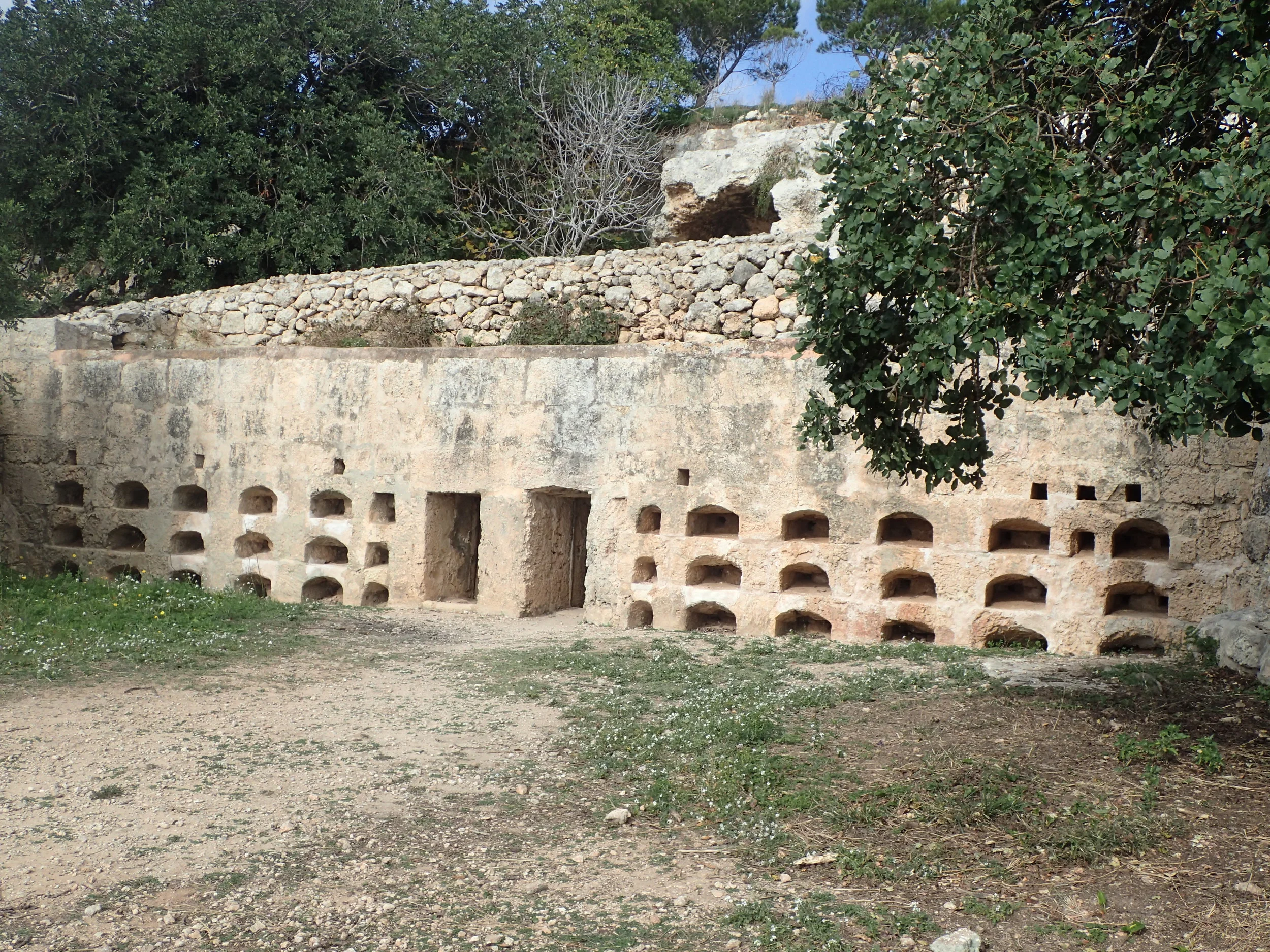
Roman Aperies, in which bees were kept and honey produced.

Pilgrimage way to Mellieha.
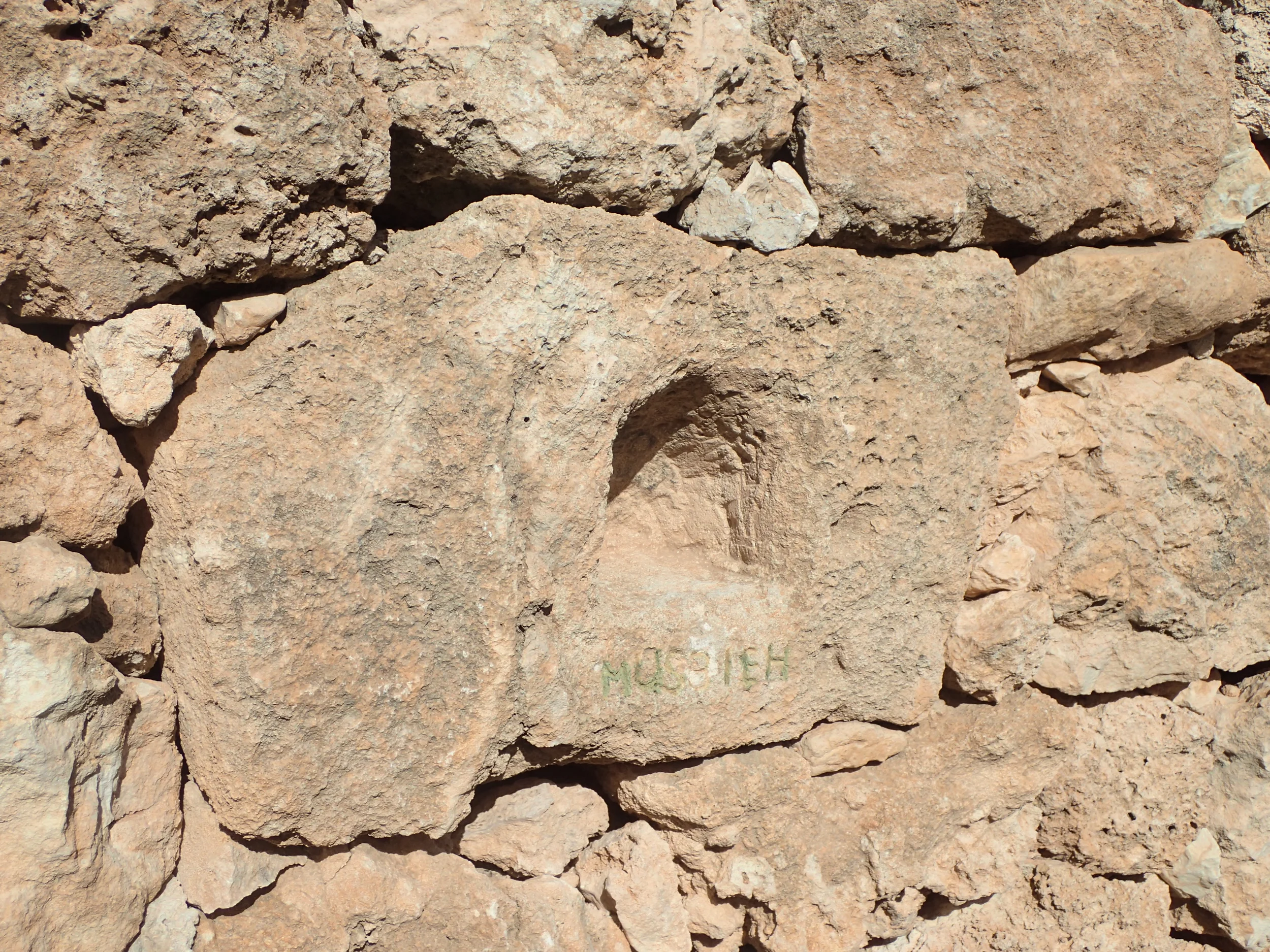
Lamp or candle holder in an abandoned farm house.

Burial site

Thousand year old carob tree.
My 50th birthday - Second letter to a small friend
Dear small Marcus,
two years ago I wrote to you the first time. You did not know me back then, but I knew you. Now you remember? Today is my 50th birthday and for you - in many years from now - it will be your 50th birthday too. Exactly the same one. I am the person, you are going to become.
Last time I wrote, I was still working and living in China. But since then, a lot changed. We have been leaving China in November 2014 and travelled the world for a year. You might ask yourself who are "we"? It is my wife Feibai and I. I thought, you might be interested who she is. But for you, she is not even born yet. She will be in Jiangsu Province (China) in 1984. Now you are just entering primary school yet and it is 1972. Yes, she is very smart and beautiful. But I leave that to find out for yourself. Okay?
We left China, because we have been there for really long, and it was time to see something new. Also, it is very polluted and we were afraid this could effect our health. So, I hit the road as a visiting professor traveling to many Universities around the world. It was very exciting. But I don't want to spoil it for you, by telling too much. You will see. Now we are in Malta, and decided to stay a little longer. It is a very nice place, and after a year of travel it is also time not to live out of the suitcase. In your time, Malta has just turned independent, and Dom Mintoff was just negotiating a deal with the United Kingdom and Libya to build a future for this small county. Your primary school does not have a library, and there is no Internet. But do have a look where ever you find information. It is interesting. I know, it does not make sense to ask your teachers, because they are complete idiots. Sorry to tell you that, when you just enter school and have 13 years to go. University will be great though. As of Malta, let me tell you so much for now: It does not look to good in 1972, but don't worry, it will be fine.

You with a "Schultuete" on your first day in school (1972).
I found a few of your books, TV series and toys, and attach some pictures to this letter below. Today, people at your age already have small calculators which have digital radio connections to a network of larger calculators. Digital is a way of electronic signaling by binary number which are represented as 1 and 0, meaning there either is an electric current or non. That sounds very impractical to you, I know. It will need semiconductors first and they need to become small and integrated on a so-called chip. Then it makes sense and becomes feasible. Today these chips are very cheap. And you know why? Because there are many people who want these small radio computers. They call them smart phones, or tablet computers. Now you might think that these people must be very intelligent. But it is just the opposite. Sometimes children of your age are already zombies, only staring on their devices. It is a bit like Television (TV) back in your time. You can use it for interesting things, or you can turn yourself into a "retard". Now, don't despise the zombies too early. We need them, because they are many, and their money drives the whole technical development in this area. For example, soon you will see colored TV Sets. Great! But for people like us nobody would build anything like this, because we are only a small niche market. So, the zombies are making the bulk demand, and only because of them you will see many great innovations in the future. It is like an "Idiot based R&D Crowd Financing". You will know what I mean in a few decades. The electronic calculators are now so powerful, that they can process picture and even movies. They are called "computers", and they are really fun machines. In some ways they are even better than people. That's why some boring jobs are disappearing. That's great, because then people can do more interesting things. But we have to ask ourselves, how we distribute the income made by these machines. That's going to be as interesting as the machines themselves.
So, there are exciting times to come, and you will see the whole development. In 1982 you will send your first electronic message, by saving it on a magnetic disk from one calculator and reading it from the same shared device from another computer. Today they call it electronic mail (or short "e-mail"). There is even a radio operated electronic telegram service which is called "Short Message Service" (or short "SMS"). This became so popular that after 160 years of service the Indian Telegraph Services close down in 2013. And even SMS is already challenged by WhatsApp and WeChat.
I know you will be disappointed, we did not fly to Mars yet. Part of the reason is, because we got distracted by all the small stuff we have now. And flying to Mars does not have "Idiot based R&D Crowd Financing". But we are working on it. Just takes a bit longer.
Let me close my letter with best wishes from Malta. Have a good time (I know you will).
Even we will never meet, let's stay in touch,
Marcus
Clear view on Sliema
Sliema is located North of Valletta and today we passed it for some shopping to be done and to take the ferry over to Valletta. Sliema is a new development, with a lot of apartments under construction. It has a completely different character from other places in Malta, and reminds me a bit of Theran. To distract myself from my shopping duties, I took a shot of it over the water. Luckily the shops were closed.

Sliema over the clear harbor waters
New Year Walk starting in Mdina
Yesterday we started our New Year Walk very early in the medieval city of Mdina. The town was just waking up. We walked though the network of narrow streets where the eye can only reach as far as an arrow, and from the top of the Southern city wall we overlooked the whole South of Malta in the morning sun. Then we walked through Rabat, where people were already gathering early and wishing each other a Happy New Year, some of them on the way to church, others meeting at the Labor Party's Café. Further we took the trails through little vineyards, fields and citrus gardens to the coast and had our first lunch in 2016 on the Dingli Cliffs. At January 1st the Maltese Busses suspend service from noon to 3 p.m., so that the drivers can have lunch with their families. A nice tradition (you just have to know about it). So we walked back to Rabat and arrived just in time to take the bus to St. Anton Gardens. The New Year has started with a refreshing > 20 km walk. And that's a very good beginning.

Corner in Mdina on the first of January 2016

Lunch time on the Dingli Cliff
Farewell 2015
Now 2015 is nearly over. We left at the Malta University Library, as it closed at noon and everybody was starting to get ready to welcome 2016. Then strolled down Msida for Thai lunch and Spanish beer at Good Thaimes, and thereafter walked along the harbor and the Royal Yacht Club. Malta showed itself in dramatic light and dark clouds today. We took a last glimpse over the water and then said farewell to 2015. Happy New Year to all of you!

The marina between Valletta, Msida and Sliema.
After a year of world travel
Friends ask me to write a book on it, and I think I could. But there are other books which wait to be written. And I also think the current bibliography of travel books is already quite oversupplied. Traveling the world for a year is these days the standard repertoire of many young lives, and it is a “must” before enrolling into a University. How often did I meet young lads from all over the world in Australia working in a bar or harvesting a field? But I am going to be 50 years old next week. So, I was not going on that kind of trip.
Also, I was not hating my job, looking for a meaning, wanting to make a change, give back to society (blabla). Neither was I stressed, suffering burn out, getting gluten intolerant or anything which could fill a self-help book. I was also not bored. But I was starting to experience a shift in my interest. So, I spent three months training up my successor, and left my office. Shortly after, my wife Feibai and I left our home in Beijing and embarked on our journey.
Let me not summarize what we did during that journey, because it is already covered in this blog. But do let me share some things, and write a few lines for those who are considering an extensive journey themselves. It goes without saying that Feibai made different experiences, and if you read Chinese, you may have a look at her website: www.ispywithmylittleeye.info
I started preparation about a year before actually leaving, as I had twelve months notice period with my employer. Perhaps it is interesting to know, that I did not have much of finding period before I resigned. But as I had the experience of a sabbatical before, I was very sure that I will figure it out and manage. So, I regard my resignation from Volkswagen as the first milestone and the start of the process itself. I told myself: if I can’t figure it out in a year, then I would be an idiot anyways and also useless for the company. Some colleagues told me, that there are smarter ways to leave and negotiate a more “golden handshake”. First of all, that’s not my style. And secondly some of them are still negotiating while I read of them in the Financial Times and hear from their lawyers.
Today I would say, starting planning a year before is too much. The reason is, that you have to work with other people’s schedules. And they simply don’t plan that long ahead. In my case, I wanted to spend my time in the academic community of different Universities around the world. And before they have made their plans for the academic year, there is not much concrete you can plan together. For the academic engagements, it was of course very useful that I have been able to split my time between corporate and academic activities since 2005. It would be impossible to start this from a “cold call”. So, if you will, I have laid the foundation for our journey already during a period of a decade before.
I remember one evening at our home in Beijing in 2014 with our dear friends rObin Golestan, Curtis Schmitt and Felix Sommerville-Latte. Beside dinner, the question was: where would you go if the world is a village? This was a great starting point, with the character of a brain storming. But the world is not a village and we narrowed it down very quickly. To travel the whole world, one year is not long enough. A good pace is, to stay a month in a place. Two weeks is the absolute minimum. Otherwise you are just packing and traveling again and never arrive. I found that a week is a very human time unit to think in: arriving a week, staying two and leaving one week, makes a month already.
The idea to do it all on one “Around the World Ticket” looked as a tempting budget option, but was not feasible, mainly because Feibai holds a passport of The People’s Republic of China. Visa and residency rules make it virtually impossible for her to travel the world in one go. And on the way, I also figured out that it would be very hard for me (holding a German passport) to do so. It is not just that you get the right of adobe in a country or territory. But it becomes quickly a very complicated mosaic of visa types, work permits, insurances, taxation rules and residence permits. Most of them are results of national legislation, bi- and multilateral agreements, protection of local employees, national interests in skilled workforce, protection of intellectual property and more and more unfortunately also national security. It is a mess. And the information on it is not clear either. Try the Internet? Great thing to book tickets and accommodation. But for most things beyond that, it is overrated.
We did not really need to fix a travel budget. But still I decided to follow our cash flow in an Excel sheet. After we left from China to our starting position in Germany in December 2014, we were unlucky enough to find our inventory which was shipped from Beijng, was destroyed by sea water. This was a bit of a shock. The insurance settled our claim with a bulk sum and we decided to add this to our travel budget for 2015. Quite often we heard the comment, that we must be “very rich” that we can afford a year of travel. Luckily we prefer a traveling style which is modest and we do not like staying in hotels. This is why on the cost side of a year of travel, it adds up to the equivalent of the purchase of a Volkswagen Golf GTI. Not sure, whether all these deciding for that car are “very rich”. It is just a different choice made.
There are quite a few changes you have to make during the transition from an automotive manager to a traveling scholar. Power corrupts. As a small preparation exercise: why don’t you pick up your secretary’s office phone for an afternoon and pretend to be her holiday substitute? Yes, that’s all the “rubbish” she is dealing with. Soon you will do all this yourself. You will feel surrounded by idiots. You may want to “fire them all”, but you can’t. People might not even pick up the phone when you call them, they will not respond, they will come late. Students will play with their phones and computers while you talk to them. You will think, they do not give a shit who you are. But that’s not true. That’s just who you are. And that’s how they are. Live with it.
Finally, because I want to keep the initial promise not to write a book: what happens after the travel? Will you start splitting your days again in 15-minute time slots again go back to “meetings”. No, but now I do the things we actually like doing myself and don’t delegate the fun part to somebody else. And we both have a full project list for 2016. It will be a year with more reflection and less exploration. There are a lot of things to write up, except the book on the travel of ourselves. We keep that until we retire. And I guess, if so, it will only make a chapter in something else.
Again, if you like to browse through more of what we have seen during 2015 and beyond, have a look at the entries of www.marcusschuetz.org or www.ispywithmylittleeye.info. And then when you really want to do a journey like this yourselves (and not just talk about it), then you are welcome to get in touch for any practical advice.
Blind little friend
In the Malta University Residence we also live together with a bunch of cats. They have quite a good life here. But about a week ago, I noticed that one of the kittens was starving and looked like about to die within a few days. It has severely infected eyes and could not find food any more. Looked like what is called a cat flue, which is a virus infection of Feline Herpes Virus-1 (FHV-1), or Feline Calicivirus (FCV), and often comes with bad secondary bacterial infections or toxoplasmosis. There was no way to touch the little guy and bring it to a vet without getting it fight for its life. So all I could do, is to feed it and get the immune system back to shape. As it can't see the food, anything which smells strongly works well, for example sardines. Today it looked relatively fine again, enjoying the sunshine. So I now try additionally to cope with the bacterial part of the problem and smashed an Amoxicillin tablet, which is for human use down to about 2kg / 80kg bodyweight ratio (about 1/40th of the human dose, as I can measure this with my bare eyes). Did not do it earlier, because it might cause a diarrhea, which is not a good idea on a starving animal. Let's see.
