The most beautiful dairy in the world never had an elevator pitch

Somehow I suddenly got overrun by startups, entrepreneurs, innovators, people who think out of the box. They are creative and challenge the status quo. Some of them even have a University degree in innovation and creativity. Further, they are disorganised, unprofessional, talk too much, and they are a complete waste of time. And as they are mostly looking for funding, they are very likely also to be a complete waste of money. Can't they just start a company like everybody else? What's all this noise for? It's like the world became a giant TED-Talk. This would fit well the fact that US politics became a reality show. 

It all reminds me very much of standing in the Taschenbergpalais in the 1990s and people talking me dizzy about "tech". It was a venture capital conference. Then came a man in a black shirt to me and said: "I have the most beautiful dairy in the world". I was surprised: "What are you talking about?". "Milk, cheese, anything with milk or related to dairy products ... and it's beautiful. The most beautiful shop in the world", he replied. "Do you take me there?", I asked. "Yes", and so we went straight away, leaving all that would later become the first internet bubble behind, and had a glass of Champaign or two, cheese, olives, and homemade bread.
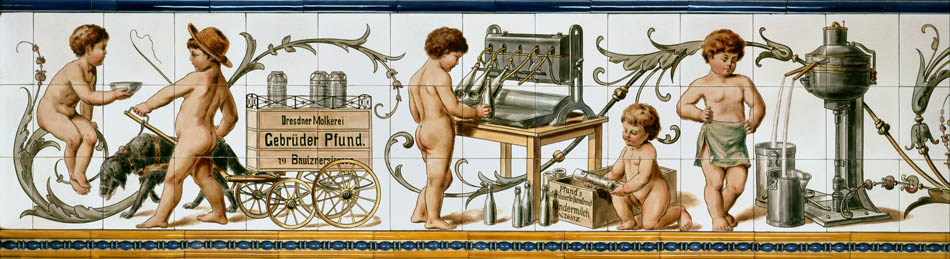
A tile of the most beautiful dairy in the world (courtesy of Gebrüder Pfund Molkerei)

A tile of the most beautiful dairy in the world (courtesy of Gebrüder Pfund Molkerei)

When I am in Dresden, I always go to The most beautiful dairy in the world. It is the only company, which is still around. All the Internet thing passed, but people still eat cheese. The shop is a landmark of the city, has wonderfully restored Meissen tiles, and absolutely great food. And you know, there was never an "elevator pitch". 

"Das, was bleibt" in Port 25, Mannheim (Germany)

We are the only ones who have seen "Die grosse Chance" by Dieter M. Gräf and Nina Zlonicky in both: Beijing and Mannheim (Germany). In Mannheim, it is a group exhibition joined with Marvin Hüttermann and Irina Ruppert at Port 25 Raum für Gegenwartskunst. The exhibition will last until March 5th and circles around material remains of loved ones after they died. It creates a bridge between the environment they lived in and what it becomes when they are gone. Dieter re-published his book from Beijing in German with an appendix of the Beijing setup in The Three Shadows in Caochangdi, in the North-Eastern outskirts of Beijing.

Sascha Weidner - Was übrig bleibt (What remains)

Sascha passed away on the 9th of April, 2015, aged 40. We last met a year earlier to his final day in Beijing, during his residency in the Three Shadows in Chaochangdi. The Fotografie Forum Frankfurt shows some of what remains: his photos. The exhibition will be still on until January 29th. As Sascha has put it before: "The perfect moment has to vanish. Otherwise we would just stay". Sascha was a romantic traveller with a camera.

1001 photos by Sascha Weidner.

1001 photos by Sascha Weidner.

Mount Etna and Taormina

The closest neighbor to the Maltese Islands is Sicily. In 2015 we spent a few weeks in Palermo and Elizabeth Briel's Artist's and Writer's Studio in Cianciana. We then also explored the South and Agrigento, but skipped the island's East and Mount Etna. This is why I took the ferry connecting Valletta and Pozzallo on Friday 13th to spend a prolonged weekend in Taormina. There is superstition around this day, but I assume that the outbound trip has been moved to the middle of the night, and the return sailing has been canceled has been due to bad weather, and this not connected to a number, but is a result of the seasonal meteorological constellations. I made it back with a flight from Catania. 

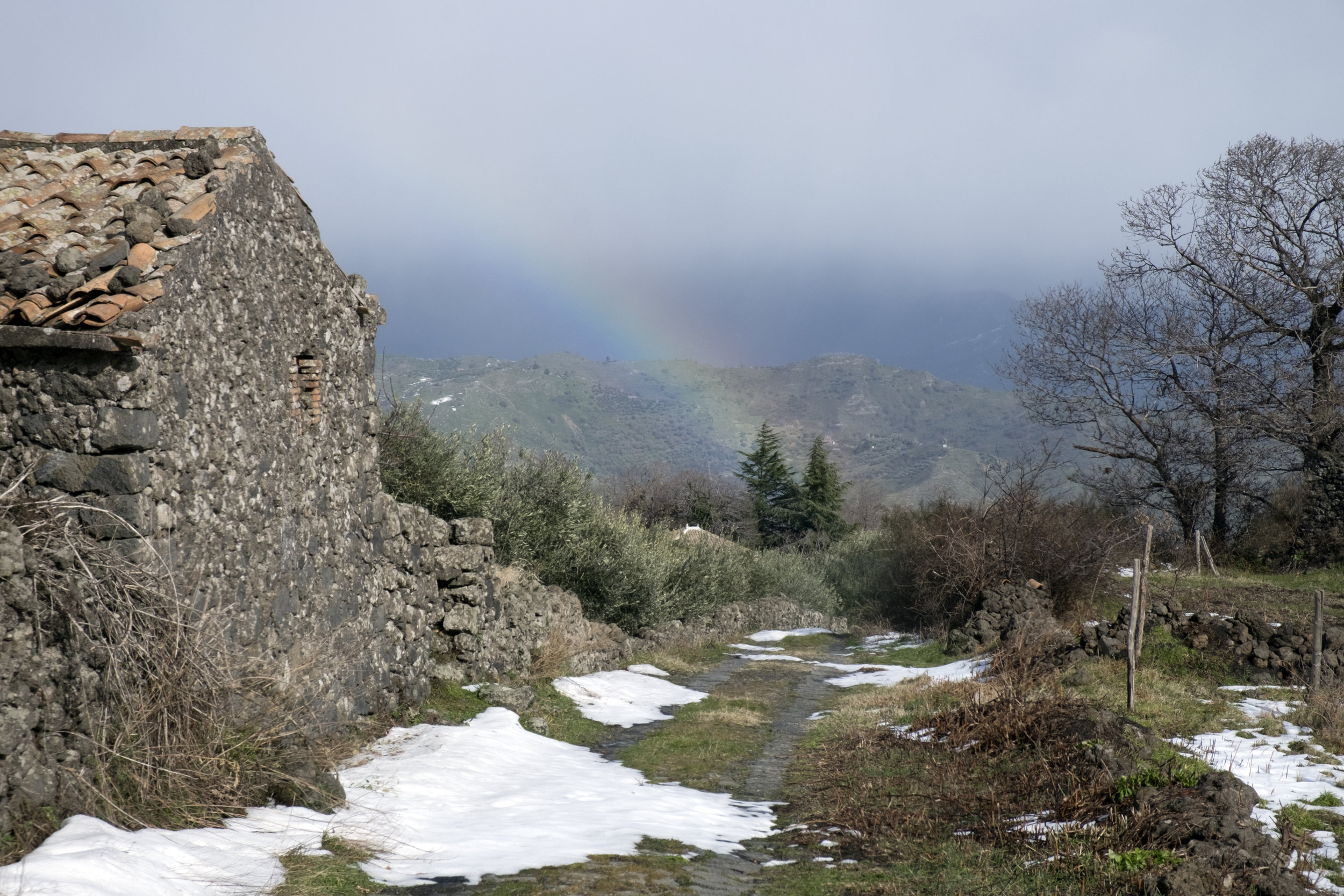
Hiking trail at the North-East Etna.

Hiking trail at the North-East Etna.

I had only postcard impressions of Mount Etna, but was amazed when I stood in front of it. The 3300 meters make it as impressive as Mount Fuji. I could not reach the crater and the Vulcanological Observatory, as of heavy snow and storm. I even had to assist a few Land Rover Defenders to be pulled out. It was not the car which brought them into this, but some points where the drivers put coolness before competence. 

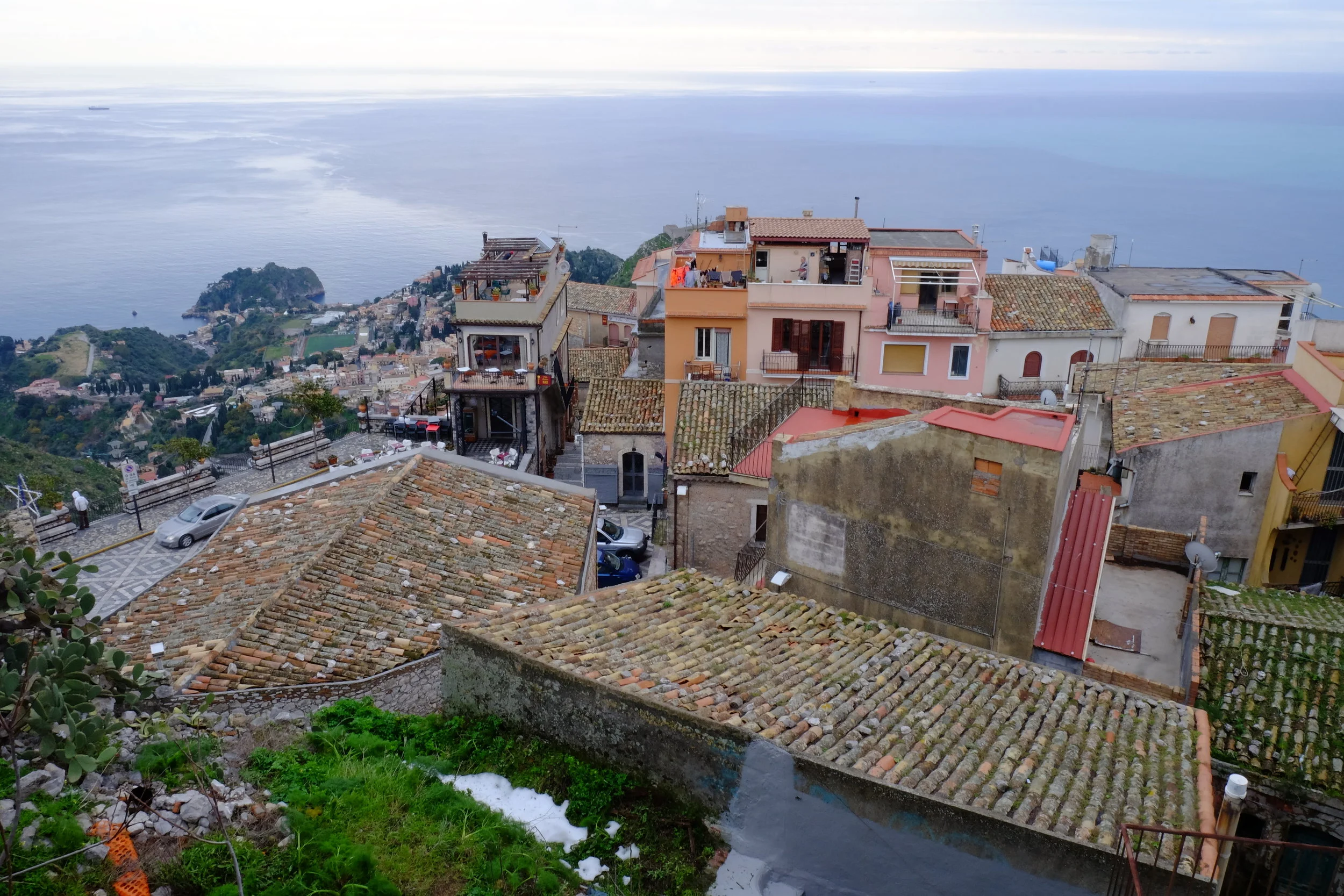
Taormina seen from the mountain side.

Taormina seen from the mountain side.

Also Taormina and Castelmola are very nice, not just because of their location between the sea and the volcano, but also the towns themselves. It was clearly off season now, but I can imagine how popular this must be from spring to autumn. I will for sure return, and then also take a hike to the crater. 

Castelmonte on January 15th

Castelmonte on January 15th

Landscape of volcanic ashes, approaching the higher regions of Mount Etna.

Landscape of volcanic ashes, approaching the higher regions of Mount Etna.

Mount Etna seen from Taormina in the early morning of January 16th. For many other days the summit was in clouds.

Mount Etna seen from Taormina in the early morning of January 16th. For many other days the summit was in clouds.

Gallic Music for Cello & Piano

If you google "Gallic Music", you might end up with "Gaelic Music", which is about the Scottish equivalent of German humpapa music (better though). This is how the google algorithm, by following the masses, can put you on the wrong track. Of course you don't google anyways but you ixquick, if you don't want somebody advertising you the wrong music for the rest of you life.

When I bought myself a ticket to the Teatru Manoel for yesterday's performance of "Gallic Music for Cello & Piano", I just wanted to have something to ambulate to, between campus and home. Had no expectation. Then, it was great! Of course, I knew it would be Gallic (not Gaelic) and turned out to be an homage to La belle Epoque, in an extremely good interpretation. The cellist was Sebestian Hurtaud, a young man with a special style of expression with his instrument, and at the piano was Bruno Canino, who was of amazing lightness and you could feel the twinkle in the eye of a master who has "seen it all". It was also my first visit to the Teatru Manoel, built in 1731 by Antonio Manoel de Vilhena, Grand Master of the Knights of Malta. It is a wonderful wonderful place. 

I was thinking of how to illustrate this post graphically, and lacking an own photo, I took a painting of Giovanni Boldini in the spirit of La Belle Epoque, portraying the perhaps first "Supermodel" in history: Cleo de Merode. 

Giovanni Boldini (1901): Cleo de Merode. Perhaps the first "Supermodel" in history (Copyright creative commons)

Giovanni Boldini (1901): Cleo de Merode. Perhaps the first "Supermodel" in history (Copyright creative commons)

Random Salt Pans

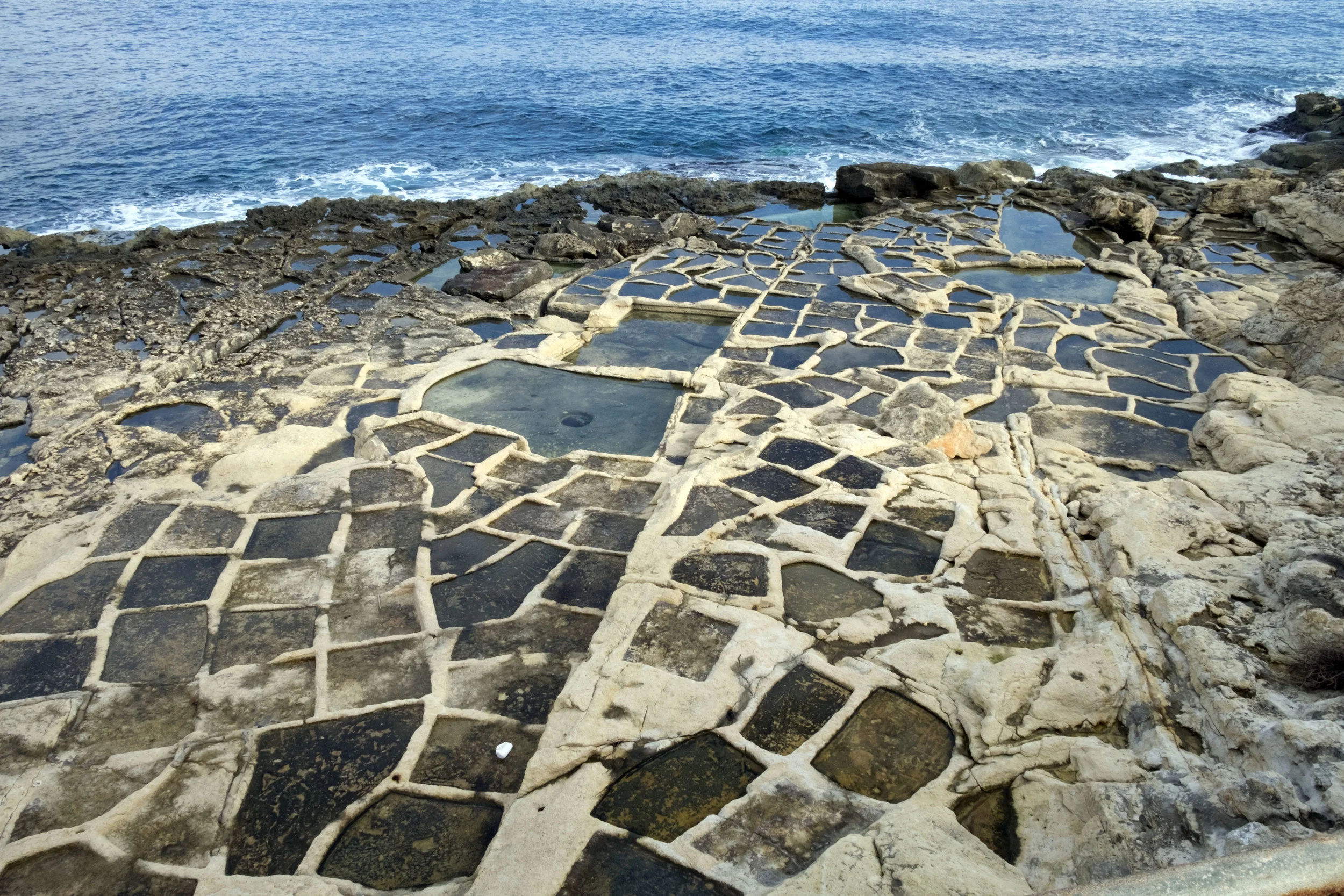
Along the coast of Malta, you often find stone pans carved into the rock, from the time of former salt production - some of them up to 350 years old. The Mediterranean has with > 38 ppt a very high salinity, given high evaporation, low rainfall and being except the Gibraltar strait cut off from the Atlantic. But I guess, the main reason why they exist is not the salt content of the sea water, but the need for Maltese to take any business opportunity and no other significant resources on the island. The salt pans pictured below, are no special ones, but just a structure you find walking South of Fort Rinella - here taken on the New Year Walk 2017. Of course, now is not "salt season", but in the hot summers.

Salt pans South of Fort Rinella (Malta)

Salt pans South of Fort Rinella (Malta)

Dov H. Levin's Dataset on U.S. and UDSSR/Russian electoral interventions 1946 - 2000

Since I can remember, manipulated elections, orchestration of military coups, foreign support of political parties, funding of terrorism, political infiltration by means of NGOs ... that's where the U.S. is the usual suspect; if not more. This is why the current self-victimization of parts of the U.S. political world, that Russian hackers would have manipulated the U.S. election, is quite amusing to me. So "the Russians" did it? Okay. 

It is not easy to casually read on the topic of foreign electoral interfierance: too many conspiracy theorists and also bad journalism are in the public domain. This is why I was happy to find publications by Dov H. Levin which are related to his doctoral dissertation at UCLA, Department of Political Sciences, titled "George Washington Must Go": The Causes and Effects of Great Power Electoral Interventions and his research interest in "The causes and effects of partisan electoral interventions; Interventions (general); Regional war and peace; Nationalism, Ethnicity and conflict; Terrorism" now as a a Post Doctoral Fellow in the Institute for Politics and Strategy at Carnegie-Mellon University. He is in the process of publishing his datasets on his website (http://www.dovhlevin.com/datasets) and wrote an interesting non-academic article in the Washington Post (published September 7th, long before the current diplomatic fallout between the U.S. and Russia): Sure, the U.S. and Russia often meddle in foreign elections. Does it matter? He predicted that in this case a manipulation would not be effective because 1) it is covert, 2) foreign electoral interventions in the U.S. are historically ineffective or even counterproductive and 3) the hacking was partly exposed. In other settings a foreign interference may modify election results up to 3 %. 

"Management theory is becoming a compendium of dead ideas"

This week's Economist gives a compelling comment to the guru business in management, by drawing the parallel to the reformation of the Catholic Church. Obviously management education also gets its part of criticism. No surprise. But to be fair, the "theories" quoted here, and those often taught, are not theories. Or does anybody seriously believes in Porter's Five Forces? Or thinks that SWOT-Analysis is an analysis? Or Blue Ocean Strategy is a strategy? The "World is Flat"? Big Data? Not even to talk about the mantras of people like Jack Welch and newly also the Donald Trumps? Leadership! The Art of the Deal? Think Big and Kick Ass. Come on! That's just story telling. Nobody with a brain takes this serious. It is just picking a few handy things out and putting them into a framework, or developing an ideology around them. Like "competitive theory", which already mutated into an ideology long ago. Or "entrepreneurship" which is a cult. It is just meant to sell a few ideas to a boarder audience. Nothing serious. Just a reality show. Not reality. Think of it like of Santa Claus. Nice story, specially at this time of the year. That's it. The rest is just a different costume: one is red, the other one gray or navy blue.

But there is a lot of serious work done to understand the mechanisms of businesses and markets better. It is just not done by Santa Claus in a suit. People work on this and do come to meaningful conclusions. And then there is the "academic research" which is often used as a synonym for "useless". My observation is, that this is because often academics in this field, choose research questions which give them a quick paper in a journal with a high "impact factor". We know the game, right? We know what "impact" this impact factor has. 

But this does not mean to abolish the scientific method, common sense, evidence, math. What I always found interesting is that in the practice of natural sciences, we try to strip down complexity to bare fundamental principles. By contrast, "management theory" tries to cover up weak fundamentals by a big narrative body. 

I was often thinking, why these guys don't go deeper. From the few I have met, I have an impression: because they can't. Not smart enough. The second reason, maybe that they are not really interested. They are happy with some fame, and then they start to believe in themselves. Reform needed, or to put it in church terms: Reformation. But again, it is more who we listen to, than what to believe in.

Starting the Christmas baking season

We have an excellent little bakery in the village, named "David's Bakery for Maltese and Fancy Bread". So there is no wish unfulfilled. But today, I wanted to test the Panasonic NN-DF383B as an oven by baking a bread. Think of it as the MiG-35 or F/A-18E Super Hornet of the kitchen: multi-role, high tech, compact. Exactly what a German-Chinese household needs! Once the needed capabilities were found in the manual, it was just about getting ingredients and a recipe. 

Obviously Italian wheat flour, Type Double Zero.

Obviously Italian wheat flour, Type Double Zero.

For an easy bread baking recipe, I asked my sister and it goes as follows:

  1. Dissolve 1 table spoon of dry yeast, a bit of salt and sugar in 1/4 litre of water. Add 500 grams of flour and make a dough. I added a hand full of walnuts, as I had spare ones from my muesli production.

  2. Let the dough grow one hour in a warm place.

  3. Bake it 45 minutes at 180 degree Celsius. Pardon me for quoting metric units, but perhaps like this it is safer that it does not turn into anything like "English bread".

Finished. Is good. Added 15 minutes to the baking time. If you knock on the bread and it sounds "knock knock knock" then it needs more baking, until it sounds "bumm bumm bumm". Hope that is clear. No? Try.

Simple bread baked in a Panasonic NN-DF383B.

Simple bread baked in a Panasonic NN-DF383B.

Mixed mode ferry commute from Kalkara to the University of Malta (Msida)

On my quest to find nice ways of commuting, I just explored this one from Kalkara to the University in Msida. It includes on the way a coffee at the Cafe Cordina in the morning, or in the evenings a glass of wine in the Baccara Gardens, overlooking the Grand Harbour from the Saluting Battery. This makes every commute a small adventure, and the journey goes as follows:

  • 10 min or 40 min past the hour, leave Kalkara and walk through the Birgu Ditch which is the West part of the Fortifications of Birgu. Should the gate be locked in the early morning, follow the road (equal walking time, just less spectacular).

  • Full or half of the hour, take the ferry from the Cospicua Pier and cross the Grand Harbour to the Valletta Waterfront Pier (takes 15 minutes)

  • Cross Valletta by foot, 30 minutes are enough to include the above mentioned coffee on the way. You may take the lift up for EUR 1,50 (the way down is free).

  • 15 min and 45 min past the hour, take the ferry to Sliema. You will land at "The Strand". Cross the road and you will see a bicycle renting station operated by Nextbike Malta. Download and install the application and register your account beforehand.

  • Cycle from the Sliema Nextbike Station about 5 minutes to the Station of the University Sports Complex. The bike rental under 30 minutes is free (as of December 2016). Lock and return your bike and cross the underpass up the hill and you are on the Campus of the University of Malta. A campus map can be downloaded here.

The commute takes you 85 minutes. You can easily turn around the schedule for the way back, by using the ferry schedule leavelets, which you may download here. Here you can also see the limits of the ferry schedule in the morning and at night. Not the shortest way, but a nice one.

After 15 minutes walk, exiting the Birgu Ditch

After 15 minutes walk, exiting the Birgu Ditch

Less than 5 minutes more walk: The ferry between Cospicua (the Three Cities) and Valletta Waterfront leaves every full and half hour and takes 15 minutes to Valletta. 

Less than 5 minutes more walk: The ferry between Cospicua (the Three Cities) and Valletta Waterfront leaves every full and half hour and takes 15 minutes to Valletta. 

The way to work, passing more interesting vehicles than cars.

The way to work, passing more interesting vehicles than cars.

Nextbike station in Sliema, opposite the ferry pier.

Nextbike station in Sliema, opposite the ferry pier.

The campus of The University of Malta on a winter day.

The campus of The University of Malta on a winter day.

Hiding in the bushes

Malta has hot summers. Having a bit of shade is good then. Now is winter and we are around 20 Degrees Celsius during daytime. Beside a small herb and vegetable garden, it is good to start growing something bushy which gives some cover in the hot season. There is a sunny and a shady place to think about. I like Bougainvillea, since my time in the South China Sea and it goes together with an orange tree in the sun. Both I planted in terracotta amphores. That needs a bit more water than the modern containers. But I will manage with an irrigation computer, also for the time I am travelling. Also I started two wine plans, and let's see later this year how that goes. 

For the shady side of the house Hedera Algeriensis is a species of the evergreen ivy which is named by its habitat: the North African coast and the Algerian mountains. It is an invasive species, which drops air roots. That's why I will keep away from the walls. Once the roots connect a wall, you have to burn them off. It seems to be extremely robust though. 

Hedera algeriensis

Hedera algeriensis

Sittin' on The Dock Of The (Rinella) Bay again - finally

I am back. My bays of choice to "sit on" are Kalkara Harbour and Rinella Bay, both just down the hill from home. It is Sunday, and so I am "sittin' on", in the best sense of Otis Redding (click here to listen), "... watching the tide role away ... wastin' time". No change. Still the old beauty of Valletta in the backdrop. I have been traveling for months around the planet and I even had to catch a mouse at home, when I came back. Killed it with a tuna can. One shot. Then made a Pizza Tonno (tuna pizza). Was okay. I don't like canned food, and I think it was a very old preserve. Good it served dual purpose. Felt like Odysseus returning to Ithaca. Just no bow and arrow, but tuna. And "Penelope" still in Frankfurt taking exams.

Rinella Bay on the 4th of December, 2016

Rinella Bay on the 4th of December, 2016

Christmas Calendar Countdown

Today marks the 4th Sunday before Christmas, which we call First Advent. As we celebrate in Germany December 24th as 'Holy Night' (slightly different from the Anglo-American tradition of Boxing day in the 25th), today the first of 24 little doors of the Christmas calendar is opened. Behind all of them is a little picture, and in some cases even chocolate. Also, the first of 4 candles is lit.

Surprise, surprise: A drummer behind door 1 of 24.

Surprise, surprise: A drummer behind door 1 of 24.

Tilburg Student Feedback deposited by an Expedition of MBA students of The University of Hong Kong at N22°11'16'', E114°7'38''

Dear Students of the International Business Master Programme of Tilburg University - as promised, I deposited the access to further feedbacks and some little goodies for your discovery and pick on your Hong Kong field trip in 2017. I was kindly accompanied by a fearless group of MBA students from The University of Hong Kong, who send their greetings. You find the feedback under the base rock of the overhanging boulder structure at N22°11'16'', E114°7'38''. Climb Mount Stenhouse, on Lamma Island, an island in the South China Sea. It is a two hours climb to the summit. From there, cut yourself through the bushes and jungle for about an hour heading SSW. Take a GPS which is independent from your phone (for safety navigation and communication have to be separate and redundant systems - you will be able to connect to overlapping networks of the People's Republic of China, even you are not on their territory). Before you climb under the rock, step on it hard a few times to scare away snakes (noise does not help, they can't hear you). The island has been a Japanese venomous snake antidote laboratory in World War II, and they mostly escaped. That's why you find Cobras and even Banded Kraits here. Take a machete. We are not looking for Pokemons here. What else? Yes, looking forward to hear whether you got up there. And as always: have a nice day.

Me, depositing the feedback for Tilburg University on the 13th of November, 2016 (Photo credit: a student from this year's HKUMBA Class - don't know who - tell me).

Me, depositing the feedback for Tilburg University on the 13th of November, 2016 (Photo credit: a student from this year's HKUMBA Class - don't know who - tell me).

The group of MBA Students of The University of Hong Kong, who joined me up there on November 13th. They all made it back safely, even tough a bit scratched. That's just what happens when you leave the comfort zone: it's uncomfortable. They had a gre…

The group of MBA Students of The University of Hong Kong, who joined me up there on November 13th. They all made it back safely, even tough a bit scratched. That's just what happens when you leave the comfort zone: it's uncomfortable. They had a great spirit.

Nearly back, still (mostly) smiling. Well done. See you in the Financial Times in 5 years. If not, I wasted my time. 

Nearly back, still (mostly) smiling. Well done. See you in the Financial Times in 5 years. If not, I wasted my time. 

My Eleventh year of Hong Kong

I am again leaving Hong Kong at the end of my latest stay. Now it is the 11th year, since the territory was my home and later my destination. The tree I planted five years ago in the jungle of Lamma Island has been succeeding in its struggle for light, and is now ranking above the bushes. The Bauhinia tree in front of my guesthouse window, at the steep edge of the campus of the University of Hong Kong, blossomed late this year. It was an exceptionally warm autumn. I will continue returning to Asia in the years to come. Even though Hong Kong is in a self induced decay, it is still a base in the centre of an exciting world region. And when it further merges in the Pearl River Delta region, it will also have a broader role to play again. Never the less, the size of such, is not why I am here anyway. 

Bauhinia tree outside my window.

Bauhinia tree outside my window.

Dezső Bozóky's Pictures of the Past

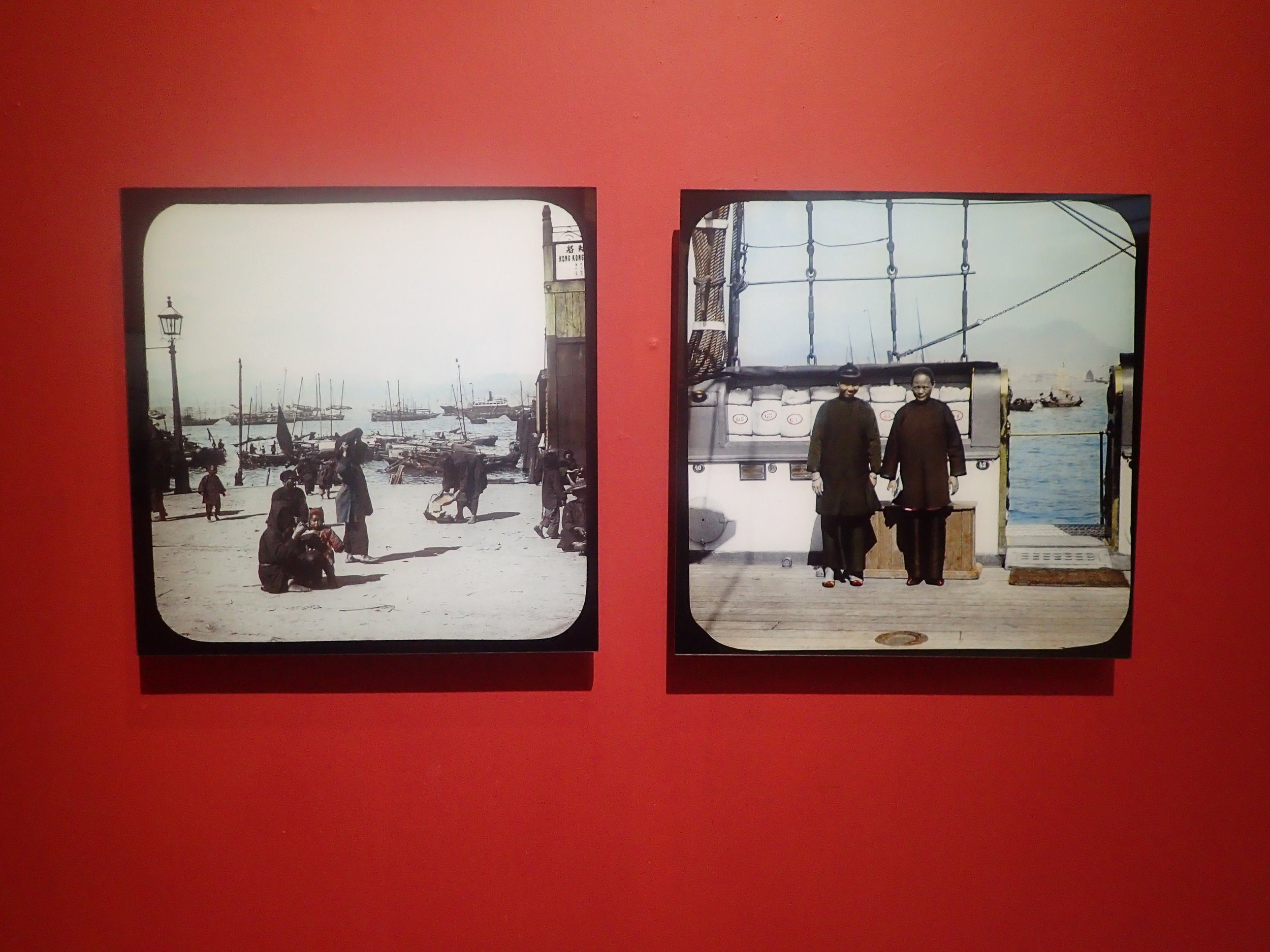
Following the advise not to do physical exercise after receiving my influenza vaccination (colloquially also known as flu shot or even "jab" for those who prefer to speak reduced vocabulary), I decided to instead visit the University Museum and Art Gallery of The University of Hong Kong. This is one of the few cultural stepping stones, you may set foot on when walking the territory, and not wanting to dip into shopping malls and crowds. I was attracted this time by the photo exhibition featuring the pictures of the Hungarian the surgeon Dr. Dezső Bozóky, taken during his travels in East Asia 1907-1909, and illustrating his impressions by quotes from his diary. As we all know, it was a very different Hong Kong back then. 

Man Mo Temple,124–126 Hollywood Road (1908)

Man Mo Temple,124–126 Hollywood Road (1908)

I liked the exhibition a lot (which will be on until January 8th), and also I spent quite some time with studying the catalogue which is a documentation of views and thoughts by the visiting photographer from a different time. It is available for 150 HK$ (about 18 Euros) in the museum's tea house, which is also recommended, and one of the places I like to hang out when I am here. The rest of the museum is either redecorating or lost a few of its exhibits from the accessible areas. But it is still a nice place with a long gone Hong Kong spirit.

Queen's Building, Central waterfront, and Kowloon Ferry Pier (1908)

Queen's Building, Central waterfront, and Kowloon Ferry Pier (1908)

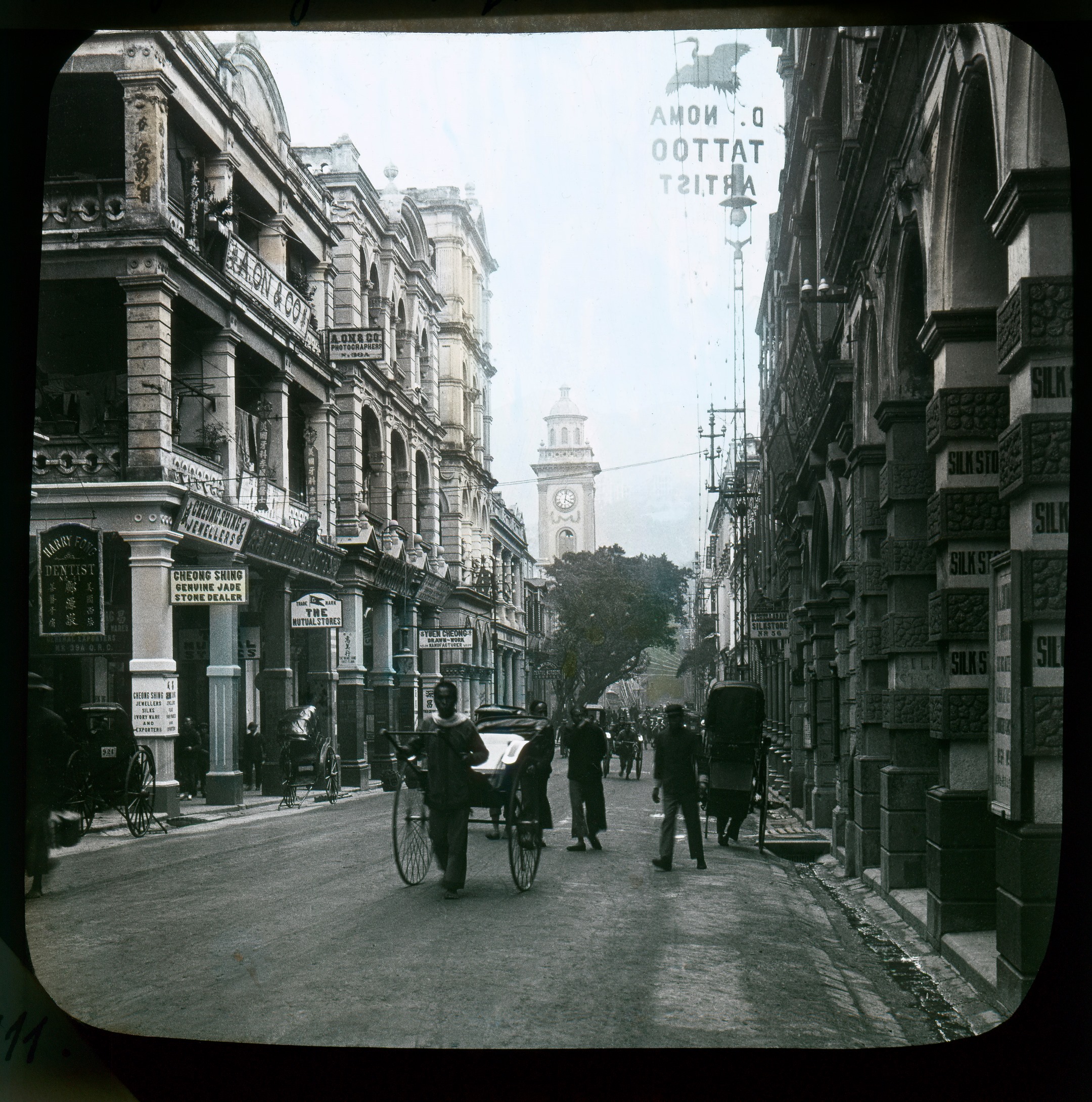
60 Queen's Road, looking towards the Pedder Street Clock Tower (1908)

60 Queen's Road, looking towards the Pedder Street Clock Tower (1908)

Dezső Bozóky's photos show street scenes, portraits and landscapes of and in Hong Kong 1907-1909. They are presented as glass slides of about 30 cm x 30 cm and are partially hand coloured.

Dezső Bozóky's photos show street scenes, portraits and landscapes of and in Hong Kong 1907-1909. They are presented as glass slides of about 30 cm x 30 cm and are partially hand coloured.

Cover pages of the catalogue and exhibition leaflet

Cover pages of the catalogue and exhibition leaflet

Storm landed

Today, I ran up to the Victoria Peak, not just for normal exercise, but to observe the landing of the tropical cyclone "Haima". First comes absolute silence, then rain, then torrential floods, and then the furious wind kicks in. It seems most people observed the warning not to go outside, and the loneliness added to the spectacular atmosphere. As I was brought up in a forest, I followed my instinct which path to take and which other to avoid. You get a feeling, which tree will hold and which one might not. But it's of course not more than a feeling. The best is to stay away from them - if you can. Just a falling branch can cause serious damage.

Hong Kong in suspense, waiting for Taifun "Haima". Just before noon time on the 21st of October, 2016.

Hong Kong in suspense, waiting for Taifun "Haima". Just before noon time on the 21st of October, 2016.

Lost a bet against myself

After we had a "Black Signal Rainstorm" in Hong Kong yesterday, which was in context of the tropical cyclone "Sarika" landing in Hainan, I thought that this must be now really (!) the end of the Taifun season. We even had to postpone last night's lectures, according to Hong Kong regulations. But no, just a day after, "Haima" is heading strait towards Hong Kong, with a sustained wind speed at storm centre of 150 km/h. I really thought, we have seen the last one for 2016. I lost a bet against myself. "Haima" might be a direct hit. I am planning a full day lecture on Saturday. Let's see how that goes.

"Haima" track forecast, as of the Hong Kong Observatory on October 20th, 7:00 p.m.

"Haima" track forecast, as of the Hong Kong Observatory on October 20th, 7:00 p.m.

Back to campus

Hong Kong neither feels home anymore, nor in any way exotic. Don't know what it really is for me at this point in time. To be fair, this time I have not seen much, because I was extremely occupied last week and spent my time in Cyberport. Now I am back to campus. Let's see what I will discover in the month to come.

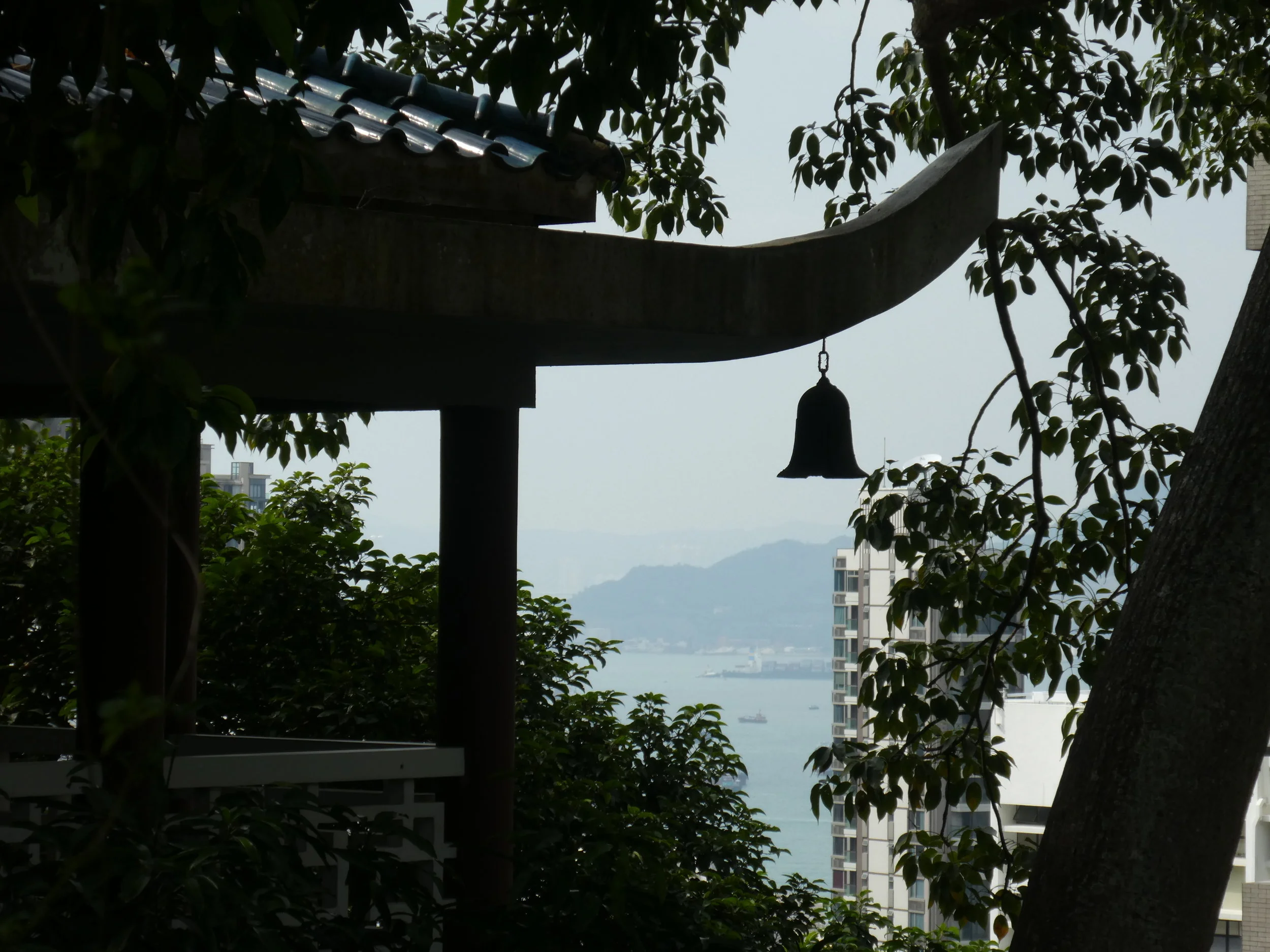
Back to campus in Pokfulam

Back to campus in Pokfulam

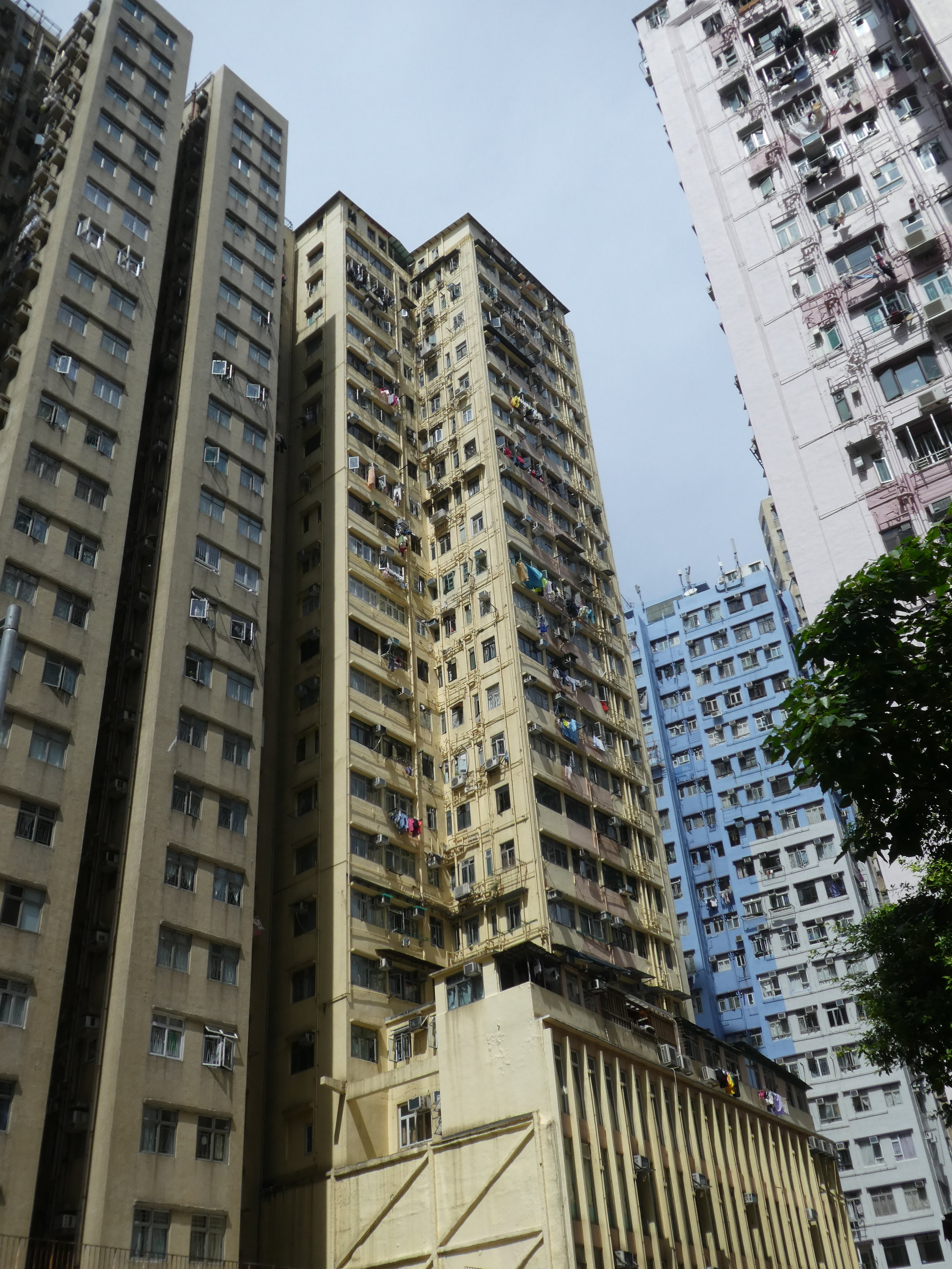
Bel Air residential development adjacent to Cyberport. Not really thinking outside the box.

Bel Air residential development adjacent to Cyberport. Not really thinking outside the box.

View from the new part of the main University campus

View from the new part of the main University campus

Life at the Westwood exit of the MTR (subway) station Hong Kong University.

Life at the Westwood exit of the MTR (subway) station Hong Kong University.