Places

First paddle tour with Nortik Scubi 1 Kayak

Yes, I am a city dweller in Frankfurt. But the park just beside my habitat is crossed by the Nidda creek, which in its lower part can be easily paddled. So, I got a Nordik Scubi 1 foldable kayak, which design reminds me a bit of the Klepper Aerius, but is much lighter (just 12 kg, as the manufacturer says) and much cheaper. First I was sceptical what this small boat can do for somebody of 1,90 meters height and 84 kg. Today I took it for a first paddle, and it turned out to be the perfect "always in your pocket boat". It took me 30 minutes first assembly, and I found it easy. I am using a 4 piece collapsible paddle of 240 cm, which I was warned could be wobbly, but it's not. And then I got a little trolley from the Chinese man running a shop on Leipzigstrasse and a 22 liter Ortlieb drybag. Pump and drybag fit behind the seat for storage. The trolley can be strapped on top. You can't store anything in the foot room at my body size.

Then off I went. Watch out: the Nidda from Niddapark, has one barrage which requires to take the boat around. Then it is very nice and quiet until before Höchst where the water gets fast two times. But in both cases, follow the current on the deep stretches and all will be fine. I was a bit concerned what will happen when I hit a rock with the light boat. But I did not. Entering the Main river at Höchst, you will pass a few house boats and a floating restaurant. I decided to go upstream until the foot of the Griesheim hydropower plant. There is no strong current, so no problem. Then I turned back, disassembled at Höchst and too the tram way (Line 11) back to Frankfurt. I did not manage to get the pump back into the boat bag in the field, so keep some extra space in your rucksack. Going along the rivers is always a nice and interesting view on city life. And in this case, it does not even feel like a city. The little kayak had a really good start: stable and easy to manoeuver, quick in assembly and collapse, small when packed. I like this boat. 

Only ducks can water ski on the Nidda, I think

Only ducks can water ski on the Nidda, I think

"City life" on the water

"City life" on the water

Watch for this barrage at the lower Nidda. It requires to get out and carry around. At least if you are not into extreme sports (which I am not).

Watch for this barrage at the lower Nidda. It requires to get out and carry around. At least if you are not into extreme sports (which I am not).

Quick look back upstream to confirm that it is better to carry the boat around this barrage.
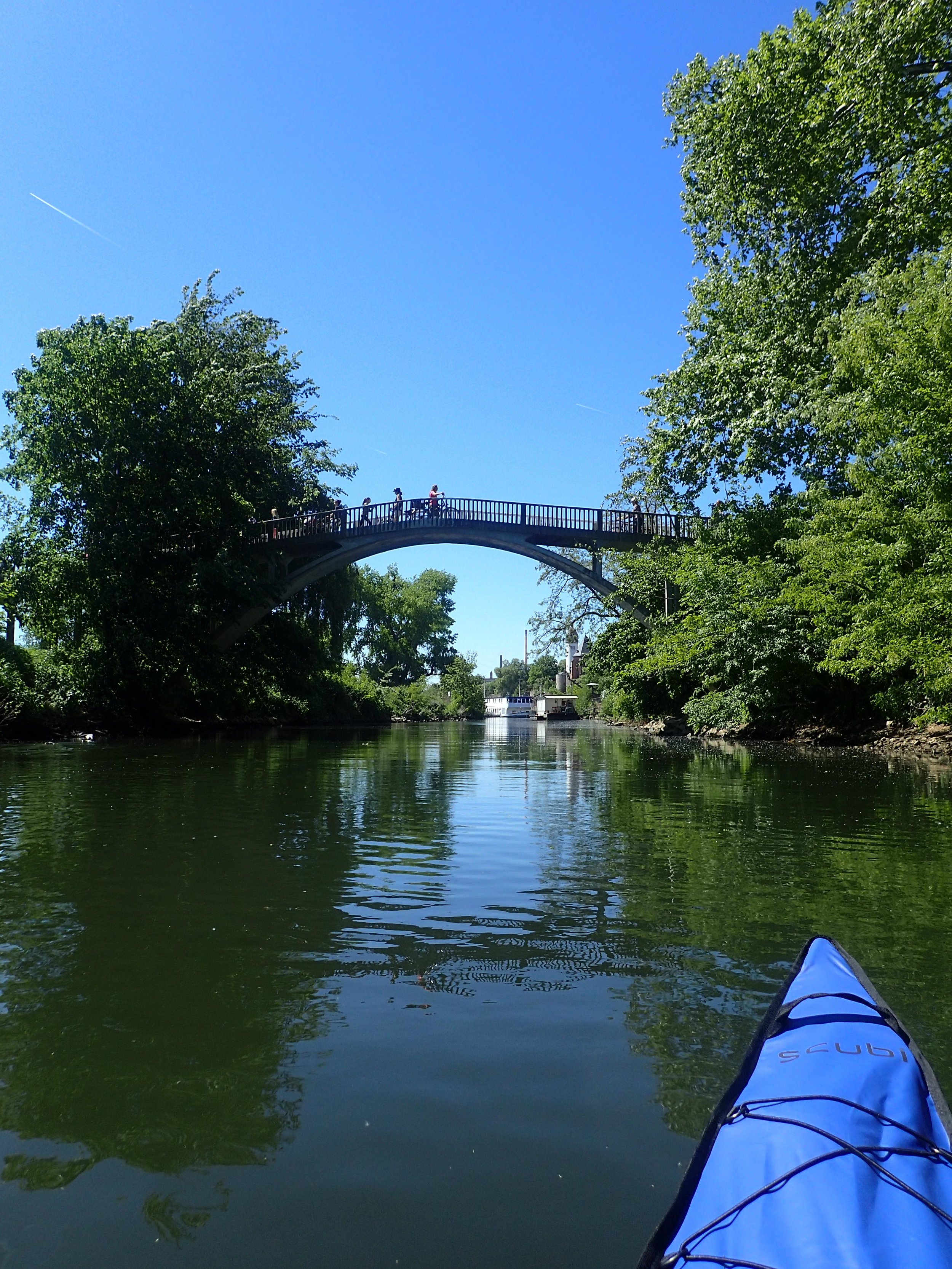
Quick look back upstream to confirm that it is better to carry the boat around this barrage.

Entering Höchst on the Nidda.
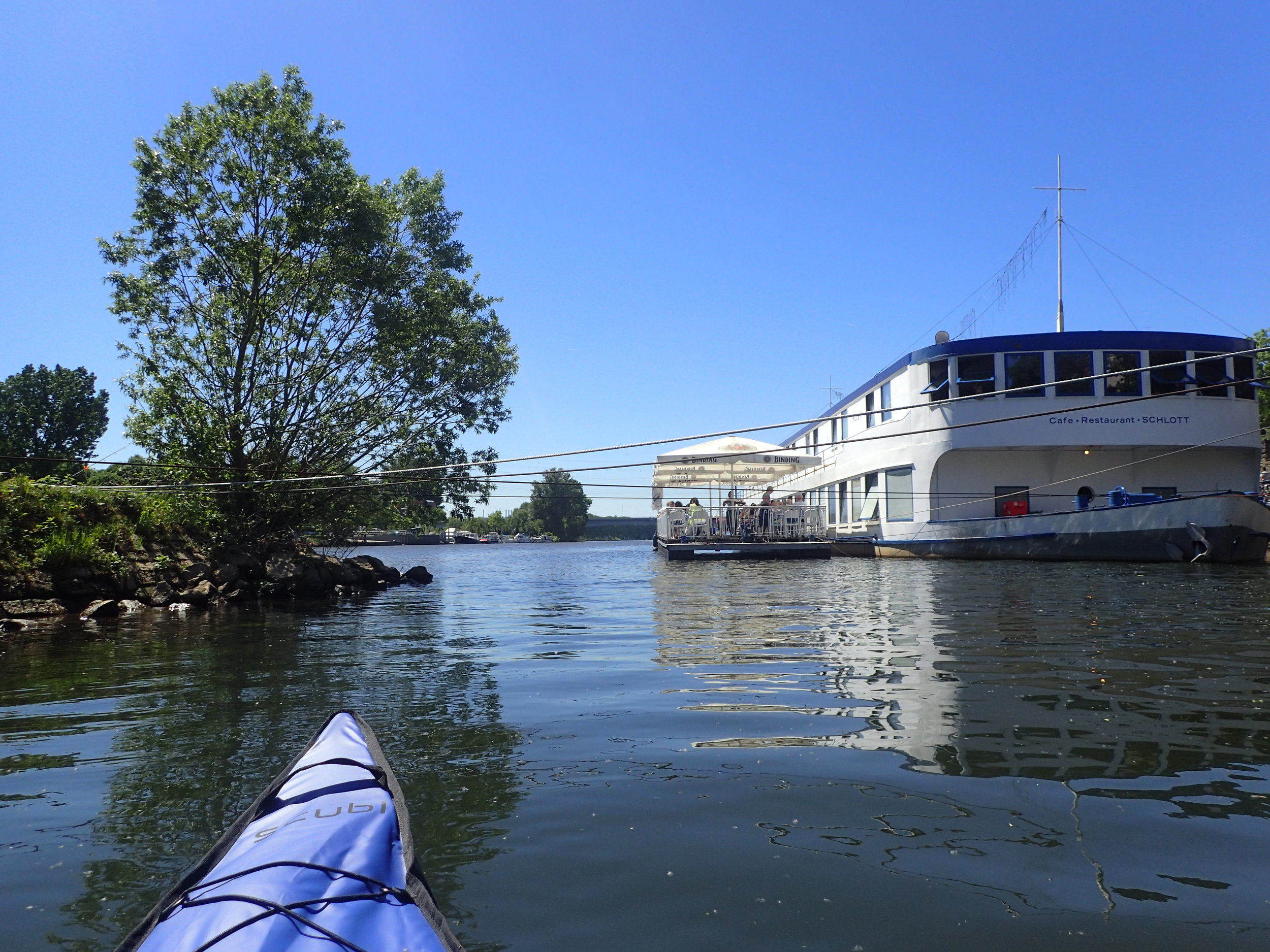
Entering Höchst on the Nidda.

Just before entering the Main river from the Nidda.
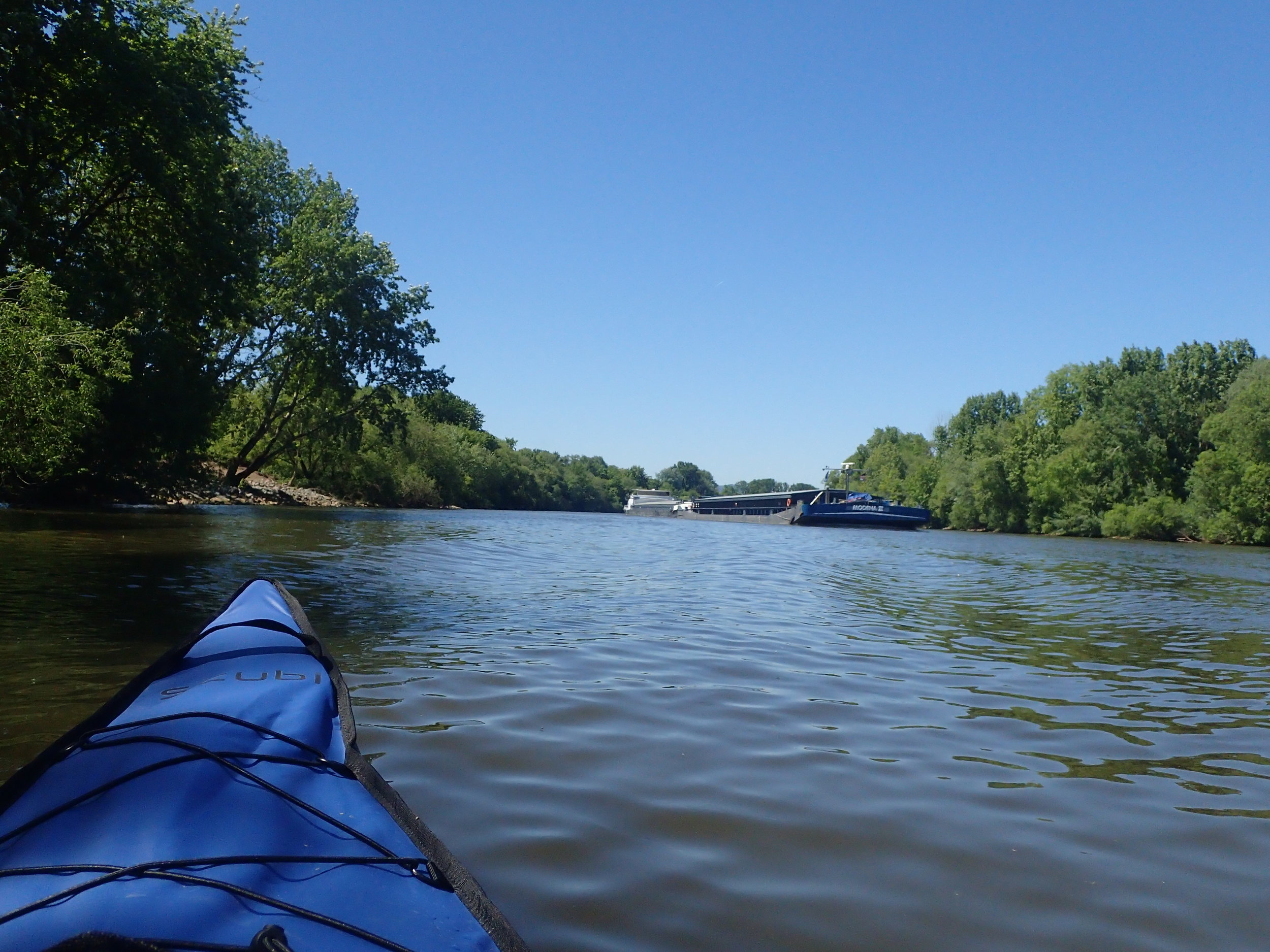
Just before entering the Main river from the Nidda.

The main river is calm and has not much of a current in this area.

The main river is calm and has not much of a current in this area.

A curious co-paddler.

A curious co-paddler.

That's my configuration of the build up Scubi 1 ...

That's my configuration of the build up Scubi 1 ...

..., and then it's all packed up again.

..., and then it's all packed up again.
Farewell visit to Neuwied - my way to school

I love the Westerwald forest and the rivers. But for 9 years I had to decent to the Lyceum in the small town of Neuwied. We call it Gynmasium, and it is the traditional school track to prepare you for University following 4 years of primary school. Every day I walked or cycled along the Wied river and then the upstream direction of the Rhine river. It took about an hour to walk one way, and back in the afternoon. The rest of the day I spent "hiding" in the countryside and forest before the next morning I had to decent again - 6 days a week. There was nothing exceptionally wrong with the school, in my view. Even though only a few teachers were good. Sometimes there were retired Nazis making some pocket money to top up their pension, church bred Latin and history teachers, or fluffy 1968 students which had concluded in the shades of the upraises that nothing really matters. We had the first wave of immigrants from Russia, which were usually of German origin and have been deported by Stalin into Siberia. Some of them became dear friends and others got fame for the brutality with which they resolved conflict. Knifes, chains, Nunchaku and even guns were daily toys. Then came the unfortunate, but very smart, Iranians, fleeing the revolution. As I was banned from religious studies, like them, we got along quite well. Neuwied once was famed for the highest German crime rate per capita. It does shape your attitude to what you can expect from people.

As a teenage boy in Neuwied there were just three ways to choose for your life: 1) degenerate to the equilibrium, 2) go to Waffen Walter (the local gun shop) and put a 9 mm Parabellum bullet through your head, or 3) fight your way out. As 2 is always an option, I decided for 3 as a start. Home was also not much of a help either. Neuwied was the anti-model for everything. Then I was drafted into the Army. Next anti-model. And last but not least, let's not forget the church. Acting people. nothing but an anti-model. 

Luckily there was short wave radio, first a receiver, then an (illegal) transceiver which connected me with the world. Then there was the school library and a local museum. Once I picked up a copy of the National Geographic Magazine at the train station, an unsold copy and the shop owner sent the title page back to the publisher for refund.  But he gave all other pages to me.  My conclusion was that no matter which direction you go away from Neuwied, it can only get better. And very luckily, I had excellent Math, Physics, English, Biology and Geography teachers. I owe them a lot. My French teacher was also good. But I did not appreciate it at the time. Communication changed since the short wave time, but still short wave radio remained a symbol of freedom for me. I met a Soviet run-away in the South China Sea, who was just the same. The other symbols of freedom remained also. That maybe the heritage of a refugee family. I think, one day I have to talk to today's refugees to tell them what not to do to their children. 

Today, my sister and I decided to go these paths one more time. The beauty of the fields, forests and rivers is unchanged. But the city of Neuwied became an even more depressing place. Where the former bookshop was, now resides a discount store. People are fat and dull. Teenage women are pregnant at the side of a tattoed male creatures. Then the perceived age demographic grows exponentially. Like there is nothing between the young proletarian and grandparents. A bit like a small German version of Manchester, Wolverhampton or Glasgow. Shops are closing. The streets are littered and under construction. The Rhine river, which I love, runs through filth. And I was reminded of the donkey in the Grimm fairy tale Bremer Stadtmusikanten (Bremen Town Musicians) when he convinced his followers to join the journey: "Join me. Something better than death you will find everywhere."

That's my home. Good we were born in a time, we still had the courage to run away from it and hide in the forest. 

My way to school. Looks today exactly like back then. Just the yellow Hyundai model parking was not launched back then.

My way to school. Looks today exactly like back then. Just the yellow Hyundai model parking was not launched back then.

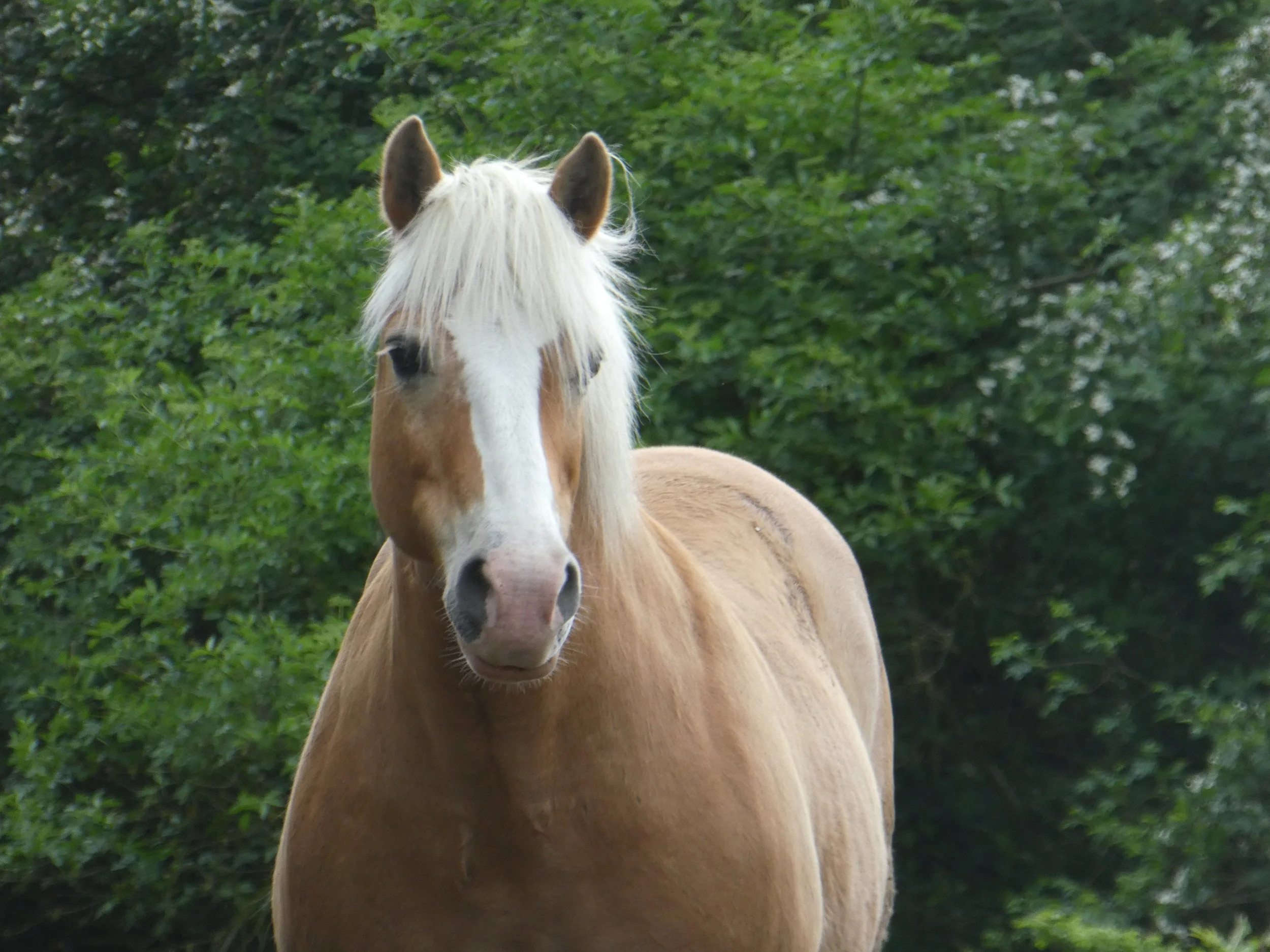
The next generation of horses on the way to school, still looks the same. That's how we all are here: cold blooded, but we can take a punch. Work hard? No problem.

The next generation of horses on the way to school, still looks the same. That's how we all are here: cold blooded, but we can take a punch. Work hard? No problem.

They tore down the barrier in the Wied river to make it easier for fish to migrate upstream. That's good, but different.

They tore down the barrier in the Wied river to make it easier for fish to migrate upstream. That's good, but different.

Further on the way to school ...

Further on the way to school ...

... and here we are: the Rhein-Wied-Gymnasium in Neuwied.

... and here we are: the Rhein-Wied-Gymnasium in Neuwied.

Municipal Lyzeum and upper-Lyzeum, what ever that means. Sounds good.

Municipal Lyzeum and upper-Lyzeum, what ever that means. Sounds good.

The Irlich Catholic church. One day the priest's vicious German shepard dog was shot with a cal .22 hornet at long distance. It was a clear shot. Nobody in the village would have dared to do that.

The Irlich Catholic church. One day the priest's vicious German shepard dog was shot with a cal .22 hornet at long distance. It was a clear shot. Nobody in the village would have dared to do that.

The door to enter for education.

The door to enter for education.

The former bookshop is now a junk discount shop.

The former bookshop is now a junk discount shop.

The beauty-spots of Neuwied.

The beauty-spots of Neuwied.

Mc Donald's celebrates the 50th birthday of the Big Mac. Congratulations. America first!

Mc Donald's celebrates the 50th birthday of the Big Mac. Congratulations. America first!

Dresden - Leipzig - Berlin - Mannheim

The week started with a trip to Dresden, where I gave a guest lecture on China and the "One Belt, one Road Initiative" at the Technical University in the Zentrum für Internationale Studien. It was a great pleasure to be back to Dresden and catching up. And I really enjoyed the quality of the students. As I had one day gap between my Dresden assignment and further meetings in Berlin, I decided hop over to Leipzig and stay there over night. I have fond memories of Leipzig from the time of the German-German reunification and heard recently that it would become for creative people, an alternative to Berlin (where the cost of living is rising). I went to the Museum der Bildenden Künste Leipzig, visited some galeries, and talked to a few people. But somehow, I could not confirm what many people say about Leipzig. Sure, my visit was very short and it always depends a lot on the angle how you enter a city. Then in Berlin, of course, it was easy to confirm that the city is "hip". In the start-up scene some people bragged how often they already went bankrupt. It's entertaining, but professionally there is not much to do for me there. The week ended with a meeting and lecture in Mannheim, as well as catching up at the Mannheim University Business School, where I had the chance to see the impressive new facilities on campus.

View from the Main Train Station in Berlin on the Bundestag (German Parliament)

View from the Main Train Station in Berlin on the Bundestag (German Parliament)

P1020217.JPG

The long shadow of Anton Siegmund

Anton rarely talked much. But when he spoke to me, his words were brutal and secretive. He stood above the law, did not respect concepts like governments, and if you wanted to come closer than 3 meters, you needed a visa. He was a one man country, in which he tolerated his family and close allies only. All he was up to, was to defend this country - whatever it takes - absolutely, whatever it takes. He lead his family on the refugee track from Eastern Prussia, to the Soviet Occupied Zone of Germany, then further to West Germany. He wanted to continue to Canada, but then aborted the idea. He lost three children, and fought on the Eastern front. Anton Siegmund was my grandfather. And I believe, he was not what we like to think he was. I think he was worse.

Anton Siegmund with his Trakehner horses

Anton Siegmund with his Trakehner horses

Recently, I made the suggestion to bring my mother to her birth place in Voigsdorf, close to Rösel (now Poland), not far from Kaliningrad (back then Königsberg, now Russia). I received stiff opposition from all my mother's family to my idea, not because of my mother's weak health, but I was told: "It is not what it was". Of course, I respect that and vented the idea that I go myself and take a photo of my mother's birth house. And the response echoed: "It is not, what it was". This made me think, that it may have never been what "it was" in their minds. It is not uncommon for refugees to exaggerate their origin, and not uncommon for Germans to blur their Nazi past.

Anton had gaps, when talking about what he did in Russia. Sometimes, he was making jokes about dead Russian soldiers, and was mocking the wives and loved ones on the photos he found in their rucksacks, when he was searching them for food. He told about loosing his horse, but just being able to grab his rifle from the animal, and that nothing else matters than a gun, ammunition, water and food. And of course, for me as a teenager back then, he was a hero, and independent mind, who knew what is important in life, a rebel and all what the perceived "looser generation" of our parents were not. As a matter of fact, my parent's generation rebuilt this county after my grandparent's generation destroyed it. Then of course, all my aunts echoed the stories of Anton deliberately missing women and children with his gunfire, and being rescued by his Polish workers from the Russian military tribunal because he treated his workers so well. Well, maybe not. I remember that once in a delusion, he asked me to put his household helper in chains, as a punishment for a bad haircut. Anton was handicapend by a bullet wound in the right shoulder. But he was an exceptionally strong man. His stubborness  was sometimes interpreted as some kind of wisdom. I think it was dementia which brought him closer to the truth. He told me, that I have to be a good boy, otherwise he will have to stay in hell for the rest of eternity. He made me promise, to get him out of there by being a good person. I promised. Of course I did. I love my grandpa. Anton kept being the undisputed patriarch of the family until his last breath and beyond. 

I decided to go this summer in June to the house my mother was born, and try to close the circle of a long story. Anton Siegmund, had a long shadow over two generations. It was a cold shadow, with sharp edges. And it may have rescued his family. But it blocked the sunshine for far too many years.

Hiding in my cave

I am in Malta since a while again, where I am hiding in my cave - writing reports, and preparing lectures. So far I only came out for sports, meeting friends and strolling a bit around. I also joined the Malta Photographic Society, and put my newly repaired  first generation Fujifilm X100 back into action. It is great to learn new things there and meet fellow photographers which cover the whole spectrum from committed amateurs to professionals. Further, I tried a few events of "Valletta 2018" in which Malta is hosting the European Capital of Culture. Though, except a fun (but chaotic) opening there is not much going on yet (?). It is also low season now, so perhaps it will still pick up. I just hope it does not go like last year's EU Presidency, which was kind of a joke in the end. Still, the streets are more lively than last winter and even the rainstorm the night before yesterday hindered the street carnival a bit, the mood is high and the parties keep going. So, perhaps that's what a culture capital should be like anyways.

View from Fort St. Elmo over the sea. Strangely you can see a WWII type submarine on the far left of the photo. I ran into this submarine in Rinella Bay the other day and was told that it is here for a movie production. 

View from Fort St. Elmo over the sea. Strangely you can see a WWII type submarine on the far left of the photo. I ran into this submarine in Rinella Bay the other day and was told that it is here for a movie production. 

Etienne's restaurant in Birgu, as always providing free parking for those who choose decent transport.

Etienne's restaurant in Birgu, as always providing free parking for those who choose decent transport.

The remains of Peppy's Bar in Ħaż-Żabbar

The remains of Peppy's Bar in Ħaż-Żabbar

Zabbar Social Club.

Zabbar Social Club.

Organ Recital in the Robert Samut Hall, Floriana

The Robert Samut Hall (35°53′30.8″N 14°30′11.8″E) is the former Floriana Wesleyan Methodist Church, which has been handed over to the Maltese Government and converted into a cultural centre in 1975. It is a neo-gothic architecture, built by the architect, illustrator and poet Thomas Mullet Ellis, which has been originally completed in 1883 and was the first building in Malta using electric lighting. It is equipped with manual pneumatic Willis organs from 1950. We went to a recital, but it was unfortunately performed on an electronic instrument. Roberta Bugeja played a mix of pieces from Buxtehude, Guilmant, Messiaen, Bossi and Gigout. 

Willis organ in the Robert Samut Hall. Not well maintained though.

Willis organ in the Robert Samut Hall. Not well maintained though.