First Autumn Leaves

The last week, was called Golden Week and it is a week's public holiday ​around the Mid Autumn Festival and the National Day. This is why many people are on the way to their home towns and families, take the opportunity to do short trip and decorate their houses with some extra National flags (everything is National here anyways). Beijing was a very calm city during this week. Only the obvious tourist places were crowded. First I was annoyed by not being able to go to Japan (another one of these National things), but then I enjoyed having a quiet week and looking into corners of the city which I did not explore yet.

Yesterday before sunset, I also got aware what else "Golden Week" meant this year. The first autumn leaves were changing color. When I walked along the river back home, I could even hear some rustling around my feet. Not the deep rustle and crackle of walking through a forest, but the little one of strolling through a park in fall.​

DSC01798.jpg

Che Fotografo

​The Beijing Three Shadows Photography Art Centre in Caochangdi showed photos taken by Dr. Ernesto "Che" Guevara: 232 pictures by the Guerrilero Heroico, in black and white and color. This was again a very well set up and high quality exhibition by Three Shadows which runs until October 10th. The exhibition is a station of the "Che Photographer" exhibition which is hosted since 1990 in 16 cities across 13 countries.

When I was a boy, I read Che Guevara's "Motorcycle Diaries" and he was somehow a fascinating figure, as the prototype of the revolutionary and driving force in the Cuban revolution. Of course this blended in with my reading of Hemingway at that time, and a general sentiment which was positive to regions becoming independent from imperial rulers. Che Guevara travelled a lot and did not only contain his activities into South America, but also to Africa. He also visited China, with a "mandate of friendship". I tried to imagine how the meeting with Chairman Mao must have been. Che Guevara was of course far more idealistic, better educated and more traveled than Mao. For him Communism was a model for liberation, while for Mao it became way of suppression and terror against his own people. But also the Cuban regime took a way Che Guevara might not have anticipated. Perhaps this is why, instead of becoming a government minister, he headed off for the next revolution in a different country, which costed him lis life.

Before visiting this exhibition today, I was not aware that Che Guevara was a good photographer. I liked many his photos , not because of technical quality, but because they are like a freeze of what he saw and how he saw it. In a way, I found his photography very "journalistic" and "documentary". Also, because he seems to have been always with a camera, he caught many private moments, which shed a light hearted light on the Guerellia fighter. Perhaps this is what photography of this kind is about: less about the perfection of photos, but of the choices of what the photographer sees and the choice of the life he lives. Che Guevara took a very extreme choice and he left the world not just with the prototype of an idealistic young man, but also with hundreds of excellent photos. 

DSC01793.jpg

Lamma Island Ferry Disaster

I am terrified to hear and read that the most wonderful an peaceful commute I had for five years from Lamma Island to the University turned into a disaster on October 1st with two ferries colliding out of which one capsized within 10 minutes and the other making it back to the Yung Shue Wan ferry pier taking water. 38 passengers died and over 100 were injured. My thoughts are with those who lost their loved ones, friends and neighbors.​ Yung Shue Wan is a small village community under shock of the largest marine accident since the hand over of Hong Kong. I can barely believe that the window of my former home, at which I stood for years to watch the beautiful scenes of boats passing bye, was just facing the site of the accident. 

DSC_2798.jpg

Penghao Theatre & Cafe

A nice place to either drop by for a meal or coffee in Beijing is the Penghao Theatre & Cafe. It is located along a foot alley in 35 Dong Mian Hua Hutong in a traditional courtyard house. Performances are not only in Chinese, so that this is one of the few drama performance places in Beijing which also is a place for non / or no good Chinese speakers. The theatre itself can host an audience of about 130 and is just beside the restaurant. The location is very close to the film school and these few blocks of Hutongs are exceptionally picturesque and have a quite special cultural atmosphere. 

Where have all the cars gone?

Exploring the streets and parks of Beijing, I am wondering these days where all the cars have gone. It is a National Holiday week in which many have left the city. And others seem not to have the urge to drive. On normal days Beijing suffocates in traffic and people suffocate in pollution. These days in Beijing are a very nice reminder how nice the city actually could be, if it would not be swamped with cars and rude drivers. And also the rudeness and aggression is dissolved in the holiday mood. This week must be one of the nicest ones staying in Beijing, and I am quite happy that Air China messed up my planned trip to Japan.

DSCF9022.jpg

One Cylinder, Two Stroke

Yesterday to my big surprise I saw an old Velosolex engine mounted on a tricycle's front wheel in Beijing. The lady who brought it from the suburbs to the city center for repair said that the young man sitting on the floor between his tools was one of the few left who can still handle repairs like that. Just a few weeks ago, I published a blogpost in memory Velosolex, when I bought my electric bicycle. I thought though the orgininal Volosolex engine must have disappeared. But it has not.

Sonja's report

"Miss Werner was a woman of leisure, well-spoken, and had been given a good education by her middle-class parents. For her new masters, all this counted in her favour. They were short of posh ladies" (The Economist, July 13th 2000). Ruth Werner joined the Communist Party as a teenager in Berlin, in the believe that Communism would change the society for a better. Undiscovered, she lived in Shanghai, Manchuria, Switzerland and Great Britain and in the end East Berlin, as a spy of Stalin's regime. The poverty she saw in China, strengthened her believe that a revolution was needed and that Communism was the social model that could make the world a better place. She was a courier of Klaus Fuchs, the scientist who delivered secret and critical information from building the first nuclear bomb. She was following the traces of her idol Rosa Luxemburg, the German communist revolutionary who was executed in 1919. But Ruth Werner, code named "Sonja", was never discovered and lived a long life of 93 years. She died in Berlin in the year 2000, in a re-unified Germany and a time when people in Germany literally celebrated what they called the "Collapse of Communism". She must have felt that her life's mission has failed.

Having dinner with friends yesterday, I was recommended to have a closer look at Ruth Werner's biography. She was a convicted Communist all her life, but I found the turning point interesting in which she got aware of the crimes of Stalin, Mao, Pol Pot and other Communist leaders. I was wondering what the thoughts could be of somebody who finds out at the end of her life, that she has been fighting with best intentions all her life potentially on the wrong side. Of course, the discussion yesterday sparked on trying to understand Chinese Communists today, and what their comprehension might be standing at the edge from a Communist state to something nobody has really seen before. Or has it? Is it just another form of a fascist state? Or not even another form? I guess the next few years will be the most interesting ones to watch in China. It will be the years in which it will make it or break it.

Cargo Cults

In his book Surely, you are joking Mr. Feynman, the physicist Richard P. Feynman refers to his commancement speeches at Caltech in 1974. Here he coined the term "Cargo Cult Science", referring to cults which appreared in indigenous island societies in the Pacific after the second World War. Here, mostly around Samoa, where American Naval Bases were supplied by air, also the local tribes had direct or indirect access to the goods flown in. They knew they were coming by plane, but they never really understood the process. So when the US Military closed the base, no more planes were coming and all the nice things did not drop from sky anymore. The indigenous people though realised the connection between the supplies and the planes and started to build own planes made of bamboo, simulates landing strips light with fires and also built wooden control towers in which people were sitting with headsets made of coconut shells shaking their heads and chanting prayers to please the plane god to come back. The point Feynman wanted to make back then, was that scientific publishing which is not referring to true experiment and understanding, is like a Cargo Cult, missing actually the point. 

Once you start looking for such "Cargo Cults" around you, the list does not seem to end. Last time I was in Changchun for example, people were wearing suits and mobile phones, because they saw the people who have been bringing them cars and technologies for the last 20 years look like that. They never really thought about how these technologies have been developed and invented and they think all these just have been brought into their country by pale men with suits and beer bellies. As a result they try to look the same. Some of them go a bit further and understand that there must be "holy documents" behind this. So, they secretly copy all documents they find on their USB flash disk and store them in a department which keeps them as a holy grale. When they see that this does not help, they also copy the rituals and put them into PowerPoint slides and have meetings to worship them. But no cars are falling out of the sky and the "self development capabilities" are as far away as they have been a decade ago. It must have something to do with the education of the pale men. So, the members of the cult also go out to Universities and obtain academic degrees. But they don't really learn much there, because they think the academic title makes the difference. They would also wear coconuts and shake their heads, no doubt. 

But this is just one example. Just look around you how many people have coconuts on their ears and try to become "successful" or "creative" or "rich" or just go to heaven instead of hell. I always enjoy reading Feynman, for his view more than for his science. This is more owed to the fact that I do not understand his science, but really appreciate his view.

"Soweit die Füße tragen" (As far as my feet will carry me)

These are the shoes in which I went around the whole world last year. Of course, I did not walk around the world, but this was the only pair. These days they really turned out to be too worn out and damaged. But this is not an item just to throw away for me. It was a farewell.

Ever since I read as a child Martin Bauer's novel Soweit die Fuesse tragen (As far as my feet will carry me), I felt special about the walking long distances. There is also a movie based on this material, telling the true story of the German Prisoner Of War Clemens Forell who escaped from a Soviet labor camp and walks though Siberia driven by the willpower to return to his loves ones. My grandfather called walking "the only reliable form of transportation, when all goes wrong". He must have known, as he also returned on foot from the Eastern Front. Consequently, I learned about shoes by experience of walking. But I also learned about the crafts of making and repairing them. 

Air Quality Index (AQI)

I received the feedback that my recent Blogpost called Smog as a Romamce  was too romantic and that I either protect the interest of the Automobile Industry or just don't know what I talk about. Well, I think I know about smog as well as about romance, but I prefer only to follow up on the science part of smog here.

Further, I found that there are very strong opinions on smog which reach from "we have to move out because my child has asthma" to "when I was a child it was even worse and see how strong I am today". Many of them are much less founded than my attempt to see smog romantically. I do not want to promote smog of course. Blue sky can be romantic too. And think how beautiful a clear spring day is. I am just making the best out of it, and I feel I personally do more against smog (not just in this city) than many others who complain a lot more than me.

In pubs and coffee shops I found that emotions can get very high on the Air Quality Index number published via various internet channels for Beijing. And no matter how strong the opinions are on the numbers published on Beijing's air quality, I found that many people do not know what the AQI (Air Quality Index) actually represents. It is a pleasure for me to spend my Saturday night, trying to bring a bit of light into this haze.

There are currently in Beijing two two public data sources: one is the Air Pollution Monitor in the American Embassy and the second is a network of measuring stations provided by the Beijing Environmental Department. Both are measuring about the same critical components in a slightly different manner and different locations. After a heated (and silly) debate whether particles should be measured according to 10 micrometers (PM 10) or the size which actually more likely to penetrate the deeper breathing system PM 2.5, now also the Beijing government measures PM 2.5.

The AQI (Air Quality Index) as defined by the USEPA (United States Environmental Protection Agency) is a composite index of five air pollutants: ground-level ozone, particulate matter, carbon monoxide, sulfur dioxide, and nitrogen dioxide.

Ground level ozone, also called Tropospheric Ozone to distinguish it from the Stratospheric Ozone, is the product of photochemical reactions of NOX, CO or VOC (Volatile Organic Components). By the dependence on sunlight, it means that the concentrations are highest during daytime and in summer. As the process needs time, it also means that the high concentrations of ozone might be quite a distance downwind the actual emission source of NOX. This is why you often observe botanical damages caused by ozone not in the cities itself, but in the suburbs, where the air should be "cleaner".

The production of ozone includes two steps. First a peroxyl radical is formed by oxidizing carbon monoxide into carbon dioxide:

OH + CO → H + CO2

H + O2 → HO2


Then NO2 goes in photolysis to provide atomic oxygen for the formation of ozone:

HO2 + NO → OH + NO2

NO2 + hν → NO + O

O + O2 + N2 → O3 + N2


The resulting net reaction is: CO + 2O2 → CO2 + O3

Ozone is known positively for example as a disinfectant for drinking water, and for protecting us from harmful ultraviolet radiation by absorbing it in the Stratosphere. But in direct exposure of the respiration system and eyes it is causing irritations and also more serious long term health effects.

There are also other photochemical substances which are built by similar but more complex processes from primary pollutants. An example are the Peroxyacetylnitrates (PAN). They are more toxic than ozone, but hard to measure. However, as the process and the primary pollutants are similar, you can see ozone as a good tracer for the existence of PAN and its derivatives.

The next component which is contained in the AQI is Particulate Matter (PM). The kind of health effects which are caused by particles is mainly determined by their size and what they actually are. While most particles at around 10 micrometer diameter (PM 10) do not penetrate the lungs, particles smaller 2.5 micrometer (PM 2.5) might even cross into the blood stream via the alveoli, where they can cause cardiovascular diseases. Particles smaller than 0.1 micrometer even can penetrate cells, including those of the brain, where they cause damages leading to brain diseases similar to Alzheimer's Disease. A major source of such small particles are fumes and smokes, for example also emitted by low quality Diesel engines.

The next two components of the AQI we already met as primary pollutants: CO and NOX.

CO is toxic by itself and is the gas which you might know from being used to commit suicide in a garage where somebody keeps the engine running in an enclosed environment while writing a farewell letter - until he/she falls asleep and dies. Of course the concentrations we find in an open environment are much less and in open air CO coming from an exhaust pipe is unlikely to be lethal, but it may modify the oxygen household in the body. Eventually, CO turns into CO2 and by this is less a local problem but adds to the atmospheric concentration of greenhouse gasses which are driving climate change.

NOX again are a primary pollutant for photo-oxydants like Ozone or PAN but also in the end form gases which dissolve in water, similar to sulfur dioxide and have a negative impact on vegetation. Sulfur dioxide even forms acids in rain water which can dissolve limestone and damage buildings. This is less an issue in Beijing with modern buildings, as they are made of the good "old" brutalist concrete. But for some historical buildings this is still a disaster, not to talk about soil and vegetation.

So, these are the component for the AQI, which is an additive index of linear concentration functions. This means, if ozone is low at night and the AQI still high, you can imagine how bad particulate matter or sulfur dioxide is - specially in winter when cheap sulfur rich coal it doing its job to keep us warm. Isn't that romantic again? But this time I won't go down that road of argument.

Chinese Summer

The temperature differences between day and night are getting larger in Beijing and this is a first indicator of fall to come. I really enjoy that my office is located in the embassy and diplomatic area in Beijing's Chaoyang District and my commute is a short bicycle ride or walk along a canal fringed with large willow trees. People are fishing and doing gymnastics every morning there and somehow I also became part of this "river community". I will follow the change of seasons from summer to autumn and then to winter very carefully. And then it is time again to sharpen my ice skates and commute where there is never a traffic jam: on the river itself. There is the term "Indian Summer" which describes the mild late summer days. The "Chinese Summer", in Beijing, is not less beautiful. I am looking forward to the leaves turning red and golden.

Time travel

The dinosaurs, I was told, were extinct because they had a small brain in a big body and they could not adjust to the change of environment. The exhibit below I have seen in Beijing 798 - and unfortunately did not take down the artist's name. Strategy, I was told, is to put yourself in a future perspective on the present and look back at the present to decide options for action. Looking for the time machine these days.

Silk Road

In times of chemical fibers, shipping and air freight it seems incredible that a textile once was of such value that it justified the terrifying hardship to transport and trade it from China to Europe, crossing Central Asia. For me silk has always been a beautiful material and it is a metaphor of romance, grace and elegance. In ancient China only Emperors had access to it. During times of pests, healthy silk worms were still contained in Japan. This is the setting in which Alecandro Barico's novel Silk is narrated, which is the story of a French Silk worm smuggler. It is a very mystical book, which I liked a lot. There has also been a movie produced, which follows a pattern you often see when people work on this material: brilliant material and bad cut - applies in fashion as well as in directing this movie. I am frequently suprised why silk dresses actually are made so lousy. They count on the material to compensate for bad design and craftsmanship, I guess.

My own first contact with the Silk Road, was when I found Baron Ferdinand von Richthofen'sFuehrer fuer Forschungsreisende as a discounted reprint in my favorite hangout as a Geociences student in Cologne: the Goertz Map Shop. Ferdinand von Richthofen is not to be mistaken with Manfred von Richthofen, commonly known as The Red Baron. It was Ferdinand von Richthofen who first coined the name "Silk Road" for a system of trading paths which never were, nor are, one road.

The trigger to make a journey along the Chinese parts of the Silk Road came from Judy Bonavia's book The Silk Road from Xi'An to Kashgar which is published by my friend and former neighbor on Lamma Island Magnus Bartlett and is a brilliant historical and cultural guide. A very interesting account of the early explorers which found and took many mural paintings and treasures from Central Asia back to Europe, is Peter Hopkirk's Foreign Devils on the Silk Road. It is one of the constant allegations by Chinese that there were not explorers but robbers, and I have sympathy for that argument. On the other hand they are sometimes defended, saying that they actually secured the works from grave robbers and rescued them from the communists, who destroyed many art works and temples in the Cultural Revolution. The latter argument does not hold for the German collections though, as they have been to 40 % destroyed in the allied bombardment of Berlin at the end of World War II. The British Museum is more lucky, but keeps the collects at very low profile not to provoke anybody. Anyways, world cultural heritage is as the name says "world cultural heritage" and it does not really matter who is taking care of it, as long as everybody has access.

The better starting point for a journey along the Silk Road tough turned out to be not Xi'an but Loyang. This is a city south of Xi'An which states its claim to be included into the Silk Road and which was one of the four ancient capitals of China and the place where the legendary Journey to the West took its start. The famous Longmen Grottos are UNESCO world heritage site.

Xi'An is one of of the places of which people say you should go there once in a life time. I agree, in the sense of: if you happen to go there once, you will definitely not go there a second time. Xi'an holds one of the best known historical treasures of China: the Terracotta Soldiers. They are really very impressive individual art works and not mass production. However, not just that I have seen too many cheap replicas of them as garden decoration and flower pots all over the world - but I am also tired of these kind of tourists which fall in thousands into the site. Xi'An is a place where tour busses dump they human cargo. It is wise to start a Silk Road Journey not in Xi'An, but in Loyang. Otherwise your will change your mind, and strait away book a ticket to Thailand instead, because you already had enough.

The journey further West through the Hexi Corridor brings you to Jia Yu Guan, which are the remains of the most Western large Chinese fort and also has the last remains of the Western part of the Great Wall. It is here not a unified structure any more, but only blocks the valleys from potential ancient enemy penetration. Jia Yu Guan was also the place wehere many goods changed their ownership from Chinese hands into Central Asian tradesmen. The fort it really impressive, but unfortunately surrounded by a heavy industrial environment. The mountains in the background inspire the imagination, but the reality on the ground is that of a historical marvel in a complete trash environment. Also Jia Yu Guan is still in the reach of tour busses and their load, and a useless management of the site ruins the rest. This experience will stay when traveling further West through the Gobi desert, where all kinds of industries received cheap land to do anything (which they do) with no or only few laws implemented. 

When you arrive Dunghuang, you see a marvellous landscape of large sand dunes, which is entirely spoiled by tourist development. The Dunghuang Grottos are wonderful though and it is a very well managed site. You can only join guided tours, and as a positive surprise the guides are really knowledgeable and of course necessary to stop our neocommunist comrades to pi on the mural paintings or scratch them off as a souvenir. As Tulufan (Turpan) is also still in the range of organized tourism, it is just a stop over. But as soon as you leave from here further to the West, things slowly become interesting until you finally arrive in Kashgar. Even the Han Chinese behave better, as if they would bully people here, I guess three brothers will take care of them. Seeing the livestock market on a Sunday in Kashgar is really a must.

Even more interesting becomes the journey further West to Tashkogan and along the Pakistan border. The Tashiks are, like the Uyigurs, very nice and friendly people. The landscape is one of the most beautiful I have seen in China too. From Tashkogan you can drive to Hetain in two days and from there cross the world's second largest desert, the Taklamakan. The Western, and new, desert highway is going along some river beds and here the desert is not that arid. I enjoyed learning about the trees changing their shape when they have more water available and the geomorphological spots which allow them to survive under such hard conditions.

On the way to Urumchi, do not miss to drive through a part of Northern Xingjian. Here are again, where scenic spots, and wonderful grassland, populated by utmost friendly Kasak nomads.

It is really not easy for me to draw a conclusion on this Silk Road Journey. There are places which become even more mystical when you see them and your interest grows. These are actually most places I visited. The Silk Road is not one of these. Seeing the places along the Silk Road, de-mystifies the whole concept very solemnly. Yes, there are beautiful landscapes and wonderful people with minority cultures which are very appealing and interesting. But up to Dunghuang and Turpan, they are just covered by a landscape of industrial trash. It is really hard to ignore that the "factory of the world" is turning them into the world's trash can. And further there are cities like Kuche and Aksu, which are purely functional places, some of them set up by former army units. These cities easily compete at the low end of urban appeal and cultural heritage. Last but not least, I would recommend to avoid even some of the most famous sites, and sites which are convenient to reach.

Once again, what is right for the Terracotta Soldiers, might be right for the whole Chinese section of the Silk Road (North and South): you might want to see it once in a lifetime, but in the sense of that you will not go there a second time. However, I am personally curious how the further Central Asian section up to Turkey looks like. So, my personal Silk Road exploration is not over yet.

Wolfsburg

I was on a business trip to Wolfsburg and you might think that this is not worth mentioning. But I liked being there and actually the former "Kraft durch Freude Wagen"-Stadt has an interesting history. Long before the settlement became a city, it was mentioned first in 1302 as residence of the family von Bertensleben. And close to today's Volkswagen Management Guesthouse Rothehof, you can still see the remains of an older small castle in the forest, which might have been built around 1200. With the ending of the von Bertensleben family in 1742, the property was inherited by the Dukes von der Schulenburg.

On May 26th in 1938 the factory for the production of the "Kraft durch Freude Wagen" (Strength through joy car), short KdF-Wagen, was started in construction. To accomodate the workers a new city was built, which was called "Stadt des KdF-Wagens bei Fallersleben" (City of the KdF-Car close to Fallersleben). US Military Intelligence pictures showed very early that the factor which was claimed to have a certain capacity for the production of cars, did not really have much parking space for storage. It became clear that given the strategic location at the Mittellandkanal, it would produce weapons and military equipment to support the Eastern Front in Wold War II. Besides military vehicles and ammunition, it was also a production base for components for the first ever Cruise Missle, called V1 for "Vergeltungswaffe 1", or Fieseler Fi 103. In principle it was a long range missile in the shape of a plane, which was used against long range targets in London and Belgium. In the words of Nazi Propaganda, this was one of Germany's "Miracle Weapons". POWs and forced labor was contained in the concentration camp "KZ Arbeitsdorf" during that time.

On April 11th 1945 the plant became target of an allied air strike and was distroyed. After capitulation the young British Major Ivan Hirst was in command of the facilities and on May 25th 1945 the city was renamed "Wolfsburg". Hirst found a few "Beetles", painted them green and offered them to the British Forces. They were amazed by the little robust car and asked for production of 1000 units. Hirst rejected the disassembly of the plant and managed basic reconstruction, restarted production and started export. By proposal of him, Heinrich Nordhoff became then General Manager of Volkswagen in 1948. It became clear, the company has a future. Volkswagen has an excellent archive and if you are interested to read more, you can download Ivan Hirst - Britischer Offizier und Manager des Volkswagenwerks. I was planning to try and meet Major Hirst in his retirement domicile in Manchester, but he unfortunately passed away in the year 2000 before I could get through to him.

Today Wolfsburg is a small town, which is trying but struggling to break up the monoculture which has developed around the Volkswagen Plant in its post war history. Many initiatives have made the city more attractive and the list would be too long to write about them all. It is not a lack of architecrual hardware, which still keeps Worlfsburg provincial. Also the list of people who shaped Volkswagen and the city is too long to be lined up here. Sure, Ferdinand Piech, who is our chairman of the board and has lead the company to great success, even beyond his time as CEO. But for me, one man has to be mentioned who with his vision has not just made Volkswagen a real Multinational Company, but also started our China Business in 1983 - Dr. Carl Horst Hahn, truly beyond an auto manager a pioneer of globalization. I was very honored that my request to meet him in his office was accepted and without talking much about cars, I was stunned by a charismatic and visionary gentleman, who understands the full complexity of the world we live in. Such a discussion I did not have in 13 years Volkswagen. If there is anything like wisdom in our industry, now I know one place to find it.

I also traveled on the weekend to Podsdam and Berlin and I hope you forgive me, that I do not mention them on my travel blog. It would have been too much to write. After returning to China, I also was in Shanghai and taught a few days at Tongji University, before returning to Beijing and now preparing for a long haul along the Silk Road into the very West of China.

Plastic Clothes

When I went to the customs in Germany to receive my stamp for tax refund before I go back to China, the officer was puzzled and asked me to open my suitcase. There was nothing wrong with the items themselves, but when he saw a collection of environmental testing chemicals and lab equipment, he felt that he wanted to confirm: "This is really for private use?"

Today was a hazy day and I spent a bit of time sorting out the equipment and played around with it: radioactive exposure is low, tab water in general parameters quite good, air quality disastrous. But then wow: formaldehyde! Where could this come from? Finally I found, that it comes from a few chemical fiber textiles I have bought in China. Formaldehyde is banned also in China, but N-methylol derivatives are used as reactant cross-linking agents to give the fabric shape stability and a "high grade finish". As catalysts for this process dialylated tin derivatives are also used. The first is known as a strong carcinogen, the second causes allergic reactions. Specially Chinese low to mid range lady fashion is entirely made of "plastic". Also many outdoor clothes, as they are supposed to be light, water resistant and fast drying and sports clothes of course too.

If a dress is supposed to set a heart on fire, then be careful, because without organophosphate substances as flame retardant this could be even dangerous. Even I have never witnesses that this kind of spark set clothes on fire, I remember three incidents in which chemical fibers caused severe injury: a cook who spilled boiling water on is legs in the army, a Nylon camping tent which caught fire and a car accident where the vehicle caught fire. In the first case I was providing first aid and wanted to cut open the trousers, but had to find that it had melted into the burned skin. In the two other cases any help came too late. Of course this was not just a result of chemical fiber clothing, but it made it worse. I also remember a comment of a Naval officer, who said that about 30 % of the men they lost in the South Atlanik War in the sinking of the Battleship Belgrano died in the flames because they Uniforms were switched to cheaper material before. 

Now this sounds a bit an extreme reason why to avoid "plastic clothes". And also the health effects of many chemicals used are disputed. So, it might not be "too bad". But I just ask myself: why? Plastic clothes look cheap (even they not always are). They do not breathe well and get stingy easily. Sure, you can reduce that by adding biocides as anti-microbal agent to make them stink later. Antimicobic material for lingery, for example. How sexy can it get? How about just taking a shower from time to time and apply normal procedures of personal hygiene?

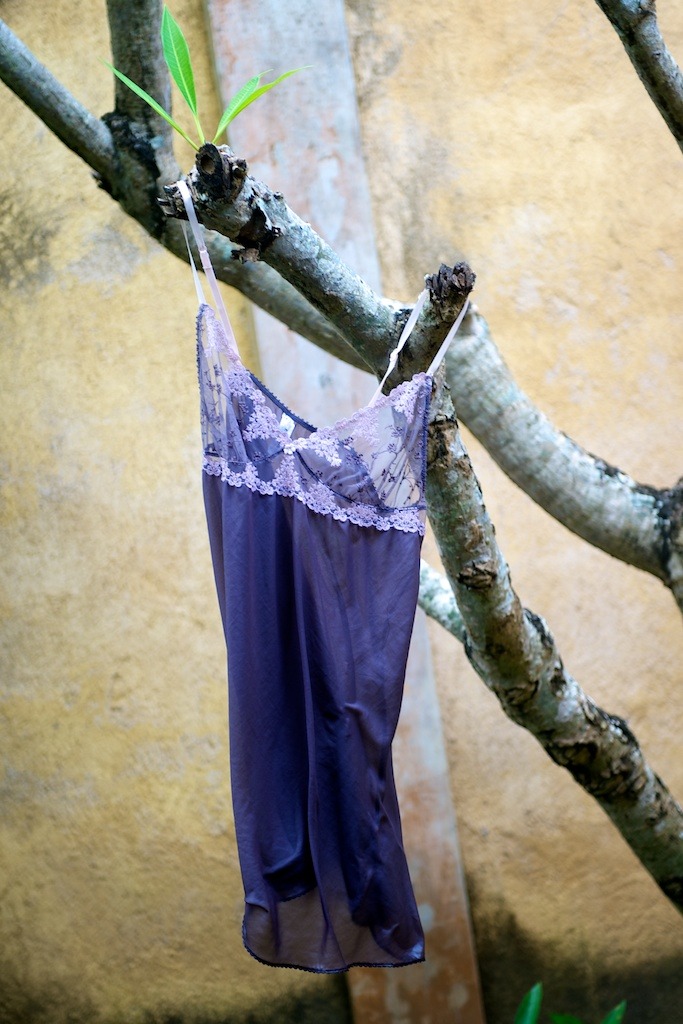
Sure, it is not easy to make something "pretty" out of chemical fibers, but often they are choosen because they are easy care. But are they really? Just a little bit too high ironing temperature and they are distroyed forever. Repairing is either not possible or not worth it. I understand the advantages of chemical fibers for outdoor clothing quite well, but even the "easy care properties" of cotton, wool, linen and silk are also very good. Just hang them on a tree and let them dry. And even they are a bit ruffled. At least they smell like fresh are and not like an oil rig.

On the way back to Beijing

After more than a week working in Wolfsburg and a wonderful weekend trip to Potsdam and Berlin, I am on the way back to Beijing. Germany is a place where life is easy. Things work efficiently, the environment is clean and people are friendly. For a moment I hesitated at that thought: Germans friendly? They did neither have this reputation nor I have them in my memories like that. But they are. Even in the North, where they are said to be "cold" and serious, I found them quite humorous. So either they have improved or I changed my benchmark. These days I am already happy, when people don't spit at me and fart strait into my face or shout into a mobile phone. But I take it with ease. Actually, I always take it with ease. That's because of my stoic personality, which is sometimes mistaken as inter-cultural tolerance.

The normal hassle on the transfer from Terminal A to Terminal B in Frankfurt was brightened up by a Lufthansa ground staff whom I asked whether there is a post office box on the way?

"Give it to me", she replied.

I gave her some postcards and she said: "I will post them tonight on the way home".

She seemed happy that someone is still writing postcards and then blushed a bit and said: "I promise, I won't read them"

How sweet. I guess, in other places they would not get to the mailbox but be strait away posted on Weibo (the Chinese alternative to Facebook - actually it is not a real alternative, because Facebook is blocked in China). I passed by long corridors of "Beauty Free Shops" (my not really funny but true alliteration of Duty Free Shops) and finally made it to my terminal. There is nothing more triste than these large airports. It feels like downtown Hong Kong: mall, toilet, food, mall, toilet, food, mall toilet, food etc. All branded, sterilized and standardized.

The advantage of a Business Class flight is more legroom. And the Air China planes are specially nice. The seat nearly unfolds into a bed. But the disadvantage is to be surrounded by a certain kind of business people, which are not just dead boring but also actively expose that by starting a conversation.  With the reform of the German education system and dropping it to down to international standard many German managers now also have serious intellectual shortcomings. It is really hard to have an interesting conversation with them. The other dominant group in the cabin are Chinese new rich who are watching cartoons, chewing on their nuts with open mouth and smiling through rotten teeth like the dogs they are. I am not looking forward to see (and hear) them having dinner!

I will have a busy second half of the week in Beijing and then teach a course in the Tongji-Mannheim University EMBA Programme. It was nice to see my colleagues in Wolfsburg, some of them again, some the first time. It was not enough time to see them all, and I missed out on a few old friends also. I am sorry. I will come again.

Breakfast at "Erlebnisstadt Wolfsburg"

Ulrich Wickert, one of the most popular news anchors in German television, once when he was asked what he likes most, answered: "French wine, French cheese and French women's legs". And then, when he was asked what he dislikes most, he said: "German wine, German cheese and German women's legs". 

I was somehow reminded of this quote sitting over breakfast in the dining hall of my hotel in Wolfsburg, being surrounded by a group of mid aged (actually about my age) German woman who must have come here for shopping in the so-called "Designer Outlets". But they seem to be traveling also internationally, as they were talking about their "Australia tour" and many others showing off to me where they have been.

I see these woman traveling the world as an integrated part of the German National Defense strategy. Nobody would ever dare to invade or attack a country where such women come from. They are the modern form of maintaining the Cold War "Balance of Threat Strategy", not with nuclear weapons but with an enormous potential of retaliation. As Germany is a core NATO member, I would be really careful as Syrian Air Defense shooting down Turkish planes in the future. You want us to send you a tour bus strait into Damascus? - Wom! 

With many hardware and systems manufacturers diversifying into the service industry, I could think that these women could make a substantial part of the business of companies like Krauss Maffei and Rheinmetall in the future. And it makes it easier also, because unlike a battle tank, combat helicopter or submarine a tour bus would not need parliamentary export clearance. Well, not yet!

Returning to Wolfsburg for a visit

Do you know the feeling, when you visit a place you were very familiar with a long time ago? While your mind is redrawing the map and match it with your memories, you get surprised how much you actually forgot. Sometimes you say encouraging: "Oh, so many things changed here". But not much really changed. It is just that you forgot a lot and always told yourself (and others) the same stories.

You meet people which have stayed over all these years. Children have turned into adults. Young people have turned into middle aged ones. The former middle aged ones are now close to retirement. Some got old, some died. The pretty daughter of the baker is not pretty any more. The soccer player from the kicking ground is now the soccer coach at the kicking ground.

The first time I came to Wolfsburg was 14 years ago for an interview. When I asked in the office in Munich how to get there, I was told:"No clue. Fly to Warsaw and then take a taxi". When I then moved there, I arrived with all my belongings packed into a Daihatsu. This must have been the strangest car ever entering the territory of the Volkswagen City (it was actually the strangest car in the parking lot of the Munich BCG office also). I left the region again in 2003 for China and now returned after more than 8 years for a business trip.

It reminds me of the feeling going back to your old school and meeting the old teachers. The formerly young ones are now in the middle of accomplishing their career. And the professional authorities of the past are now spending their last few years before retirement. In a corporate environment, where leadership changes sometimes abruptly make losers out of winners and winners out of losers, these "dislocations" can be sometimes quite severe. Still the more professional merits people have, you can see that they are less dependent than the ones which have been purely counting on personal connections and "mentors". And also those who have to many Volkswagen branded bones in their skeleton, tend to suffer personally more when these bones are pulled out one day - specially when one of them was the spine.

Caught in the rain in Beijing

Water Lily

My whole life is mine, but whoever says so
will deprive me, for it is infinite.
The ripple of water, the shade of the sky
are mine; it is still the same, my life.

No desire opens me: I am full,
I never close myself with refusal-
in the rythm of my daily soul
I do not desire-I am moved;

by being moved I exert my empire,
making the dreams of night real:
into my body at the bottom of the water
I attract the beyonds of mirrors.

- Rainer Maria Rilke

Vive le "Velosolex"

Today I tried to get spare parts for my Wanderer bicycle in Beijing. It is strange that even you would think China is a bicycle country, people actually don't know much about bicycles, and it is not easy to get parts. You also don't really get the impression that they know even how to use a spanner key or a screw driver. So finally, I decided to get what I need when I am next time in Germany, and then repair it myself.

But on my Odyssey, I had a closer look at the electric bicycles available. There is a whole range of electric scooters, but my interest was in some kind of "muscle-electric hybrid", which also is called "Pedelec". I have been trying a prototype from a colleague once, and found this the "Velosolex of the 21st Century". Not many remember the old bicycle with the small one cylinder two stroke support engine which was just flipped on the front tire when needed. I was still once riding one in the late 70s, and remember well how it blew the oily exhaust fumes strait into my face. Of course this does not happen with an electric version. Actually, the original version of the Velosolex is still available and is advertised in the US, as the "French way of getting from A to B". Other electric personal mobility concepts are provided for example by Segway. Segways are also available in China, via an importer in Guandong Province, but far too expensive to compete with the local bicycle electric competition. The one I decided for, is a simple 20 inch bicycle with a 36 Volt (10 AH) Lithium Ion battery, which is supporting via a 240 Watt motor in the front wheel. Really a bit like a Velosolex. But the manfacturer is Giant, which is a Taiwanese company, of which lso my racing bike is made. Could be called the "Chinese way of getting from A to B". The range is very much determined on how much you rely on the engine and how much you paddle. It is really a hybrid. Today I tried out nearly the full electrical range, which is about 20 km. Then the engine stopped abruptly and went home on a conventional push bike.