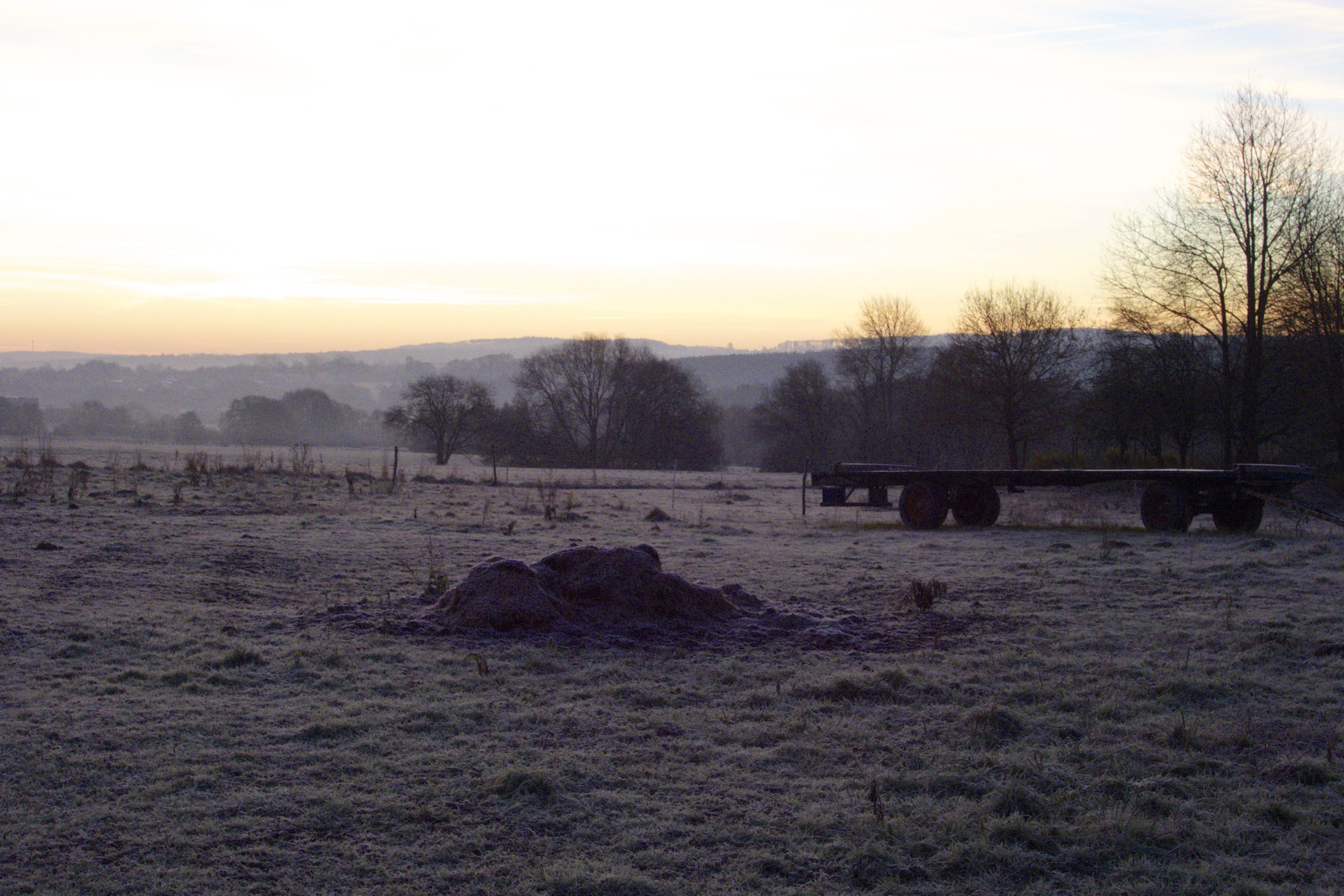
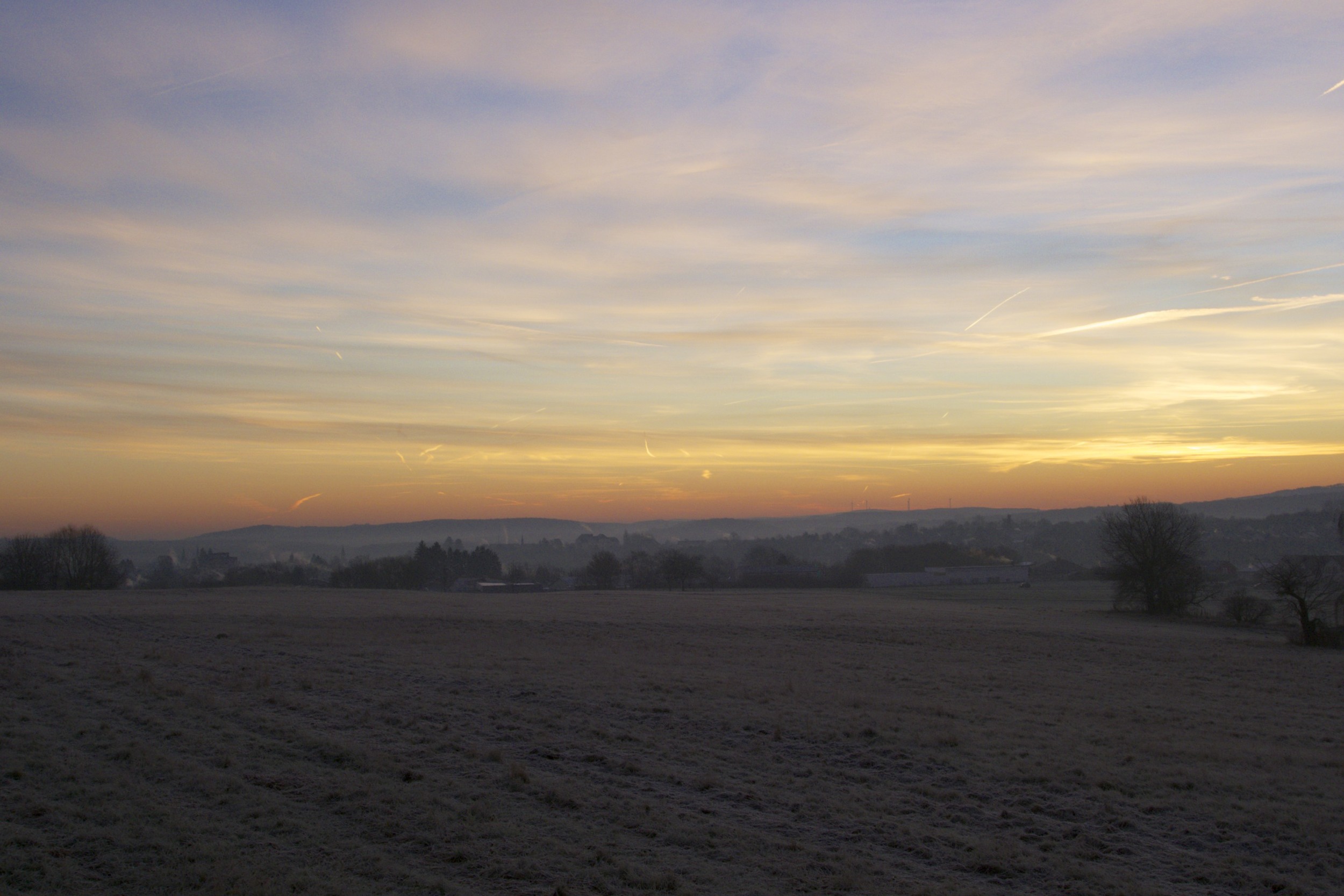
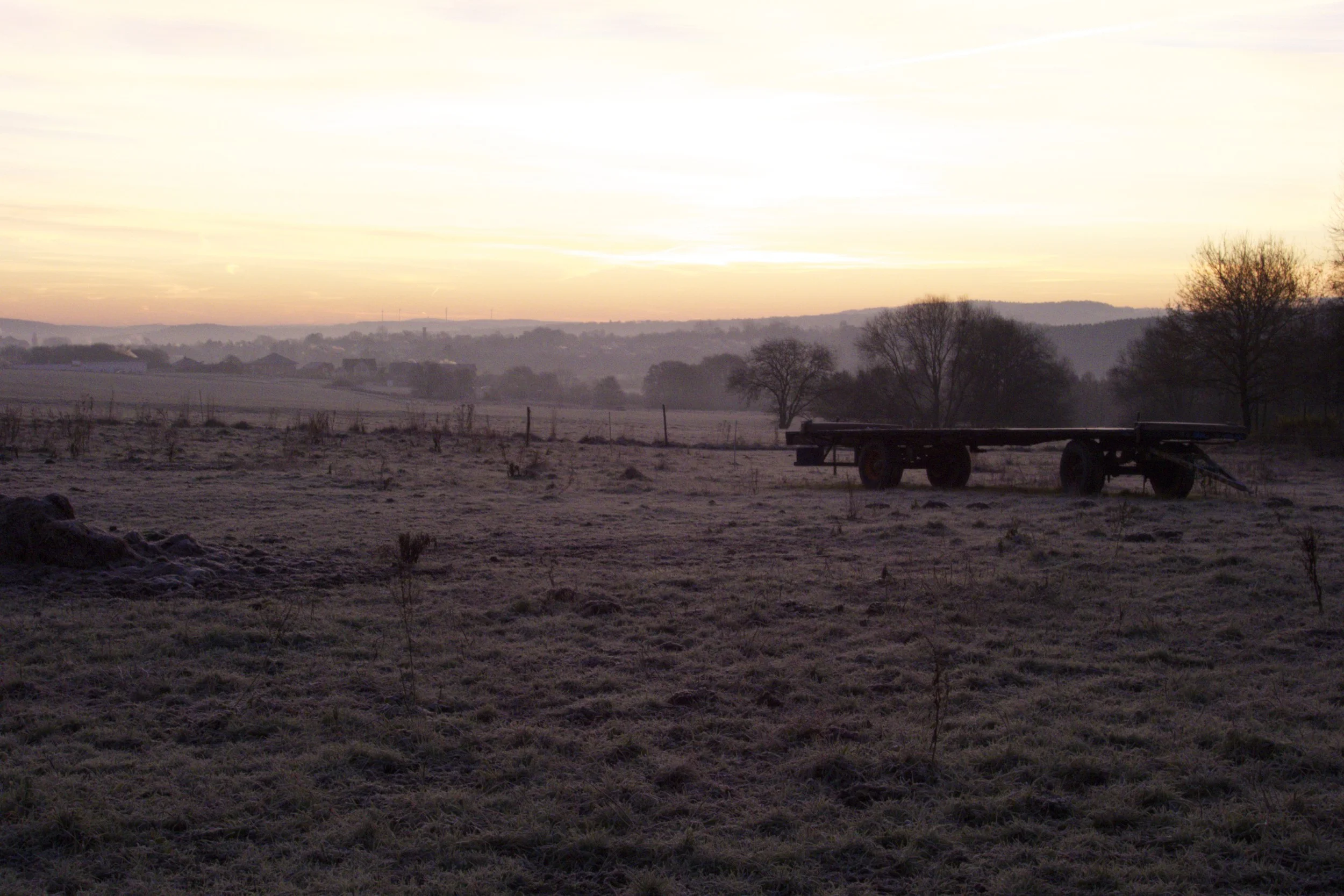
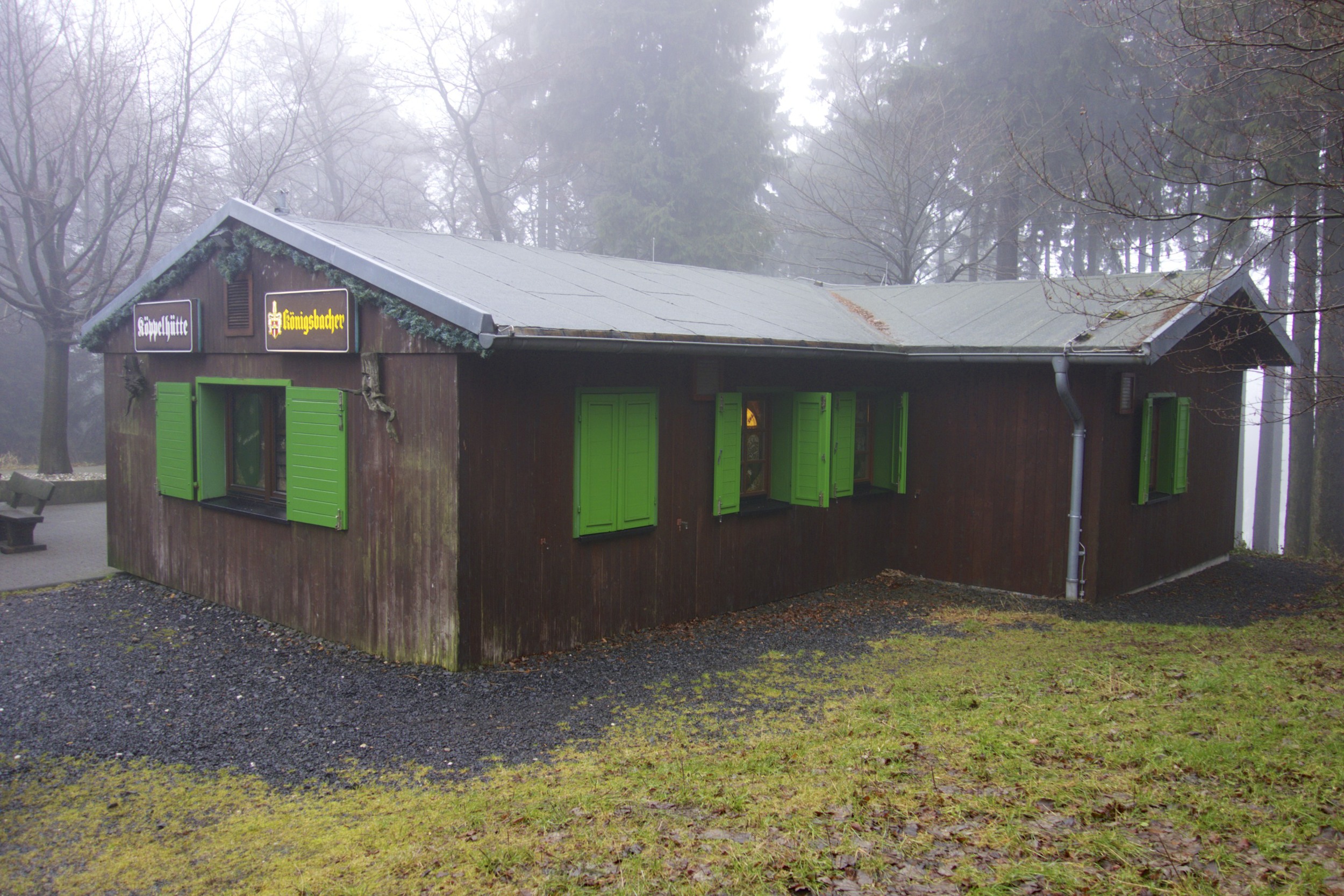
Ice carries

Today, I walked along the Beijing Canals to the office again, since I just came back from a trip to Wolfsburg and Dresden. Compared with December 9th, when I saw them last, the ice now carries. Like last year, people started clearing it for using ice skates. I walked on it the first time this winter. Soon then I can also commute by skates again. But now is Christmas time first and no thought of any office work.

A man with a broom taking a rest from clearing the ice for skaters.

A man with a broom taking a rest from clearing the ice for skaters.

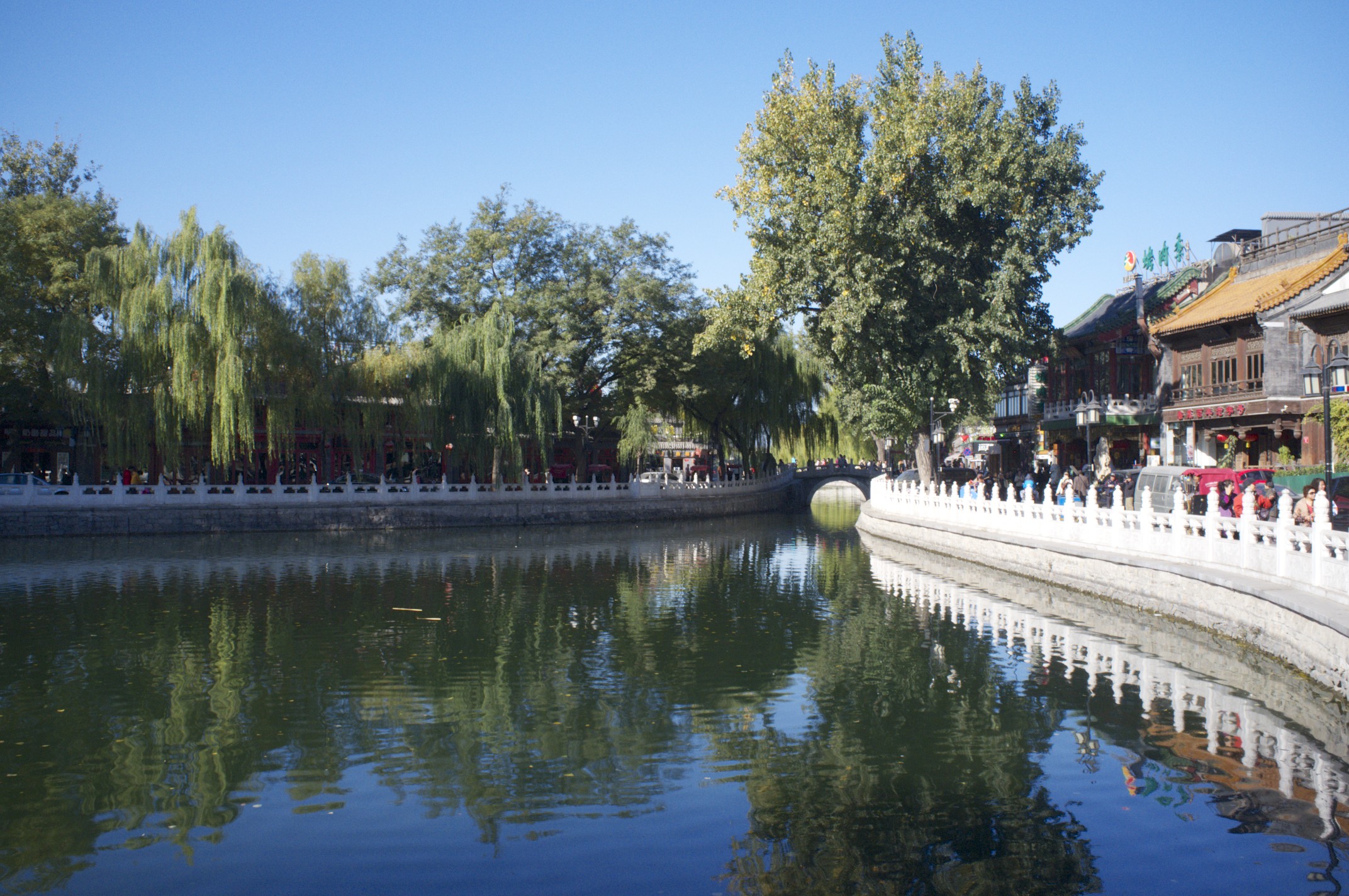
The canals of Beijing

It is still a few weeks from now and I can go to the office again on ice skates. This will be a nice commute. There is already a thin crust and expect this to become solid soon. The environmental situation of these canals has been much better this year, than before. Formerly, there was color and chemicals dumped in, to make the it not flip over into a stinking mud. This year solar powered ventilators have been applied, besides a lot of measures cutting out the access wheat. This looks like quite a successful method to keep the oxygen level in the water up.  

Thin ice on the Sanlitun canals.

Thin ice on the Sanlitun canals.

Solar powered ventilation of standing waters. 

Solar powered ventilation of standing waters. 

Master's defense

I spent the beginning of the week at Tongji University in Shanghai to participate the defense of the Master Theses of the Mannheim University EMBA. This is for the candidates the culminating point of an intensive piece of work. I enjoyed the discussions a lot and congratulate everybody to their success. Of course I am thrilled that the students I supervised did very well, even two of them "excellent", which is a very outstanding result in our very rigorous evaluation system. You convinced a very tough evaluation committee of two Universities of the quality of your work. Well done. Now I am on the last Airport Express train back on the way to Beijing city. The air is filthy, and the sulfur bites the nose. Always when I arrive in Beijing Airport and the hall looks like somebody burned a fire in there, I just want to turn around and get on the next flight to hop over to Japan. But okay, the week will be a short one. And perhaps we get a bit of wind from the North.

Chairman Mao hailing on campus. He is not really known as somebody who cherished academic work, sharing of knowledge and a fair debate. So a University campus would be the last place you might expect his statue. But he is still around. I guess movin…

Chairman Mao hailing on campus. He is not really known as somebody who cherished academic work, sharing of knowledge and a fair debate. So a University campus would be the last place you might expect his statue. But he is still around. I guess moving these monuments needs more than just a bulldozer.

Camera Obscura

Recently I went into a Leica store in Beijing. Sure, the brand has revived. But it looks like it is more about special editions than about special cameras. I am waiting for the Hello Kitty Leica. Please don't ask for it! They will make one! Don't get me wrong: the M9 is a wonderful camera. So are others. But first of all, I don't think many professional photographers can afford them. And secondly there are quite a few compacts in the range which are surprisingly close to some Panasonic models. The staff in the shop was by the way incompetent and unfriendly. But this might not be Leica. It's China.

Now I just discovered that Hasselblad seems under the same urge of entering the "mass market" of the new rich. The Hasselblad Stellar is nothing but an overpriced Sony RX 100 , both with the same Zeiss lens. No difference except three times the price and a bit of design makeover. The Hasselblad Lunar is the excellent Sony NEX-7 (have one) with a nicer design and a leather case making it five times the price. If I would be a Private Equity company, I would probably do the same thing. As a professional manager also. Shareholder value, I know. But as I always looked up to the great cameras of Leica and Hasselblad for their technical abilities, I feel I will rather stay with my Fuji X-100 and Sony NEX-7 and read the specs more carefully before being impressed by legends. 

Die Bremer Stadtmusikanten

In the last few days I was more on the phone than on the computer. There was a bit of administration "with Chinese characteristics" which drove me nuts. But who cares in the end? A dear old fellow and colleague passed away, after suffering for more than two years. Three days before his death he had a five hour conference call with his team. His mission was to give us the right cars at the right time. He did. For now and for the years to come. I admired Reinhard Fischer for his good humor, for his determination, and for never complaining. Facing death for years, he still put his mission first. That's all I knew of him. Of course I was wondering whether this is heroic or sad. But now is not the time to wonder. It is heroic!

Friends called from all over the globe. Mostly in their early 60s or just late 50s. We chatted and they told me how they are doing. It was often ironic. We laughed a lot. I heard a lot of anecdotes how the leaders of the past are becoming a burden of the present. And how they are told that they should step down, after they have been encouraged a lifetime to step up. The young hotshots are pushing. Have I not been myself a young hotshot recently? I am still in my 40s.

I was reminded of a tale, which every child knows in Germany: Die Bremer Stadtmusikanten (engl. The Town Musicians of Bremen). But no child understands it. It is the story of an old donkey picking up an old dog, and old cat and an old rooster. Together they go to Bremen, which was then a free "Hansestadt" (some kind of free trade zone) and become town musicians. Everything must have been possible at the Bremen of that time. They all leave a place where they are presumably a burden to the one who feeds them. And on their way they defeat a gang of robbers heroically, each with its unique skills and experience.

I have seen this story so many times in corporate life. And I have witnessed often enough how embarrassing it can be when big corporations "handle" their passing staff in the final stage. 

And this is where I remember the childhood story and my favorite quote: "Join me. Something better than death we can find anywhere."

Hutong Weekend

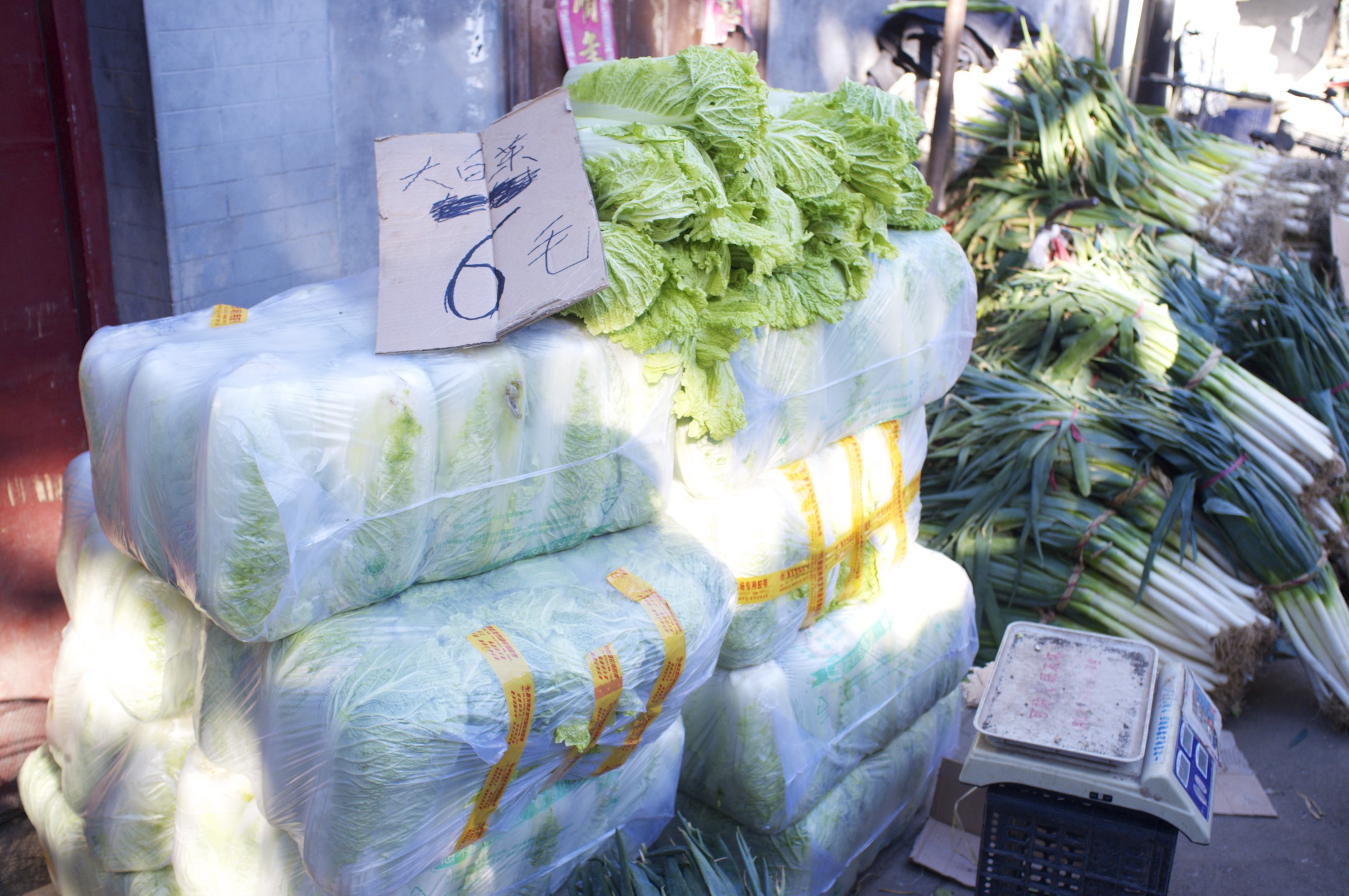
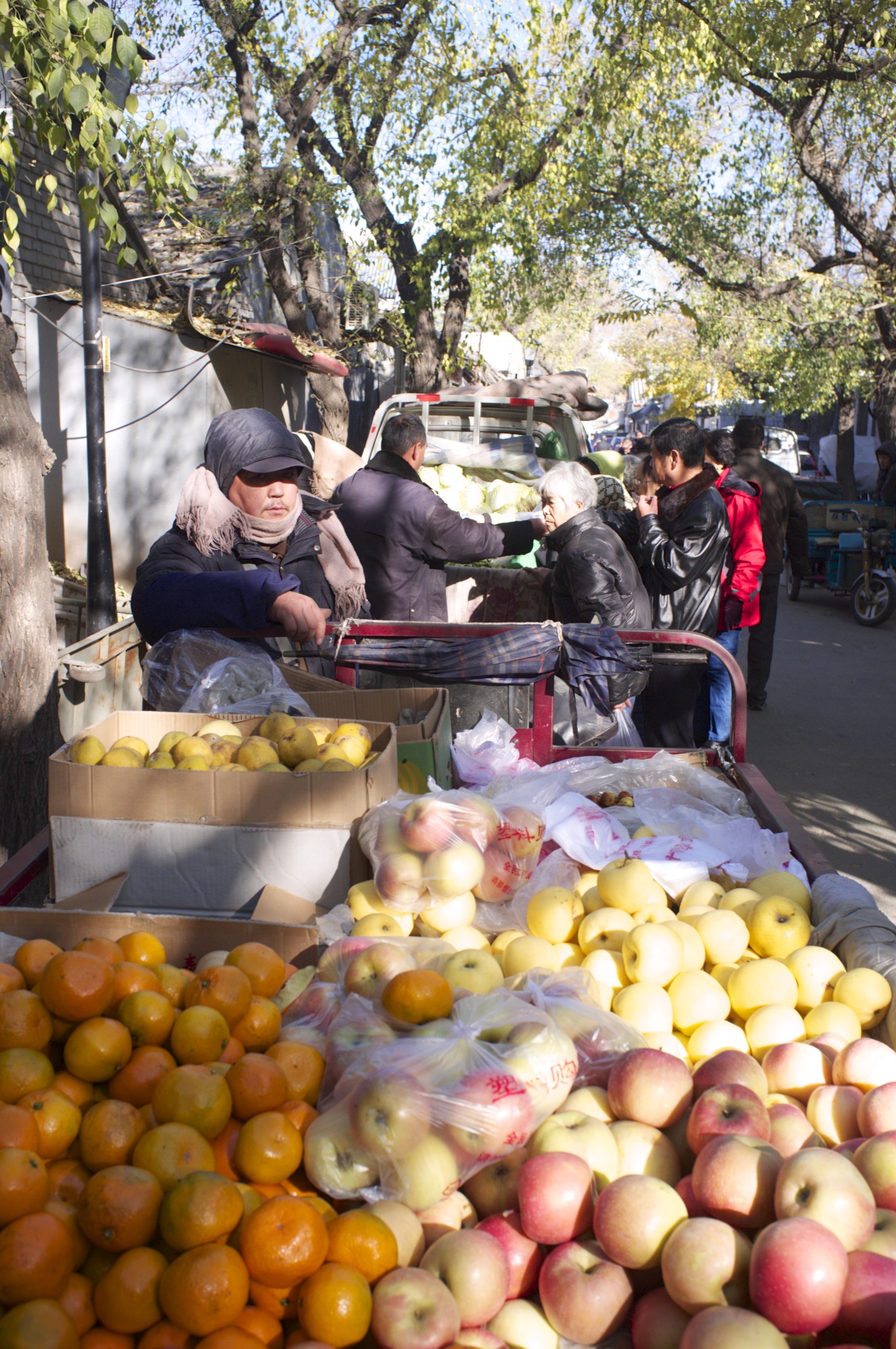
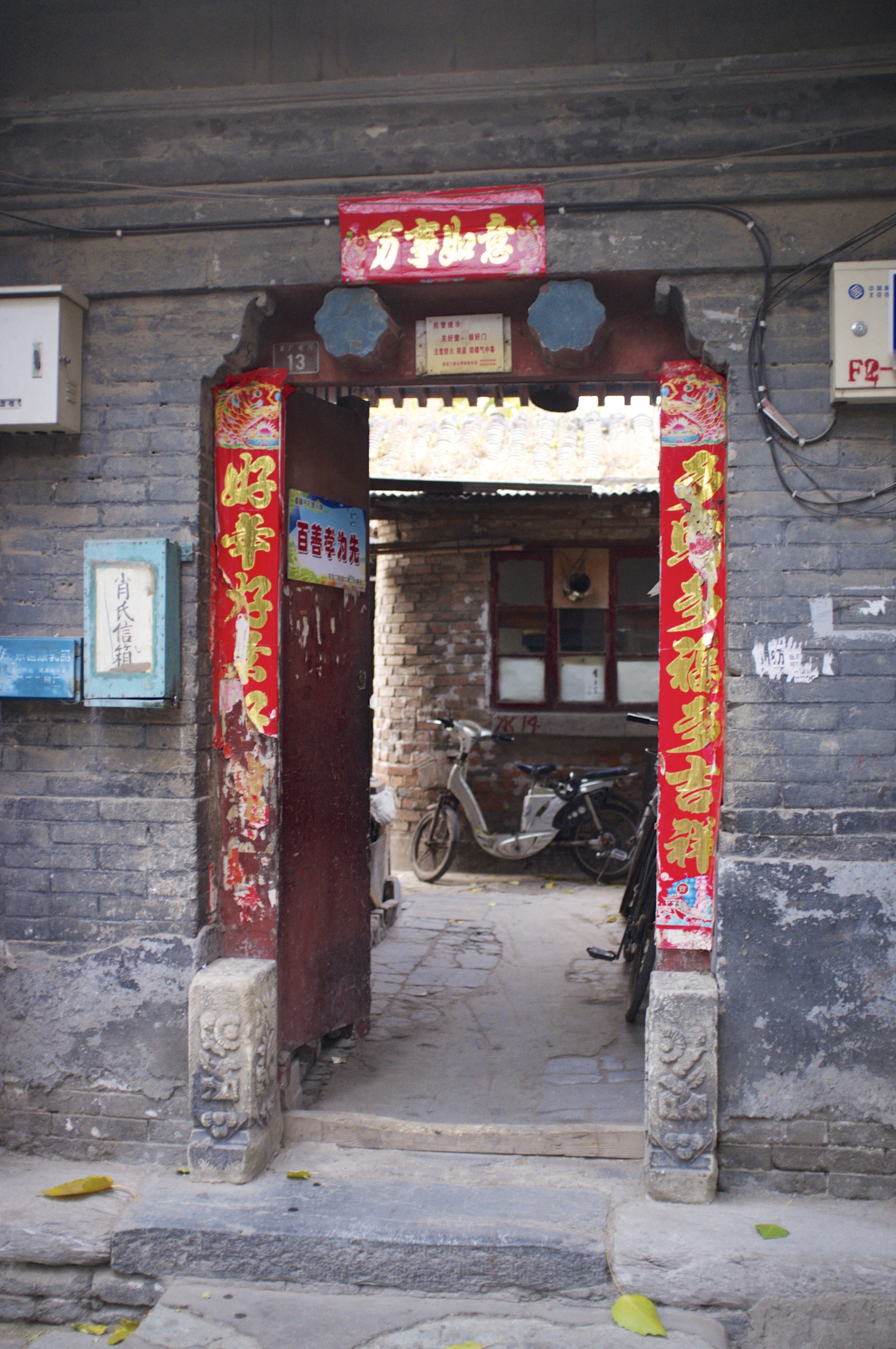
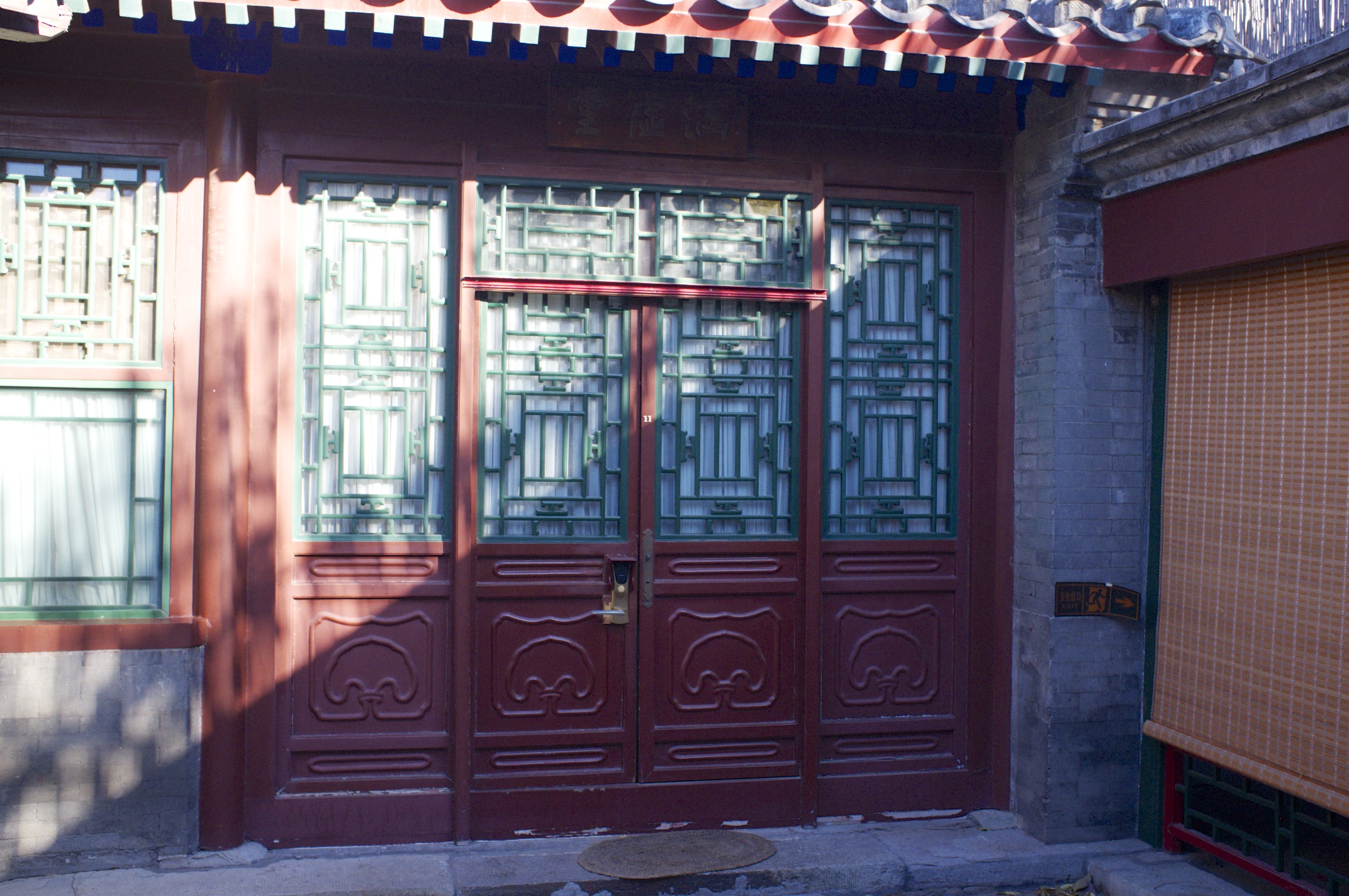
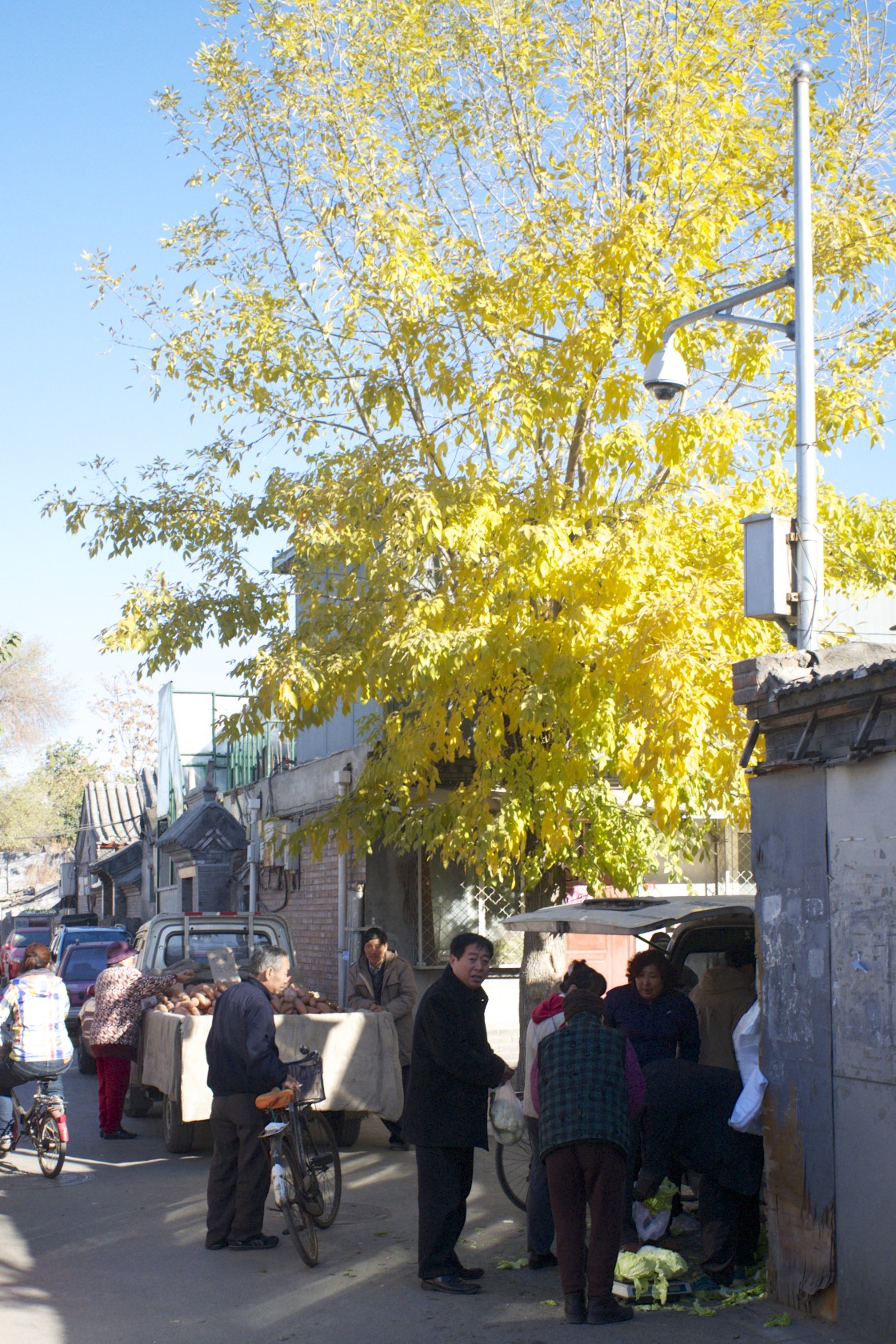
Usually at this time of the year the weather in Beijing passes through a very short autumn into winter. So it did this weekend. The best place to experience this, is in the Hutongs. We spent the time there staying in an old courtyard and woke up after a night of strong wind in piles of crackling leaves and with clean air and blue sky, exploring the narrow streets and its markets in the morning of Sunday. This is one of the most genuine parts of the city. Now winter will follow very fast. And it will be a cold one I guess. For me personally, it will be also the last one for a long time to come.

Chuandixia Village

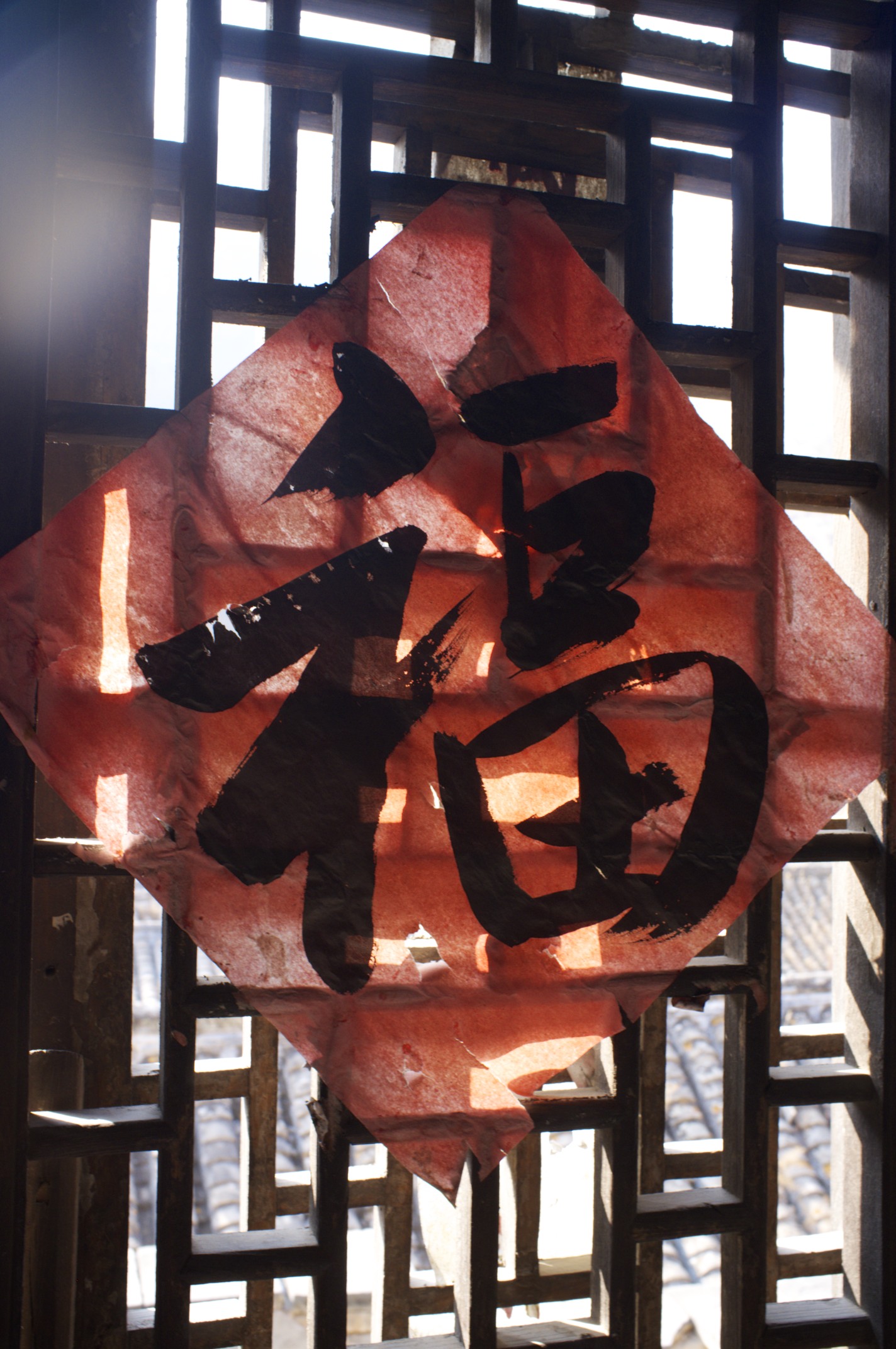
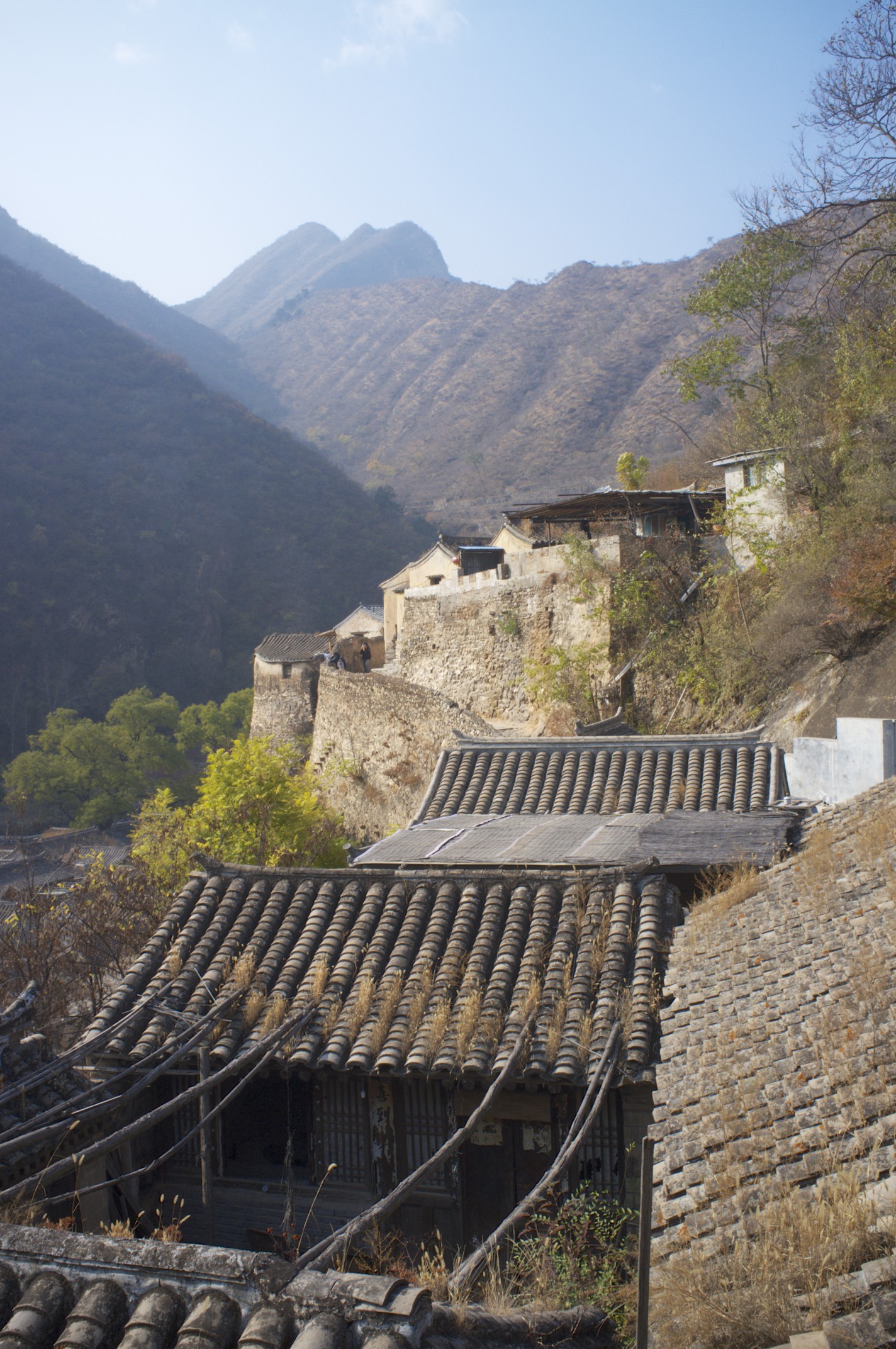
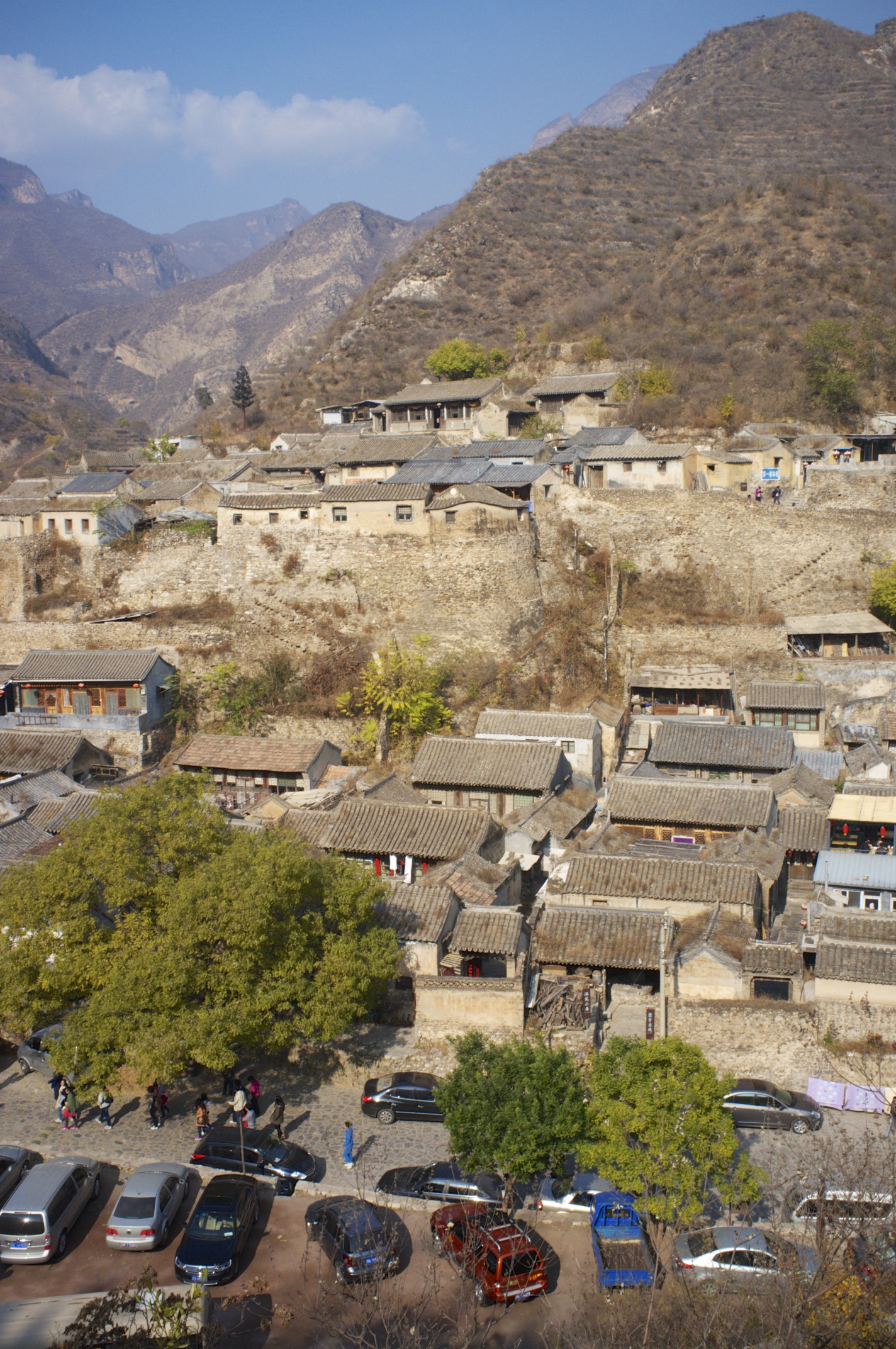
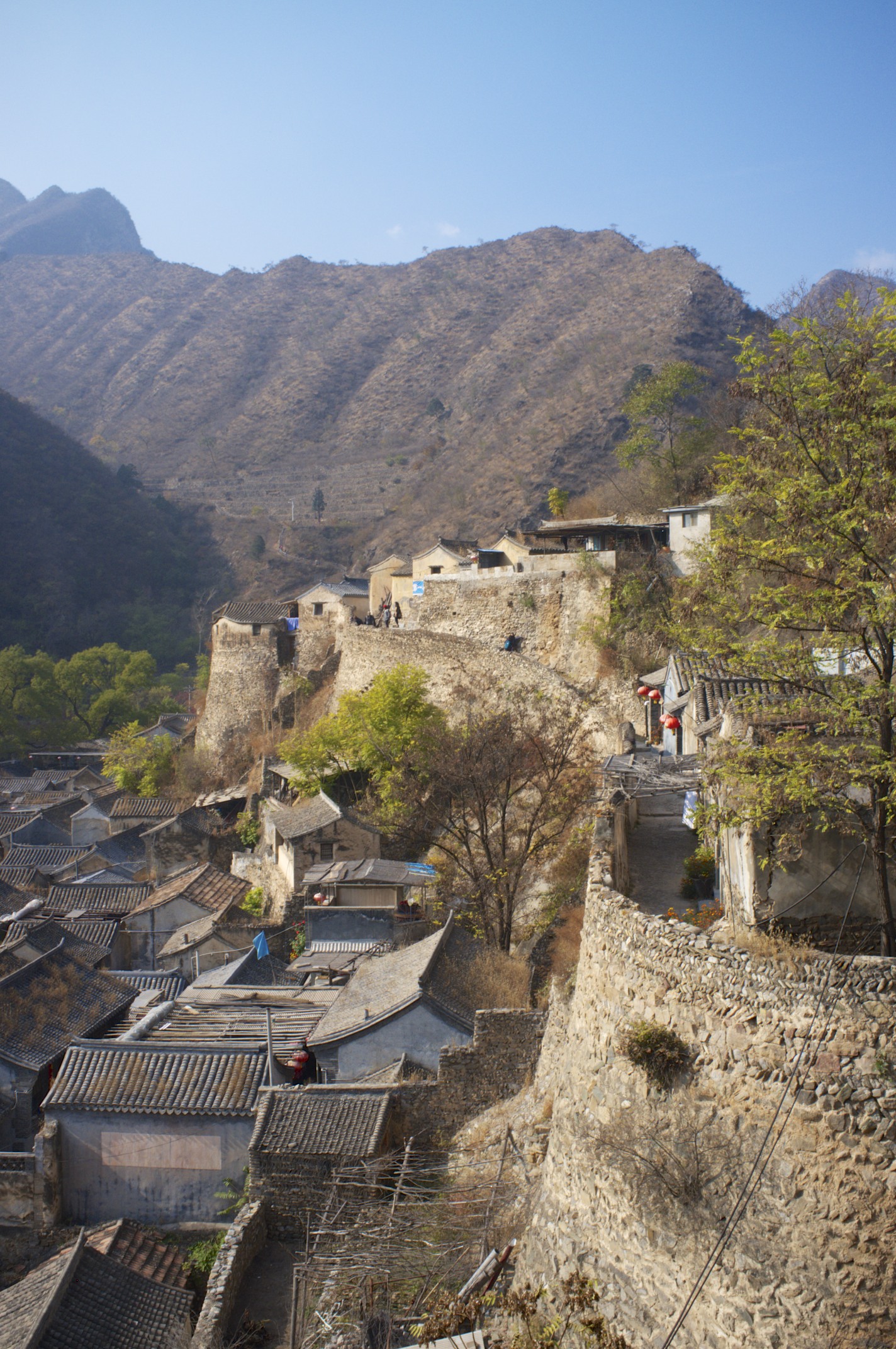
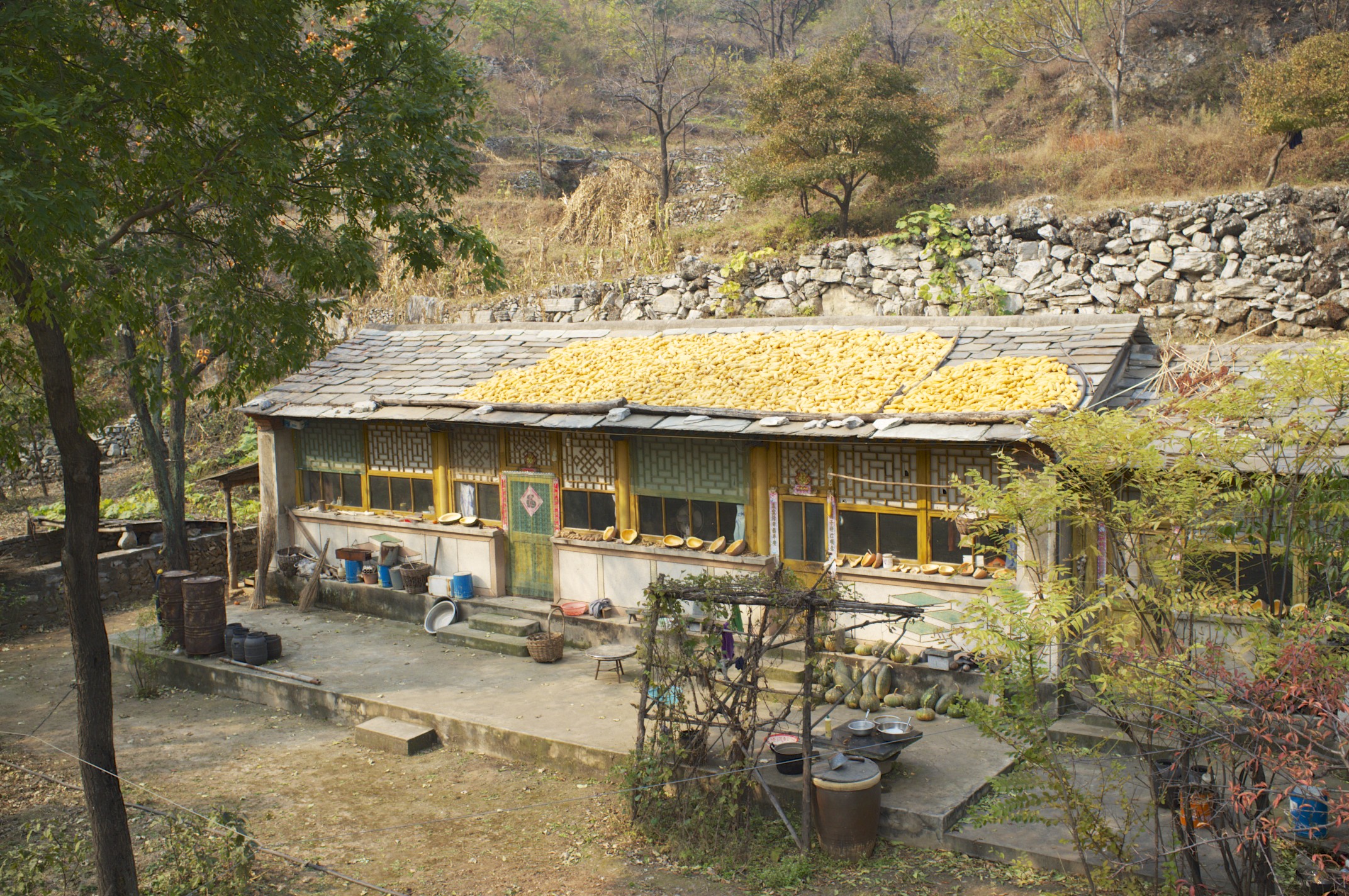
Chuandixia Village lies about  hours drive into the mountains West of Beijing. It is a small village of courtyard houses, which was located at an ancient trade route and served as a resting place for traders before they reached the Beijing markets. It was also one of the strongholds and hiding places for Mao's troops in the Anti-Japanese war. After 1949 the village fell into economical hibernation until it was "rediscovered" by photographers, painters and film crews in the 90s. It is a nice day trip into a beautiful mountain landscape. The roads are curvy and it needs a bit attention, as some drivers do risky maneuvers overtaking. But the location is easy to reach. We actually did it in a company outing, driving in a convoy of 6 vehicles. 
Chuandixia village as seen from the hill on the Southern side of the valley.

Chuandixia village as seen from the hill on the Southern side of the valley.

Trail marked on Google Earth, showing the way up to the viewpoint on the village. 

Trail marked on Google Earth, showing the way up to the viewpoint on the village. 

You may download the GPS track including the driving route by clicking here: in gpx- and tcx-format. The Southern branch of the mountain route leads to an excellent rural restaurant.

General location of the village in relation to Beijing city.

General location of the village in relation to Beijing city.

Baojin Shankou Hike

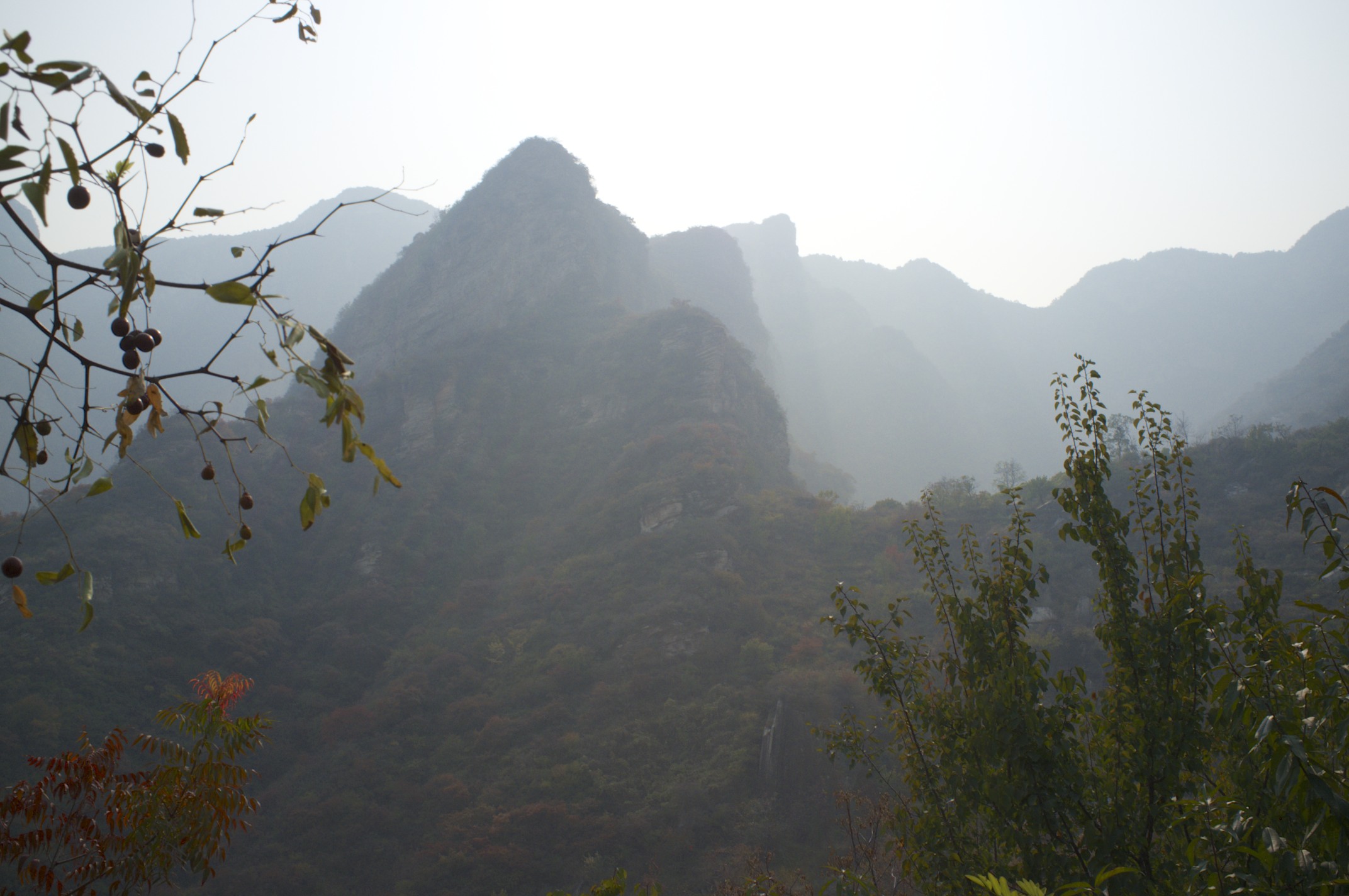
In the South-West of Beijing lies a limestone area resulting in a magnificent karst landscape, North and South of the Baojin Shankou Canyon. There was a bit of haze today, but it clear weather it must be even more beautiful. On the South there are gardens and small farms. In the past all over here food was grown. Now there are just remains left, but they are still active.


You may download here the GPS track in gpx- and tcx-format. We started a bit late today and did not explore the area to the fullest. Given the geology, there must be caves around. We met a teenager with a torch (and an acrobatic throwing knife, which impressed me a lot) who was heading for one of them. But we returned to avoid sunset before reaching clear trails again. To reach the starting point you will have to cross a bit of "Tourism with Chinese characteristics". But no worries, they will all disappear into some sort of park worshipping with their mobile phone cameras some sort of plastic Confucius. This absorbs them all, really.

Here comes position and GPS plot: 

20131027 Overview.jpg
20131027 Baojin.jpg

Yangtaishan Sunday Walk

Yangtaishan is in the North-West of Beijing, beyond the heavily tourist contaminated territories, but still close enough to the city for a sunday outing. You might still run into so-called "hiking groups", but they are noisy enough to be avoided from far. There are some "parks" around. But the term "park" means a different thing in Chinese. It is more like: "build a gate and randomly ask for money".  So, don't enter the "parks". Today's walk was about 16 km and elevation gain 1041 m. That's nearly a bit of exercise. You may download the GPS logs in tcx or gpx format by clicking on the links. The first trees are turning yellow and red these days and show us another autumn is coming. 

DSCF9627.jpg
20131020 Yangtaishan.jpg

Development knocking at the door

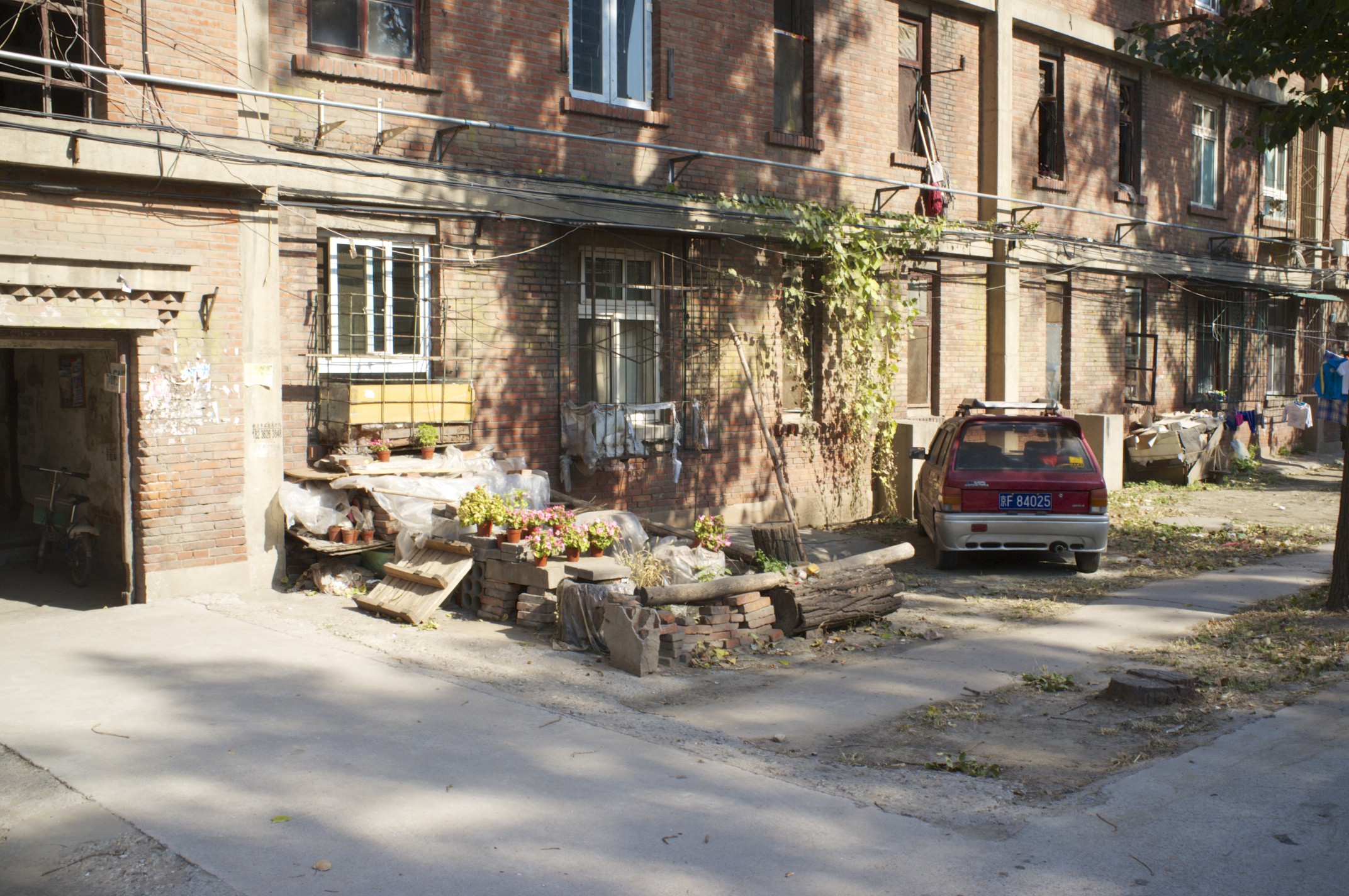
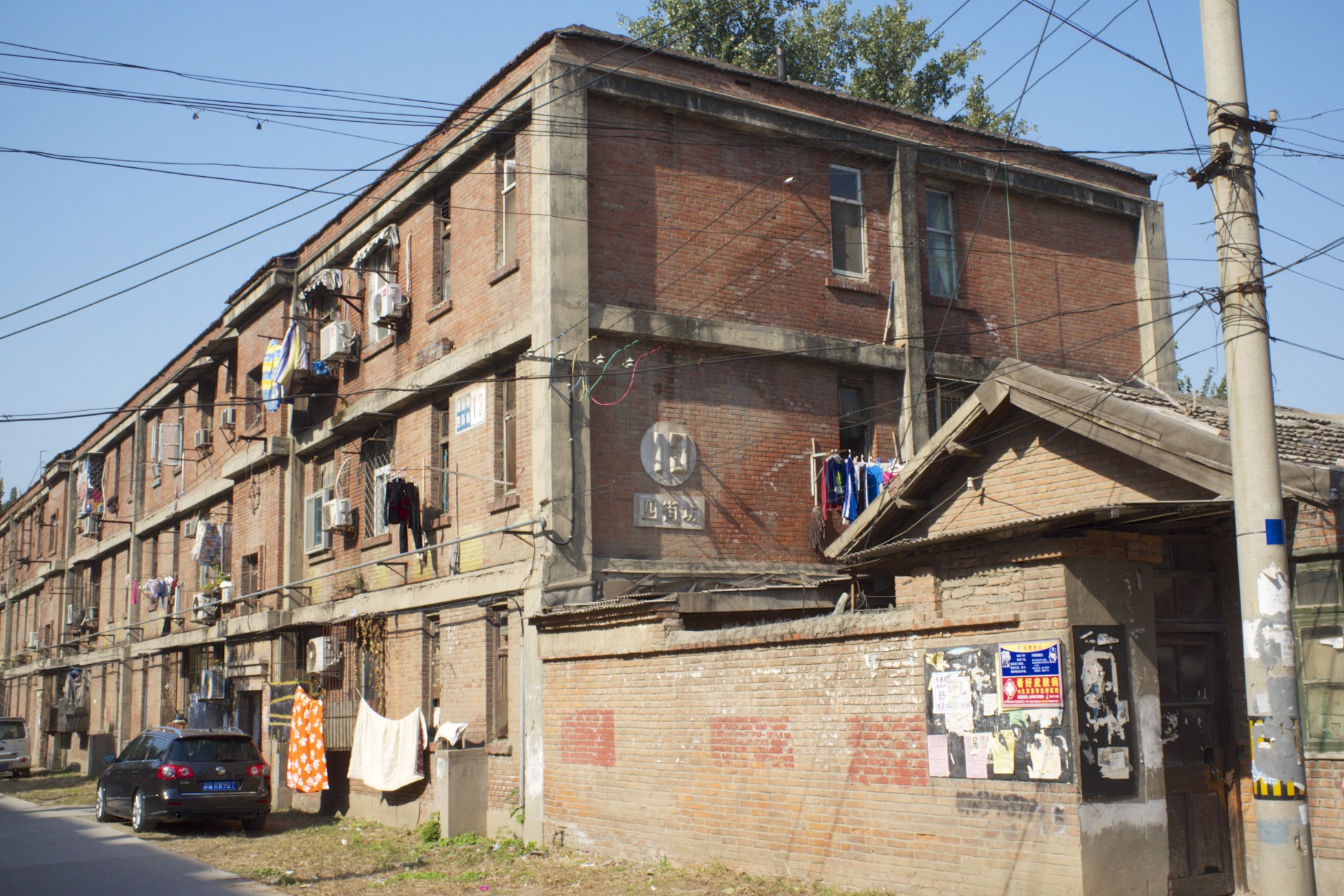
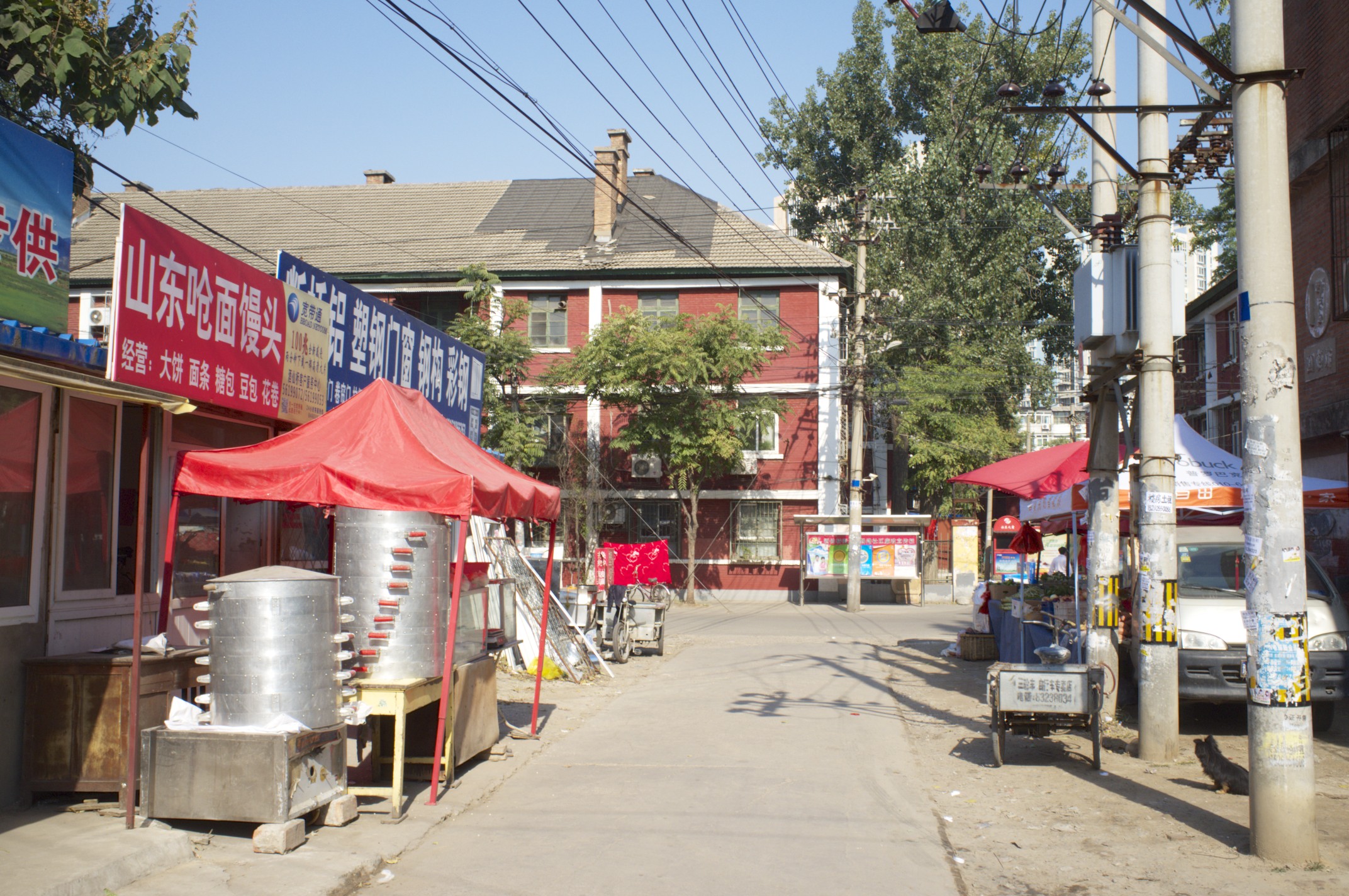
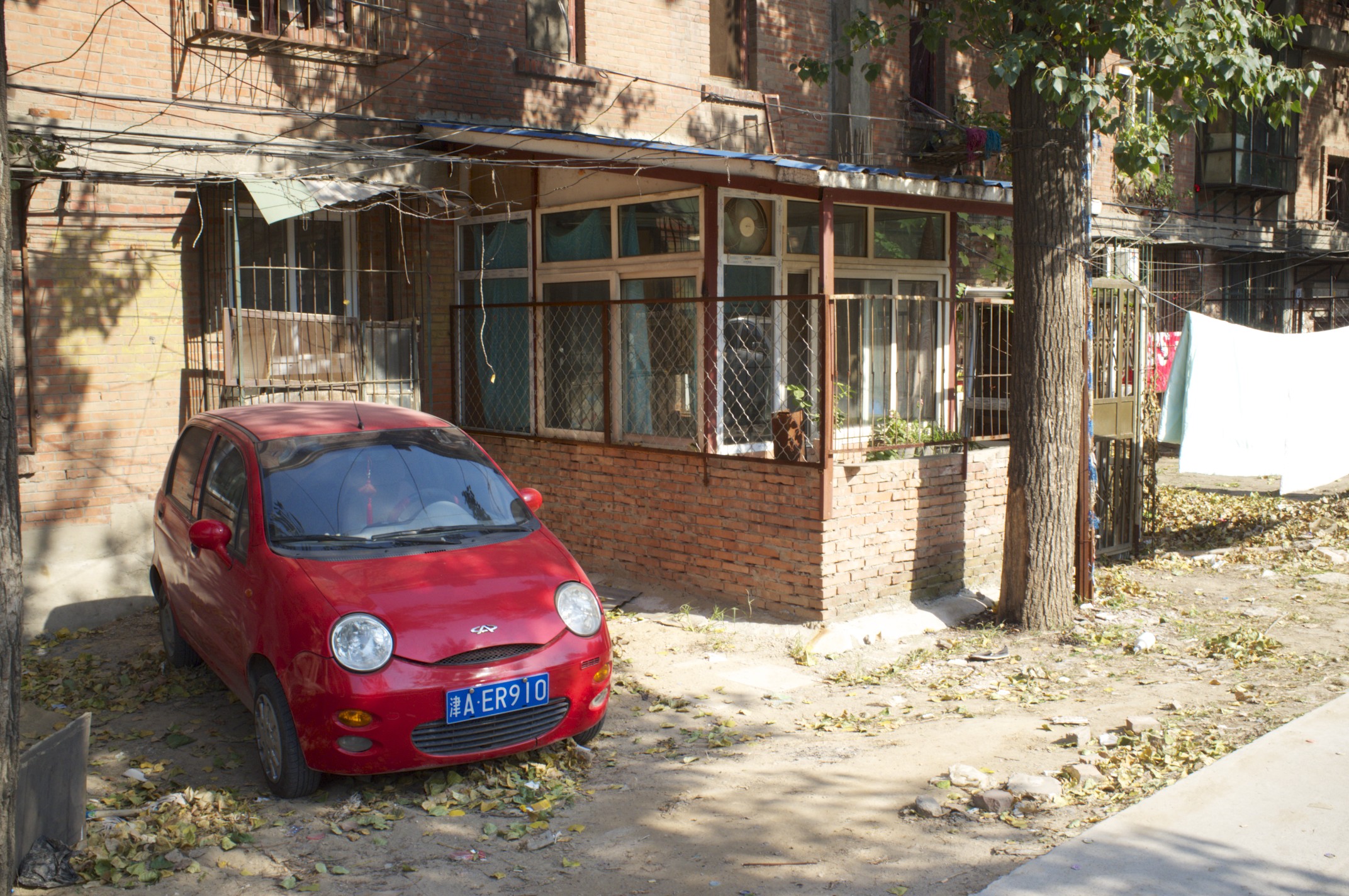
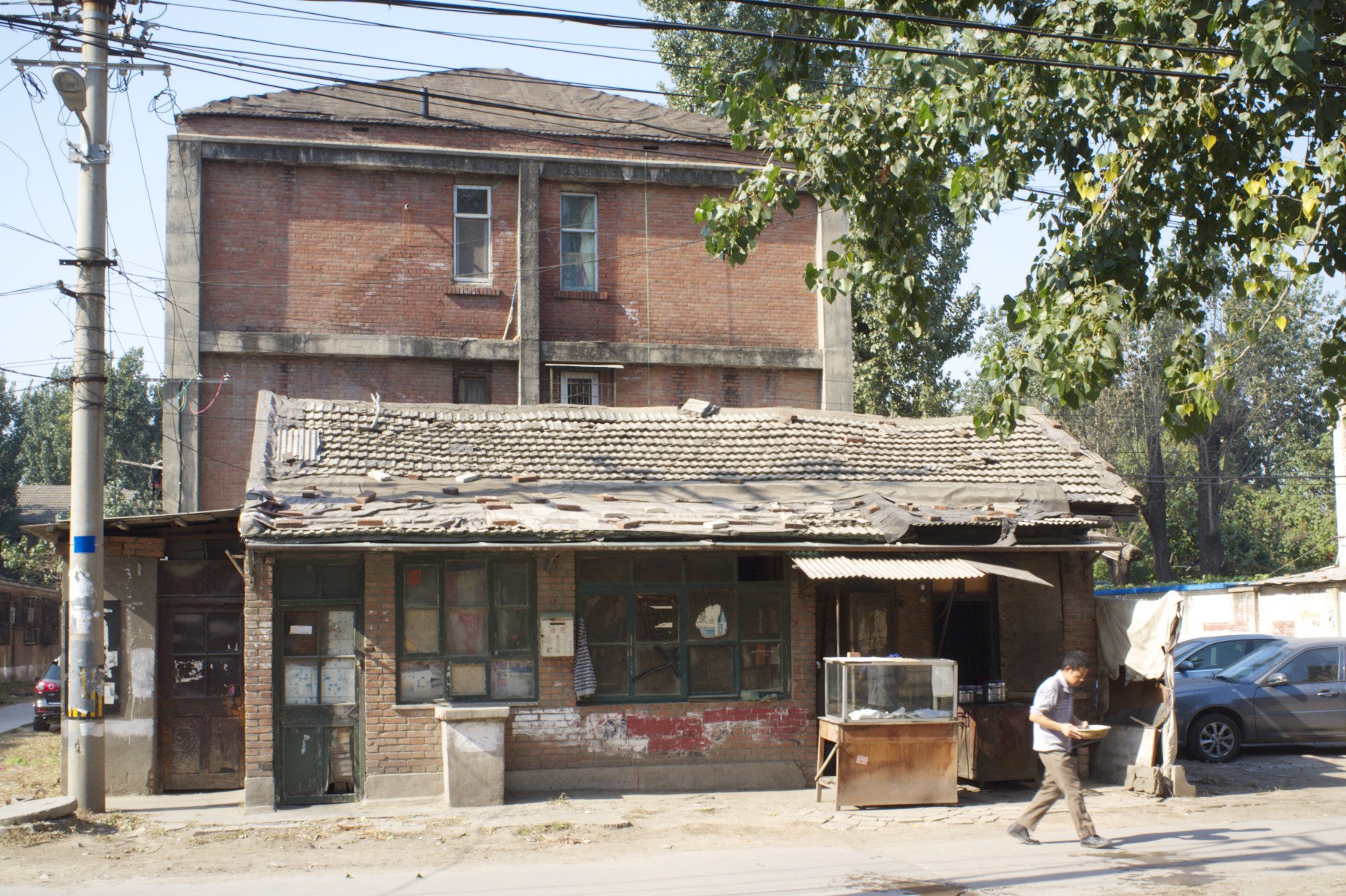
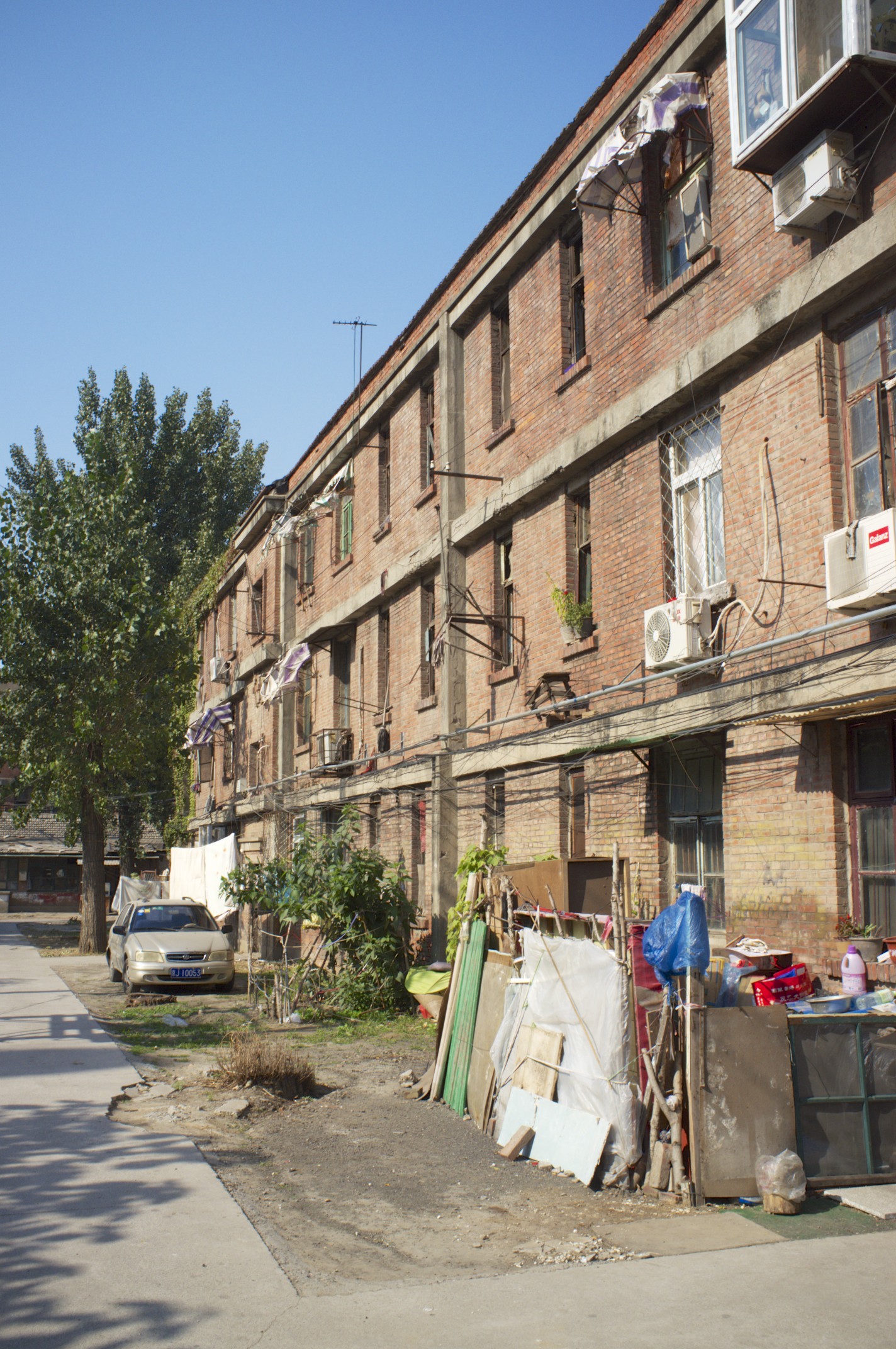
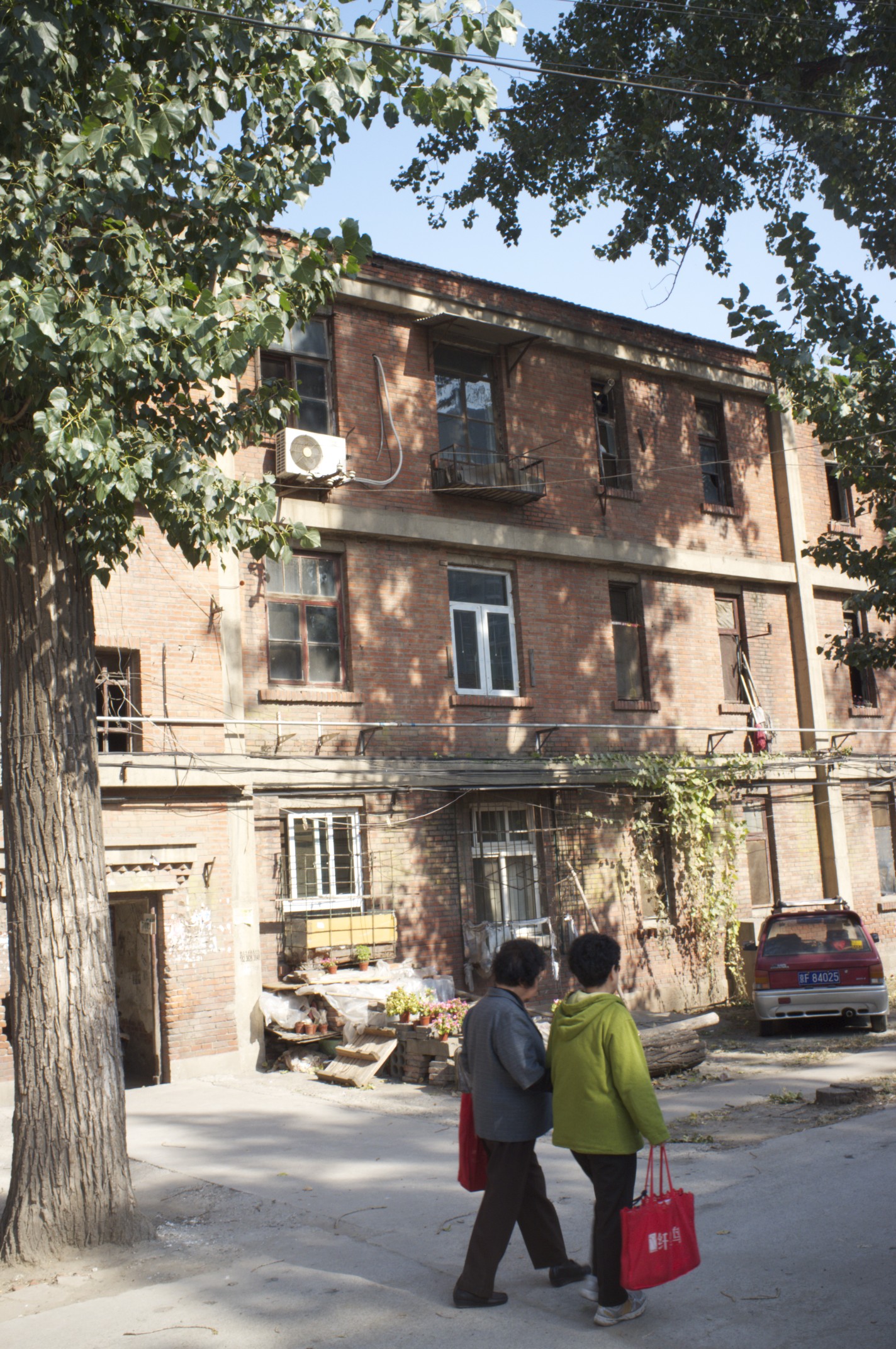
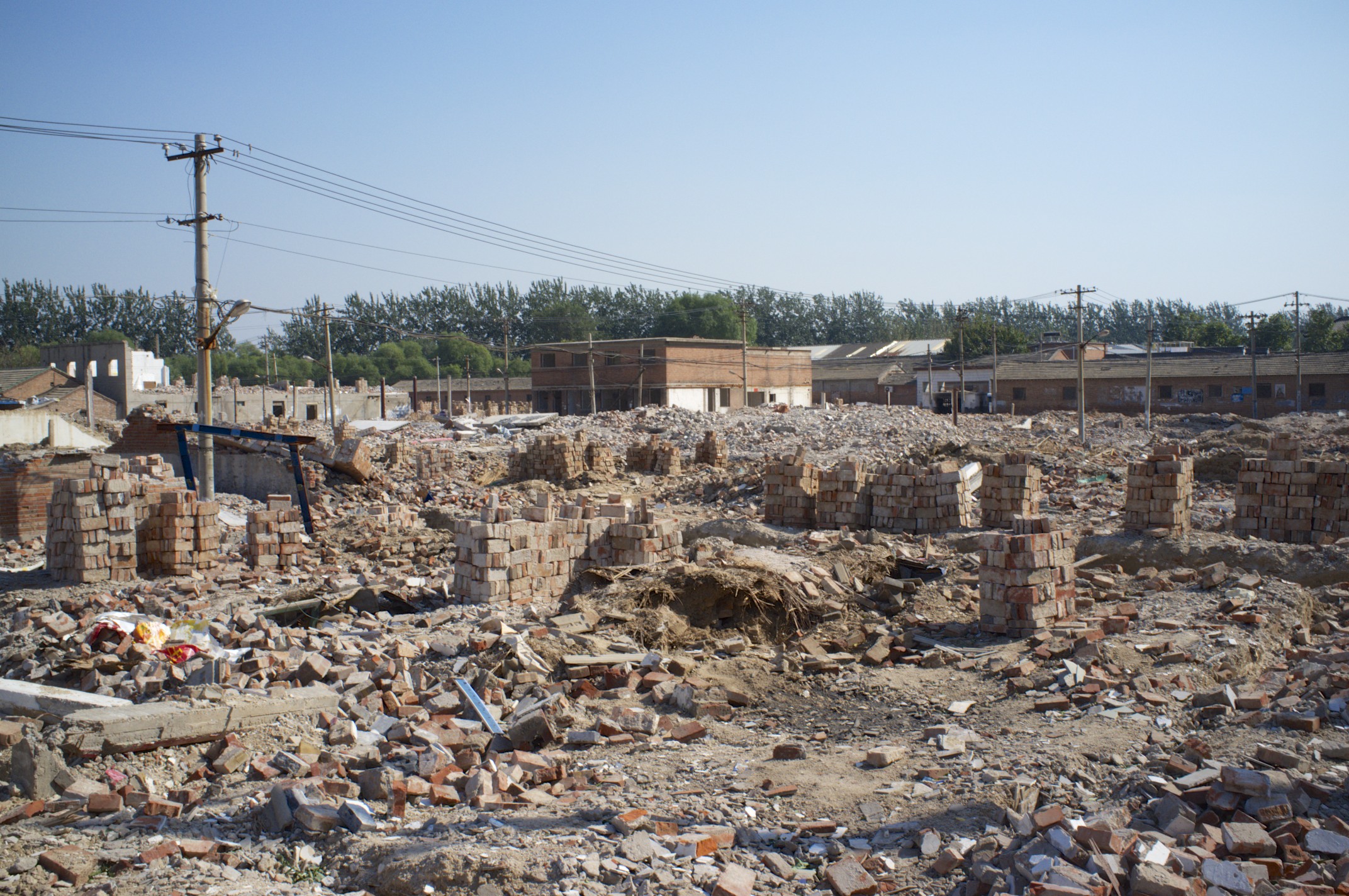
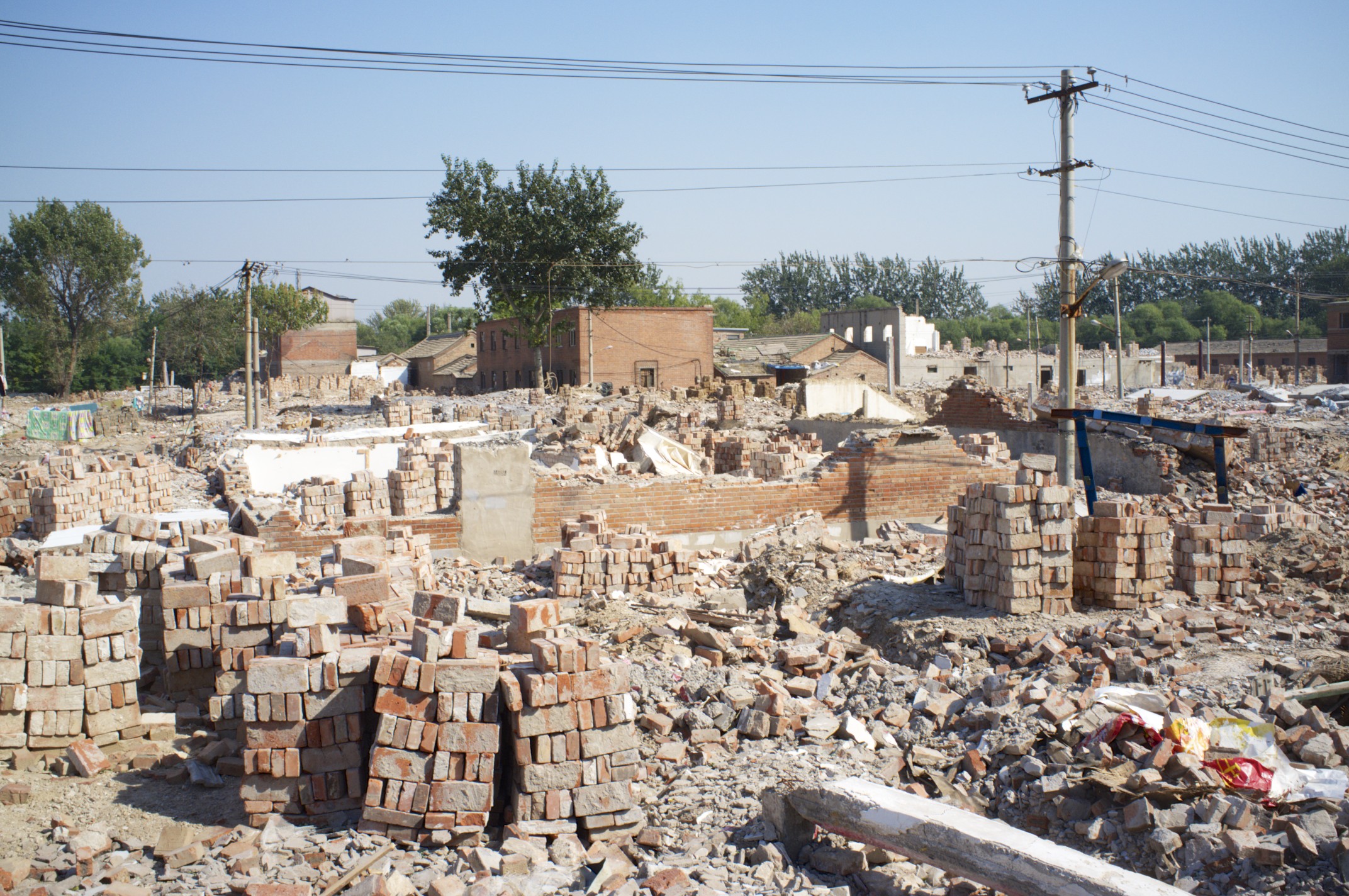
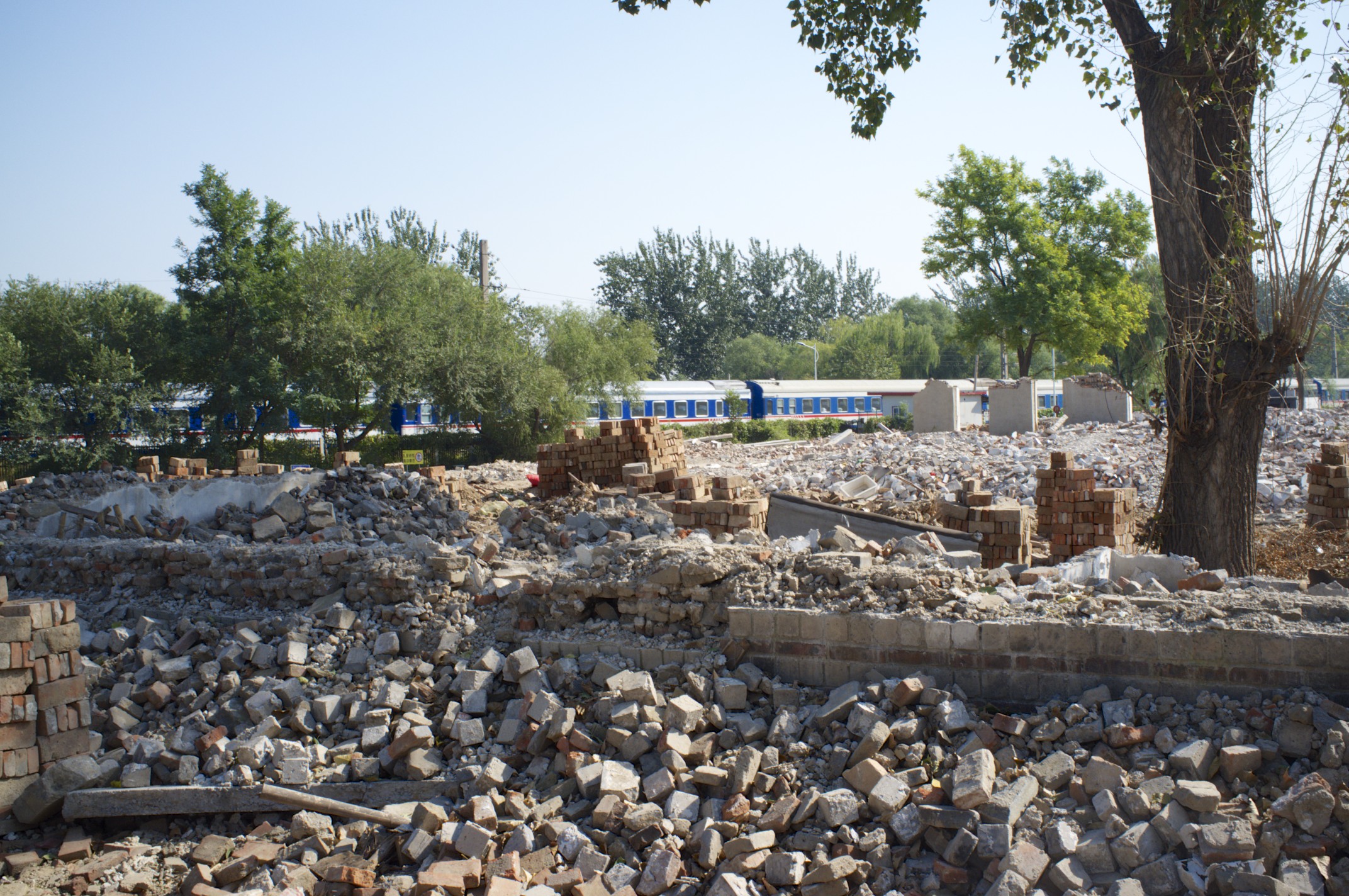
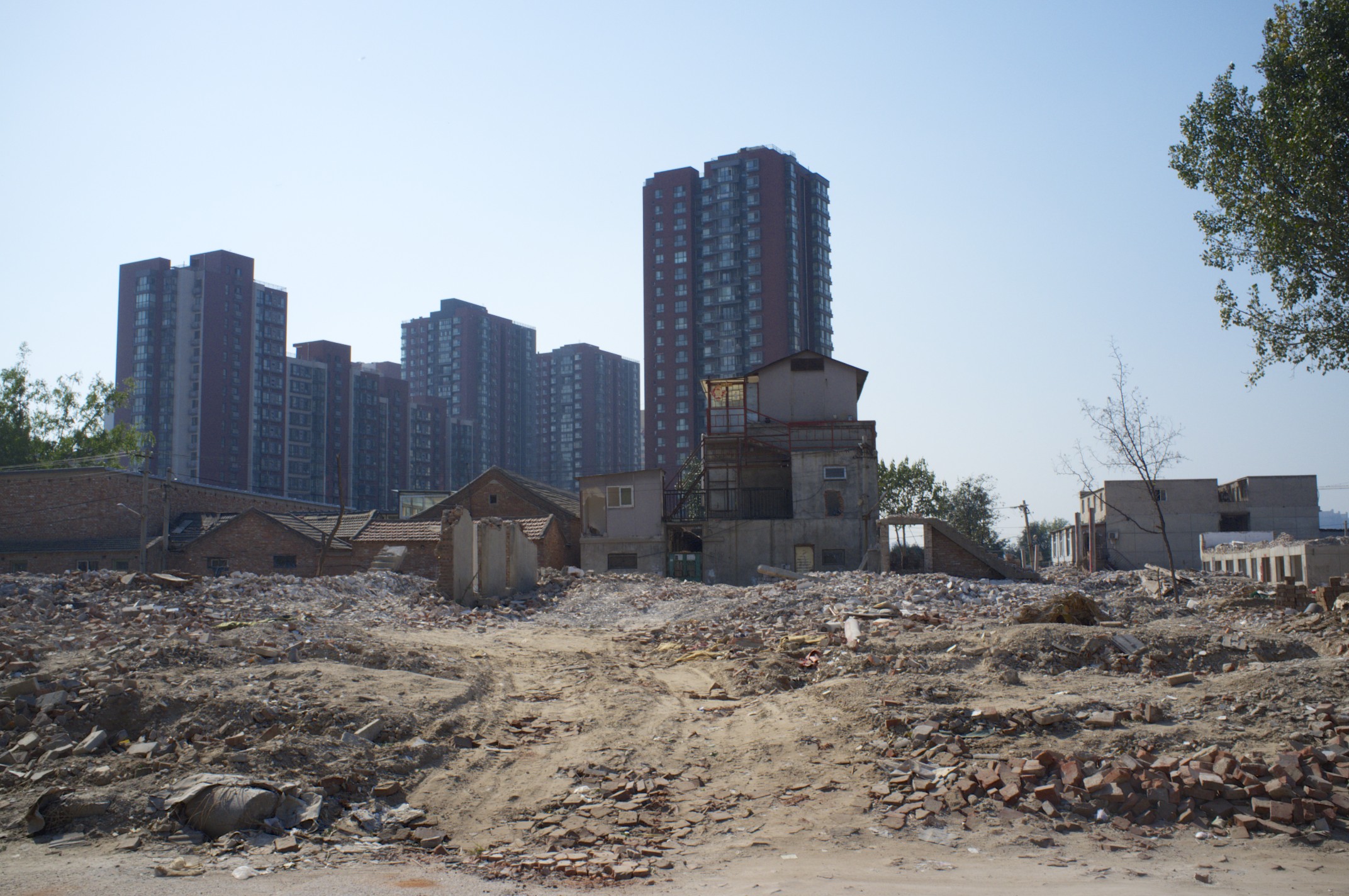
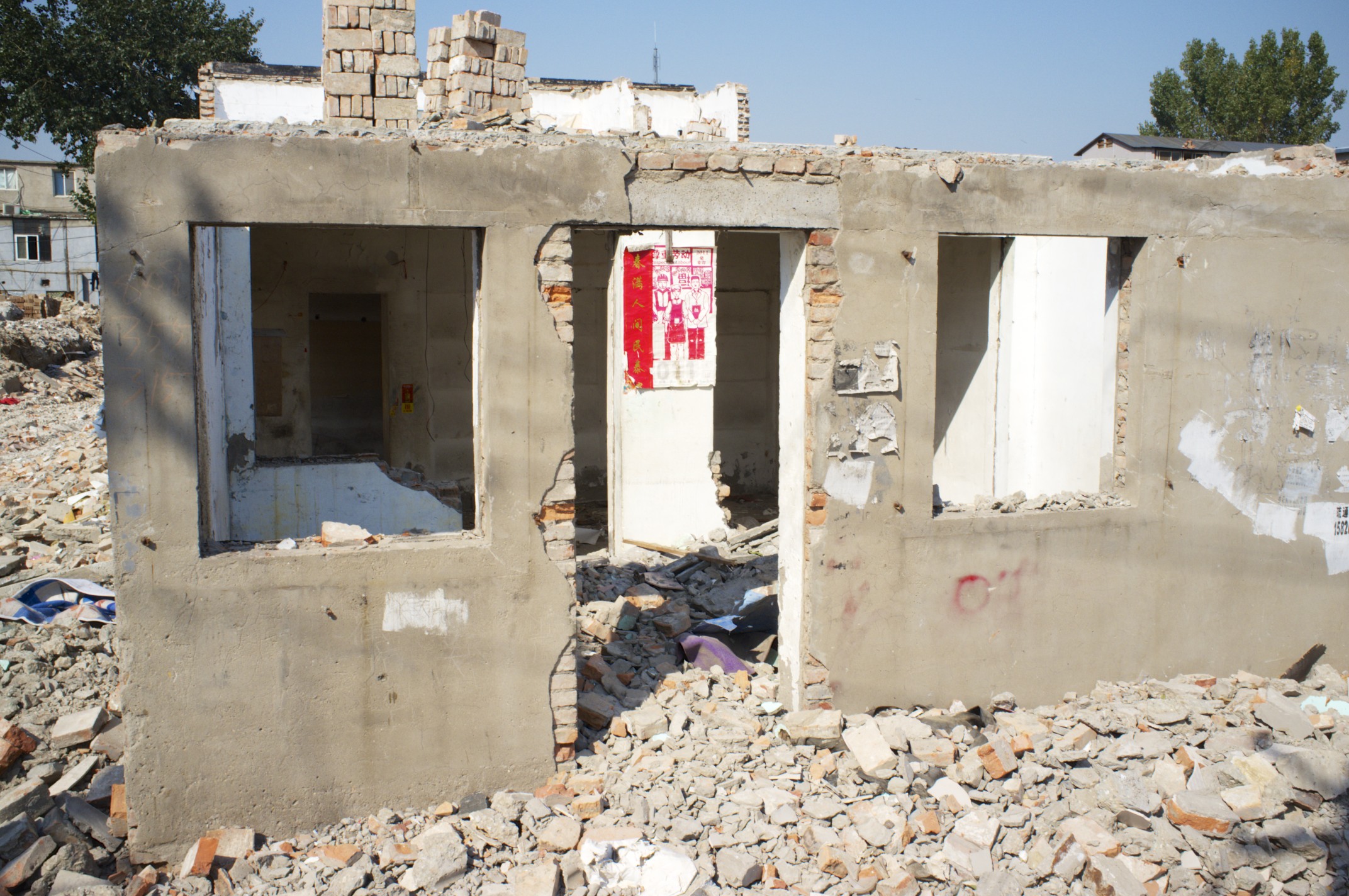
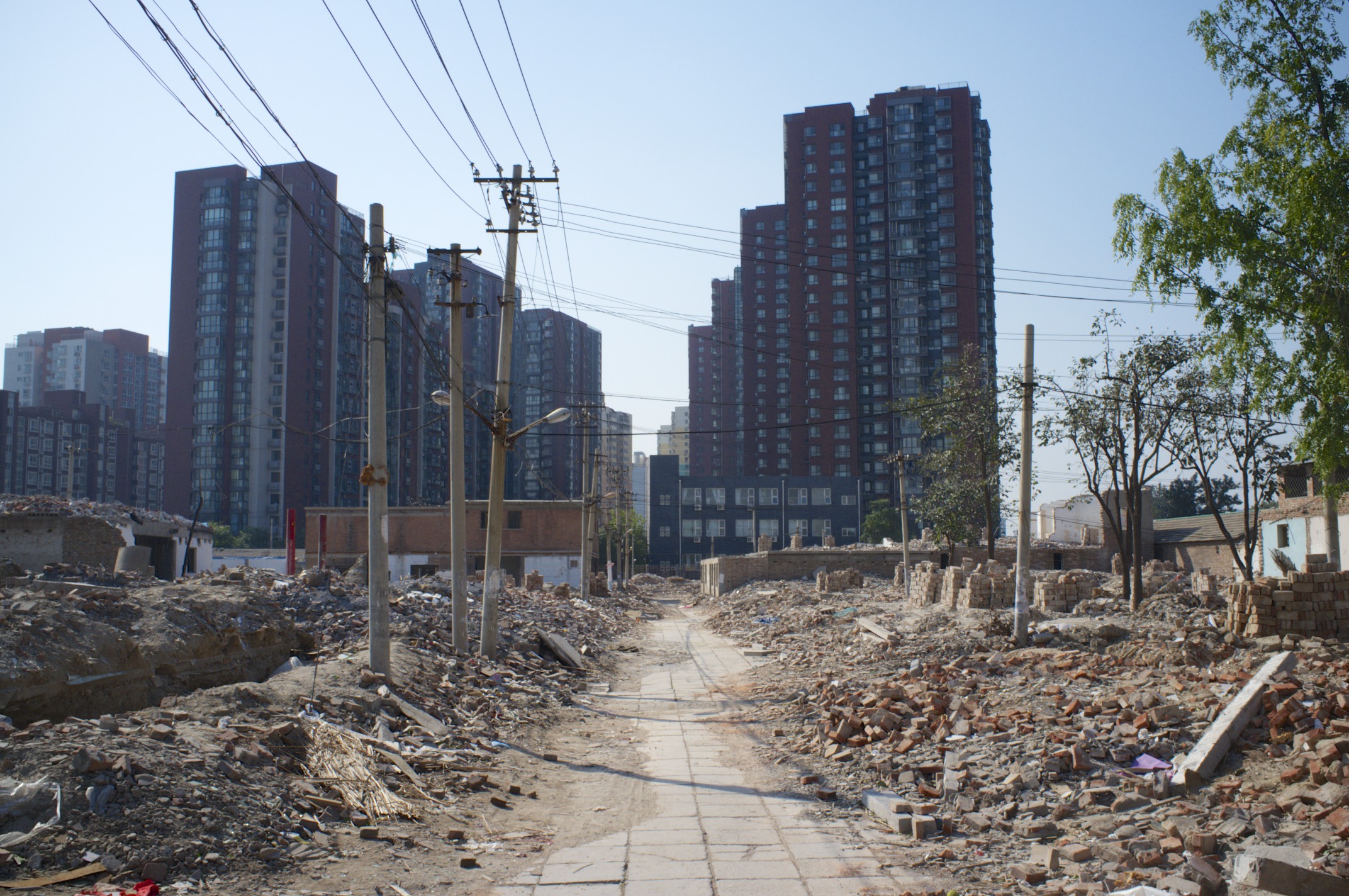
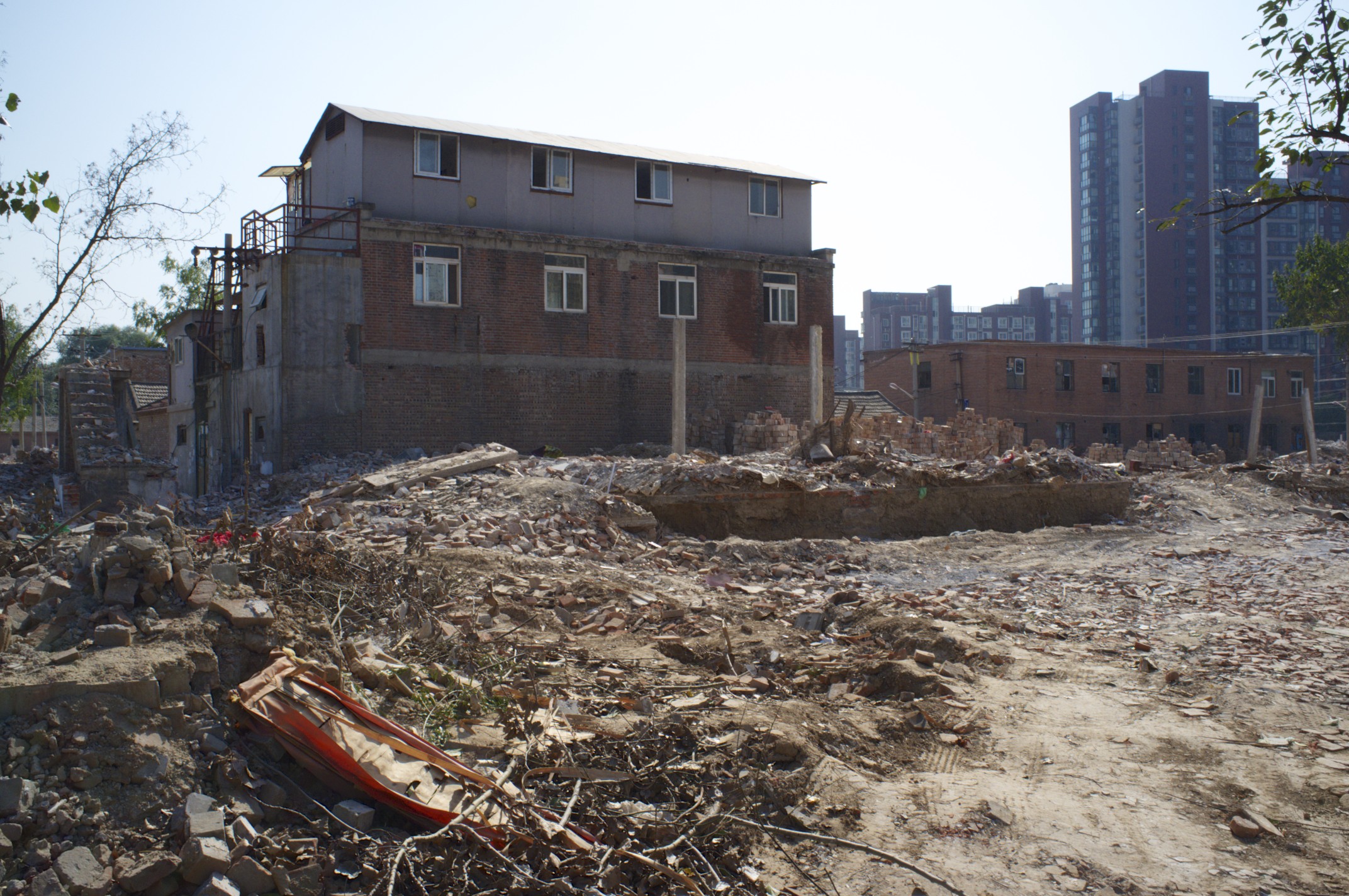
Before traveling to Europe for about a fortnight, I cycled along some old residential places in Beijing. Actually, they are not old by normal standards. But they have become rare here, while land has become incredible expensive. They are not in good condition either, and would be costly to renovate; not even to think of the "opportunity cost" versus putting a few high rise buildings there. They are not Beijing Hutongs, which have been partly accepted to be a heritage, and they are neither "useful". So, they are neither seen as heritage, nor are they viewed as something of value. Their time has come.

I decided to come back with a camera and take a few snapshots. I was lucky, because when I returned today, some of them were already demolished (the satellite photo underneath still shows the blue roofs which show that this was a more recent development) . They are/were along the canal, outbound the city, beyond the 4th ring. Please refer to the co-ordinates in the grid below for exact location.


Location of the residential area which is still in tact.- Satellite photo: Google Earth (on the 11th of October, 2013) 

Location of the residential area which is still in tact.

- Satellite photo: Google Earth (on the 11th of October, 2013) 

Location of a demolished area. In the East is the railway, which can be seen in one of the photos.- Satellite photo: Google Earth (on the 11th of October, 2013)  

Location of a demolished area. In the East is the railway, which can be seen in one of the photos.

- Satellite photo: Google Earth (on the 11th of October, 2013)  

Phillips' Economic "MONIAC Hydraulic Computer"

In absence of electronic computers William Phillips used a hydraulic system to simulate national economy. Only 14 of such machines have been built, and the original design was meant to be a teaching aid. It was called MONIAC (Monetary National Income Analog Computer), and it is quite fascinating to watch. Even without seeing it operated, but just exhibited in the London Science Museum, it explained to me very well the principles and how the different factors of an economy work together. It is a system of tanks, valves and water represents money. The bottom tank is the National Income. Phillips demonstrated the machine to economists in the London School of Economics (LSE) first in 1949. Have a look by clicking here how it works. 

MONIAC computer exhibited in the Science Museum London (2013). 

MONIAC computer exhibited in the Science Museum London (2013). 

Schematic description of the MONIAC.

Schematic description of the MONIAC.

"The past is a foreign country"

Most journeys have the purpose of exploring something new. Not so my travels during the last few weeks, which brought me to the parts of the Europe in which I spent my earliest works aboard and learned my first foreign languages, namely English and French - as German is my mother tongue. I was surprised that my French still worked reasonably well after so many years. But more so, I was surprised that more and more French speak English now. 


DSC04207.jpg

Though the purpose of this journey was not just personal nostalgia, but also to get an impression of Universities, Colleges and Schools on the way. Specially in England the route went along such sites like London, Oxford, Bath, Bristol, Manchester and Cambridge. I was surprised about Bath, which has developed into quite a campus. But it had the handicap of a place which markets itself with student's satisfaction instead of academic merit - an understandable positioning in the "education business", but not hugely inspiring. All other places, and the small ones in between, were of nice character and some spirit living in the walls. I enjoyed a lot my visit of the Royal Geographical Society in Kensington Grove, which I am a fellow of, and seeing the places where the famous explorers of the world reported about their journeys. I will for sure spend some more time in London and make use of the Society's library for a month or two. In Oxford I was also reminded of my time lecturing there in the School of Geography in the mid 90s. It was one of the last things I did in that field, and it felt like the best place for a farewell to science. The German University and education system back then felt like a waste of time and I did not pursue an academic career, but went out and looked for a "proper job". Ultimately, a lot of this ended up being a waste of time too, but a lucrative one, which still opened me a lot of opportunities. By now, I understood, that "career" is just a way to integrate into society and explain to HR departments and the tax office that what you are doing actually makes sense. 

DSC04287.jpg

A nice little stop at a nearly unknown academic location was the one at Keele University in Staffordshire. It is a small University campus, just a bit North of Shakespeare's city Stratford-on-Avon and Birmingham, up the hill of Silverdale in the suburb of Newcastle-under-Lyme. This was the place where I gave my first academic talk at the School of Earth Sciences, while I was working at Wardell-Armstrong in Newcastle. I always liked the messy old office in one of the corners of Keel Hall, which is overlooking the park. No idea whose it is, and what is done there. But back then I though, if somebody gives me an office like this one day and a lot of time, I will be happy. 

DSC04301.jpg

Of course, I also dropped by the place where I lived at that time, which was not in Newcastle, but over the hill and just over the border to the neighboring city called Stoke-on-Trent, in Victoria Street. I am not sure whether my former landlady, Frances Griffith, still lives there. It is about 20 years ago. I have been still writing to her a few years after. But finally letters stayed unanswered. Lucy, the old lady living next door must have passed away. Her place looks abandoned. Frances and Lucy always shared their flower seeds and were growing them in their gardens towards the back alley. It was a recession in England. And then there was Pauline, the hippie, which lived next door of Lucy. I think she went to Australia. 

DSC04323.jpg

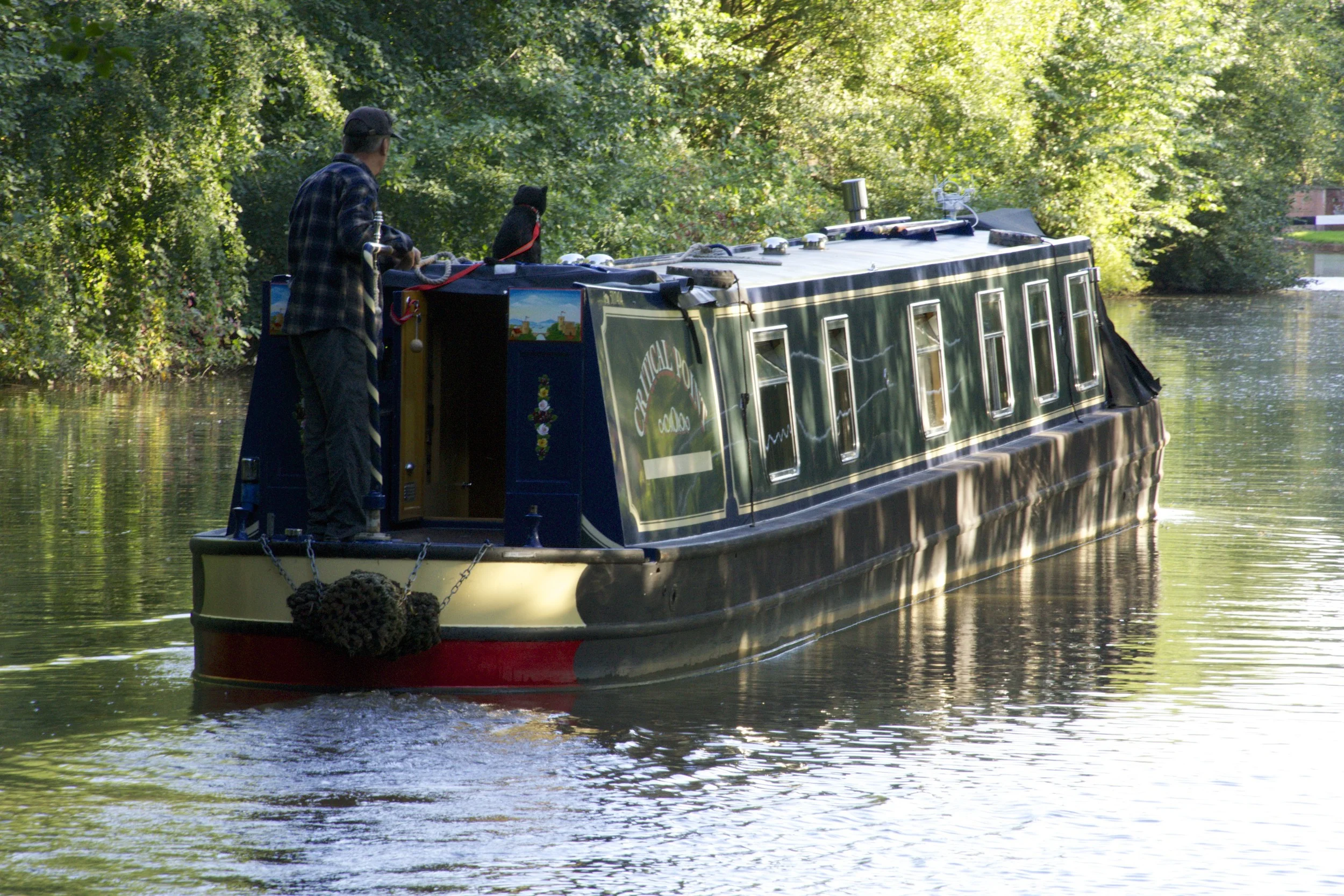
Stoke-on-Trent is a conglomerate of smaller places which once were the heart of the English pottery industry. It is the place of "Bone China" called the Potteries. Most of the old bottle kilns have been converted into museums. What also reminds of that time, are the canals which were a means of transportation for fragile goods and span over large parts of England. Today they are still operational and you can use them with longboats, also called arrow boats, for recreational purposes. From the marinas you see England not from the road side, which is always the more interesting perspective.  

DSC04332.jpg

A few miles North-East of the Potteries is the Peak District, and the landscape changes dramatically with steep rocks and moorlands. I often went there on the weekend to go hiking or caving in the karst caves. The caves inspired me in 1990 to try and model the development of them using a Monte-Carlo approach simulating the dissolving processes of the limestone. I discussed later with Tim Burt in Oxford on it. My simulated caves looked really beautiful, but the structures I calculated had nothing to do with reality. My idea to use the model and identify the age of the caves did not work out at all. In the end I scrapped the plan and changed my master thesis topic with Helga Besler at Cologne University to mathematical modeling of particle dispersion, which was related to my work and much easier. In the Peak District, just beside the National Park, is a nice little town called Buxton. It has some springs, and people came here for them in the past. There is still a pretty little opera house and a green house. It is a good base to explore the karst and the moorlands around. 

Stopping over in Manchester re-confirmed that most cities which are proud of their soccer club, have not much more to offer (Madrid and Sao Paulo are obvious exceptions).  

In Cambridge I met a friend and former colleague from Wardell Armstrong. It has been about 20 years and was nice to "catch up" in the way, as if the 20 years actually did not happen. We enjoyed it a lot over dinner in Midsummer House. I rarely mention restaurants, but this one is quite special and should not be missed when staying in town. The University of Cambridge is similar and different to Oxford. I never did anything academically in Cambridge, so I do not really have an insight. But from my impression Cambridge is more lively and connected than Oxford, without compromising on heritage and ability to focus. But this is really just an impression gathered in a few hours. 

DSC04358.jpg

Arriving Dover via Canterbury I had a surprise: there are no ferries taking foot passenger to Ostende leaving from here. Also the Hovercrafts are gone. The tunnel really changed the world here. Dover, not long ago the focus point of traffic between England and the continent, has become sleepy. The only ferry went the short way to Calais. On the French side, Syrians were camping and hoping for a chance to go over to the UK. Also Calais changed. It became sleepy too, but it is better not to gaze, but take care of fellows waiting for a chance to hit and run at least for your bag. Good reminder to put the pocket knife back in reach for quick reach and adequate response. The train to Bruxelles leaves every few hours from Calais. The one to Paris more frequently. This time going via Bruxelles was the train to take back "into the continent", as the English sometimes like to call it. 

8bis, rue Saint Hyacinthe

In Paris I walked along my old commute from the Metro Tuilleries to rue Saint Hyacinthe where I lived during my early time working at Bosch. My office was in Louveciennes though and I was commuting against the tide out by Metro and RER in the morning and back in after office hours when most went back out of the city. Most of my landmarks are still the same: my running route along the Seine and around Jardin des Tuelleries, the Opera Garnier, the baker, the market. Most restaurants changed owners. But the patterns stayed. This time, again I could not convince myself to go up the Eiffel Tower. Perhaps I will never make it up there. But I also don't really know why I should. 

DSC04155.jpg

Haute Ville

Special geography, making the castle already naturally a defendable stronghold, and clever policies sustained Luxembourg a sovereign state in Europe. Except a vanished steel industry in the South of the country, in Esch-sur-Alzette and Differdange, and agriculture in the North, there are no natural resources to exploit. Still Luxembourg has a GDP per capita around US$ 80 000 which makes it at times the world's "richest" country. Before favorable tax policies and banks which back then still kept their secrets, started to transform Luxembourg initially into what it is today, I spent a big part of my childhood here with my family. Then it was different. With my cousin, I strolled mainly around the mining and processing facilities of the Arbed around Differdange, explored shafts and tunnels and already experienced "open borders" by ignoring checkpoints and making our ways to France through the forest. The city of Luxembourg at that time, in the early 70s, was much less wealthy than today. The "Grund" in the Petrus Valley, just at the foot of the escarpment on which the Haut Ville is positioned, was still one of the town's poorest quarters around the city prison. Arriving the town by train and walking along the streets towards Place d'Armes, was a route through deteriorated streets. Now Luxembourg is a vibrant, international and nearly cosmopolitain city. Now the "Grund" hosts European company head quarters like those of Skype and Amazon, and is a place of entertainment and culture. I liked my recent stop over in Luxembourg a lot. Just one night though and then off on the TGV to Paris. 

DSC04138.jpg

Dear Diary, I have to stop writing to you.

Of course every day has nice moments. They appear spontaneously, and so I will note them down or capture them in other ways as they come. But looking out of the window today, seeing another Kafkaesque scene of the city in constant smog, I decided not to keep a diary for the time being. Like that, the time in Beijing will blur into the grey shades that it was. There will be memories, letters, photos, sketches and other artifacts - but no continuos record. 

Morning view from the window. Sun is coming out decomposing the smog into photochemicals. It is 35.3 Celsius outside the window and an AQI of 235 ("very unhealthy").

Morning view from the window. Sun is coming out decomposing the smog into photochemicals. It is 35.3 Celsius outside the window and an AQI of 235 ("very unhealthy").

Yun Meng Shan hike

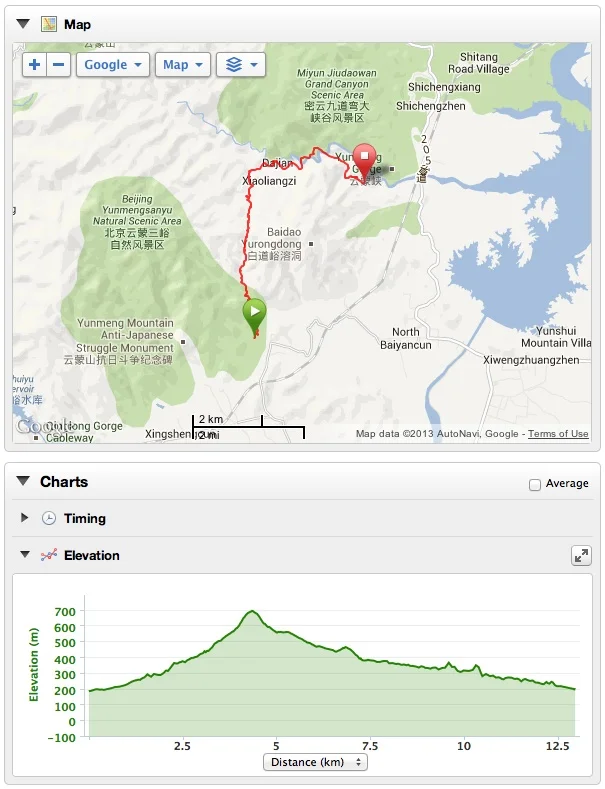
At 7 in the morning, with humidity above 90 % and an outside temperature reading over 30 Degree Celsius in the morning and a thick layer of clouds above the city of Beijing, it was obvious there will be quite some rain coming down. But we sticked to our plan hiking up the Yun Meng Shan, which is about 85 km North of town. In this weather, every view looks like a Chinese painting. The same hike on a clear day, must have a completely different character. A good reason to come again and exactly take the same paths. It is a very nice route and you may download the GPS log here in gpx- or tcx-format.

View from Yun Meng Shan.

View from Yun Meng Shan.

20130811 Yunmeng Shan.jpg

Miyun Jidaowan Canyon

We have been lucky with the weather in recent days and it is always a pleasure to make it out of Beijing on the weekend. For that you can hike from the Yunmeng Mountain up over a saddle North and then follow the crystal clear river through the canyon towards the reservoir. You will see some Watch Towers which have been built there "by accident" off the Great Wall in the Ming Dynasty (don't get me going!). 

The trail is bushy and in some sections quite steep. There is only one village left, as all the others have been washed away by a flood about a decade ago. It is unlikely you don't see anybody in the remote places. I recommend to upload the exact log on to your GPS (gpx-format, tcx-format).  

DSC03911.jpg
20130728 The great flood hike Beijing.jpg

Piano rental in Beijing

In the morning we went to the other side of of the city, to the neighborhood of the Central Music Conservatory, to rent a piano. You can get them from 120 RMB per month, if you sign up for a year. The Yamaha piano sounded softer though, so an upgrade to 150 RMB (18.76 EUR or 24.40 US$) per month was very appropriate. It includes a piano chair and a cloth cover. Delivery is free, tuning (any time needed) included. Let me put this into relation: it's about what I would pay for my mobile phone package per month (if I would pay for it). For the price of an iPhone 5, you can rent a piano for nearly 3 years. Usually iPhones break after one year tough. The economics of happiness is an interesting one. 

DSCF9421.jpg