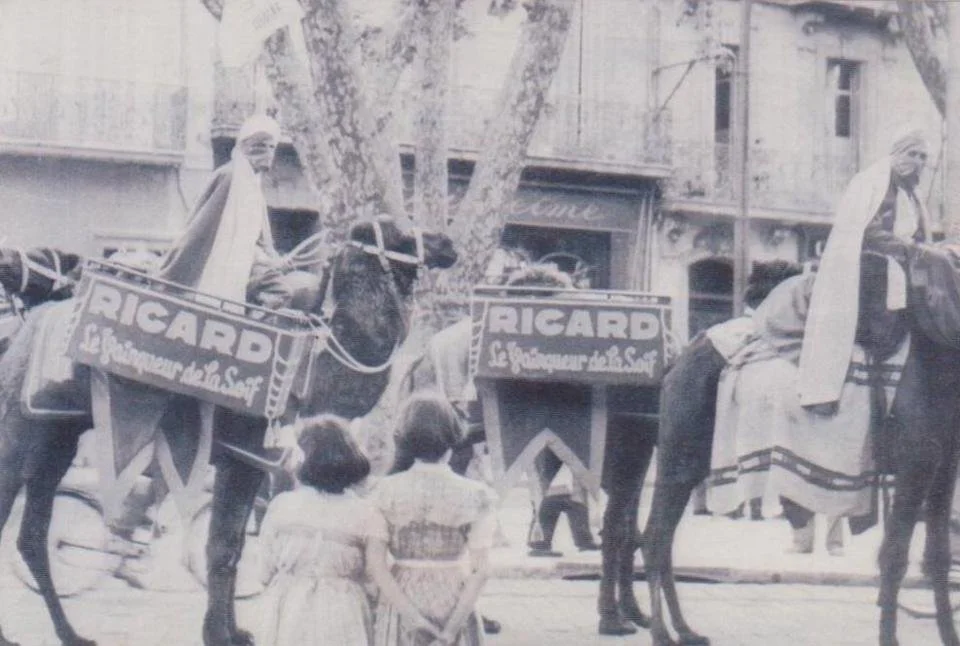
La Caravane de la Soif
With recent events, triggered by the US-Israeli attack on Iran, I was reminded a scenario workshop where a potential blockage of the Straight of Hormuz was discussed extensively in the context of alternatives provided through the “One Belt, One Road Initiative”. But let’s not go into that now. We all had enough geopolitical ignorance Made in America, by now. Instead, looking into Mediterranean travel and crossing Île de Bendor, I recalled “La Caravane de la Soif” masterminded by Paul Ricard’s during the Suez Crisis …
With recent events, triggered by the US-Israeli attack on Iran, I was reminded a scenario workshop where a potential blockage of the Straight of Hormuz was discussed extensively in the context of alternatives provided through the “One Belt, One Road Initiative”. But let’s not go into that now. We all had enough geopolitical ignorance Made in America, by now. Instead, looking into Mediterranean travel and crossing Île de Bendor, I recalled “La Caravane de la Soif” masterminded by Paul Ricard’s during the Suez Crisis. This was a masterpiece of turning challenge into opportunity. Paul Ricard had built his pastis empire not just on a unique recipe, but on an aggressive, direct-distribution model. Since launching “Ricard, the true Pastis of Marseille” in 1932, he had relied heavily on a fleet of branded delivery trucks to supply bistros and cafés across France.
The Suez Crisis began in July 1956 when Egyptian President Gamal Abdel Nasser nationalized the Suez Canal Company, a joint British-French enterprise. In response, Britain, France, and Israel launched a coordinated military operation in October and November 1956 to regain control of the canal. The conflict resulted in the canal being blocked by sunken ships for several months, severely disrupting global trade routes, particularly the flow of oil from the Middle East to Europe. This disruption led to an acute fuel shortage in France and Britain. By late 1956, petrol rationing was introduced, forcing businesses and citizens to drastically alter their daily operations and transportation methods.
For Paul Ricard’s company the petrol rationing threatened to paralyze this distribution network, potentially cutting off the supply of his highly popular aniseed spirit to the crucial Parisian market. Faced with the inability to use his delivery trucks, Paul Ricard devised a brilliant and audacious solution. He decided to bypass the fuel shortage entirely by using an ancient mode of transport: the camel. Ricard organized a caravan of camels to deliver his pastis directly to the bars and cafés of Paris. This initiative was famously dubbed the “Caravane de la Soif” (Caravan of Thirst).
Paul Ricard must have been quite a character and reminds me of figures like Jim Thompson, reviving the Thai silk industry after WWII and mysteriously disappearing in the jungle. Ricard tested his recipes first illegally in bars and restaurants, and by that gained a unique edge during prohibition. Ricard, a passionate painter, was also a significant figure in motorsports, notably constructing his own racing facility, the Circuit Paul Ricard, in Le Castellet in 1969. When it opened in 1970, the track was considered one of the safest in the world and featured advanced facilities that made it a premier destination for Formula 1 testing and the French Grand Prix. Beyond racing, he was a dedicated developer and philanthropist, donating several Mediterranean islands, including Île de Bendor, to the French government to promote tourism. Further, appalled by industrial pollution in the Mediterranean, he founded the Observatoire de la Mer in 1966, which evolved into the Paul Ricard Oceanographic Institute to research and raise awareness about marine health.
Paul Ricard published his autobiography, La Passion de Créer in 1983. I have to admit, I did not read it yet. But when the time has come that I start to read other people’s autobiographies, it’s on my list

“Panta Rhei – Everything Flows”
Last night, I had the pleasure of joining the vernissage of the solo exhibition of Rosette Bonello at Rudy Buhler’s Art Gallery in Marsaskala. I walked along the coast from Kalkara, at the end of a stormy day, which expanded into the night. It is always impressive to see how the rock has been able to withstand the waves for ages. Rudy was a Swiss banker …
Last night, I had the pleasure of joining the vernissage of the solo exhibition of Rosette Bonello at Rudy Buhler’s Art Gallery in Marsaskala. I walked along the coast from Kalkara, at the end of a stormy day, which expanded into the night. It is always impressive to see how the rock has been able to withstand the waves for ages. Rudy was a Swiss banker for most of his professional life and now manages to bring a cultural spotlight to this village in Southern Malta. This exhibition is called “Panta Rhei – Everything Flows” and runs until December 22nd at Quayside Court, 58 Triq Is-Salini.
During the day before, I went through many of my things in Malta and sorted and maintained what needed to be done. Besides the practicalities, I also found my old calendars, especially the 2014 one, caught my attention. This was my last year living in China, and the beginning of a world trip and my European adventure. It is great to have these calendars and be able to move back in time and even sense life’s atmosphere. Back then, it ended 12 years in China and started for new horizons. It was a similar time to what it is now. But a lot has changed also. Some people, yes, but also how the world works.
Back in the day, it was, for example, possible to share exact plans and locations online. There were people writing back and asking questions very specific questions and the exchange was light-hearted. Since then, also the online world has become a more hostile place, and comments reflect less inspiration but greed. That’s why I am not on social media except LinkedIn, which hopefully maintains professionalism. Running this blog feels already anachronistic and untouched of that.
Re-inspired by browsing through my paper diaries, notebooks and calendars, I obtained a 5-year diary. Here, you have the same day on one page, and by “scrolling up” with your eyes, you have a direct comparison over time. It would not make sense today to have a paper calendar anymore because coordination and scheduling have become more of a life tool than a lifestyle. But such diaries run parallel to the office world in a nice way.
Also, I re-plenished myself from my local stock of small notebooks. I always carry these to capture information and impressions. In recent years, with being less mobile, I have switched to larger formats. But now, it will be more of the small Moleskine type again, and Riteintherain for the tougher outdoor notes. Given that I cannot carry many books, I also re-set my Amazon Kindle. That’s the only reason to keep my Amazon account open. But for the coming trip to Canada, I will take a paper copy of Joan Didion’s "Slouching Towards Bethlehem". She had something to say about how to use notebooks as a tool but even more about the chaotic and rapidly changing cultural landscape in the USA of the 1960s. And of course, I will put more American authors now on my reading list. Suggestions are welcome.

My 2014 calendar, which marks the last of 12 years living in China. Recovered (and cleaned thoroughly) in Malta.

Guns, Germs and Steel
On my return from Hong Kong, I still picked up Xi Xu’s book “Dear Hong Kong: An Elegy to a City”, and before the turn of the last year, I read it on the way to Malta. It is a farewell letter to a city, which was also my home for five years. Did I not live on an outer island in the South China Sea, back then, I would have found the city itself unbearable. It struggles to build new capabilities, needed to be a significant part of China and staying relevant in a world which is moving on. Hong Kong was “frozen” for 50 years by British negotiators at the time occupation ended and the city returned to China. I really liked Xi Xu’s personal tone and her views on Hong Kong. A second book, which I read the first time in 2007, I reviewed by listing to the audiobook: Jared Diamond’s Guns, Germs, And Steel - The Fates of Human Societies. Just in the middle of many Western countries failing to manage a pandemic, and the US government globally mongering conflict and rattling swords, this was an interesting reminder, how societies rise and fall.

The Malta at War Museum timely features an exhibition on gas masks. This style fits into the necessity and fashion today, even our FFP2 standard is less spooky.

Grafitty in Zabbar. Germs.

Gund and steel - The Saluting Battery in Valletta.
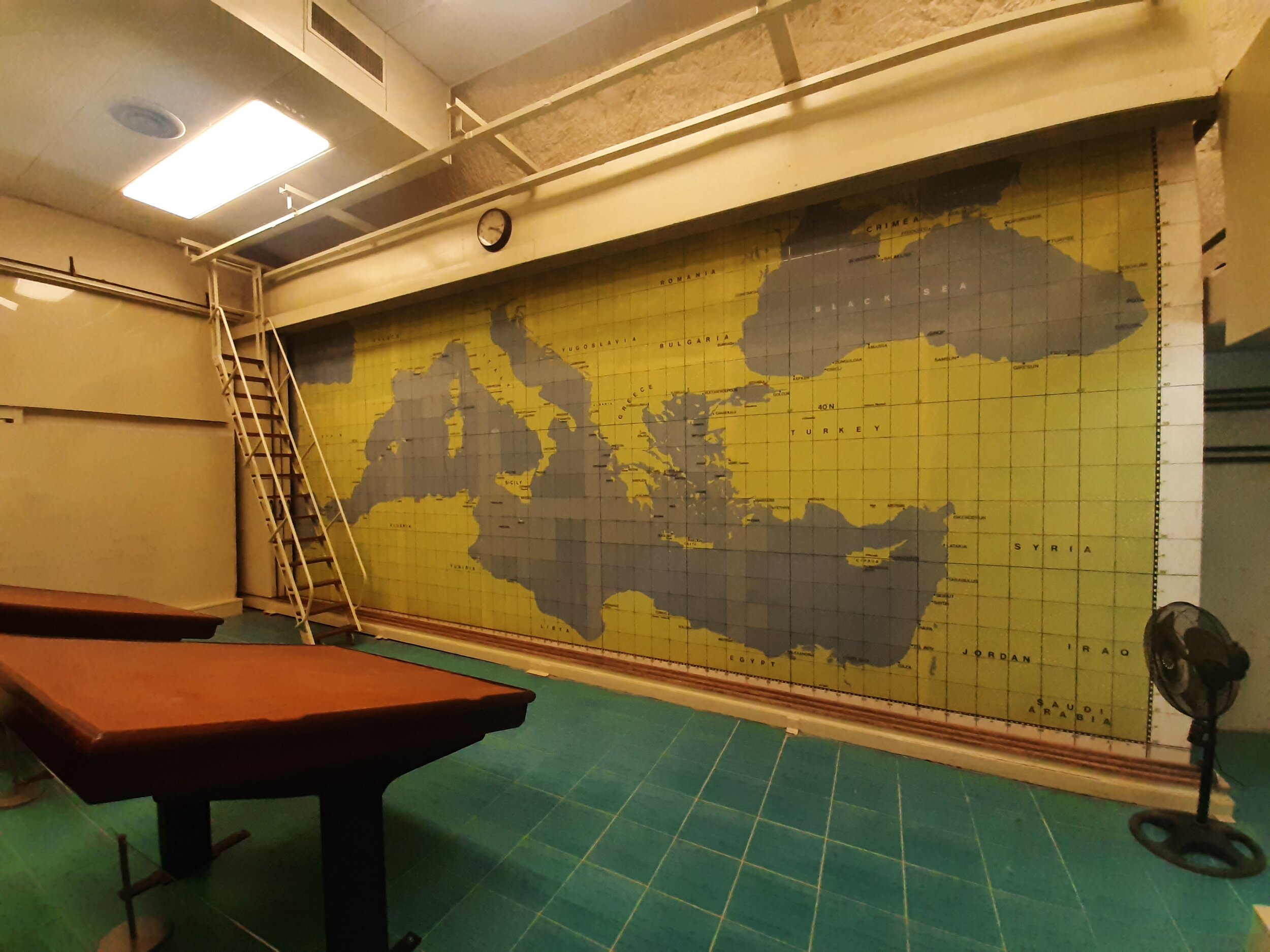
View into the HQ bunkers in Malta, in a room where the Mediterranian is monitored. It was last used in the Cuban missle crisis, to potentially block Sovjet ships passing through from the Black Sea.

Air defense coordination room in the Maltese HQ bunkers.

On my favorite walk from Kalkara to Marsaskala

Birgu

Last sunset 2020 in Cospicua

Kalkara waterfront - my village

Kalkara Boat House
"Deutschlandreise"
As I am on a trip to Germany, I took Roger Willemsen's "Deutschlandreise" as my pocket book of the week. Roger Willemsen, passed away recently and far too early. This is why the publisher, reprinting in a haste, forgot to print the title on some of the book covers and fixed this in the post production with a sticker (I bought them as paper versions for reasons of nostalgia and even overcame my aversion to contemporary bookshops for half an hour). I really like the author for his interviews and other productions. But "Deutschlandreise" I found shallow. Perhaps it is, because his observations in Germany were too common for me. Two more of his books I have in my bag though: "Die Enden der Welt" (The ends of the world) and "Momentum".