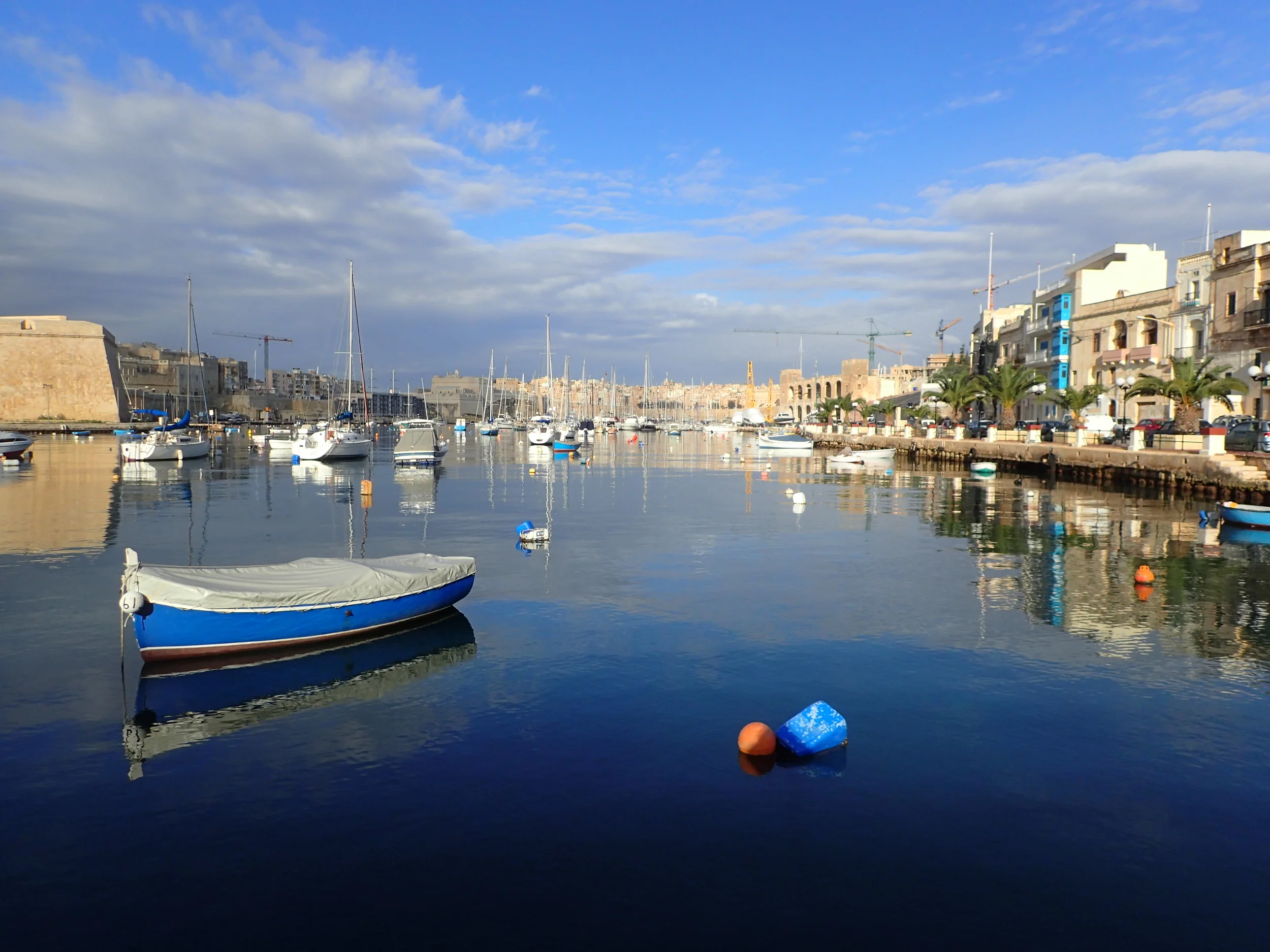
Long distance views

Time flies in Germany. Have been busy. First in Bonn to help preparing the "B+L Zukunftsforum 2016", which then took place in the BMW World in Munich. It is an event dedicated to the construction material supply industry and where numbers are crunched and approaches and views are explained and discussed. It was my first time to join, and I found it really interesting and at a very high level of expertise. I still finalized my own topic before traveling to Munich, which was to evaluate the impact of the digitalization on the business models and distribution channels of the construction supply industry until 2030.

We spent another day in Munich. In the "Deutsches Museum", besides visiting some artifacts of my childhood memories, I saw the first time in my life Jupiter and Mercury by a glimpse though the telescope of the Eastern Tower Observatory. We also tried Capella in the constellation Auriga. But during daytime, this is not easy. I think, I saw it. But not sure. In the evening we had dinner in the "Zodiac" which is a new venture of my friend roObin Golestan, which he started with his partners from far - as he is living in Beijing. Excellent Pizza and a really nice ambiente. You have to try (click here for more and directions).  

Deutsches Museum, Observatorium im Ostturm.

Deutsches Museum, Observatorium im Ostturm.

Going with the flow in the Isar River (Munich)

Going with the flow in the Isar River (Munich)

Next day we drove to Walchensee to spend the weekend in the Northern Alps. The first the weather was beautiful and we went up to the Herzogstand, enjoying the marvelous views. Sunday then, it was raining. We drove to Garmisch-Patenkirchen, but did not go up to the Zugspitze, as it was within clouds. Lunch break we had in Murnau am Staffelsee and then went back. The rainy day, gave me time to read carefully the news about "Brexit". What an unwise decision. I looked at article 50 of the Lisbon treaty, to understand a bit better what  procedure is likely going to come now. Long term, I guess, England will be completely marginalized, and even maybe even stripped of Scotland and Northern Ireland (maybe Wales). Short term, the currency devaluation may help their exports a bit. But what do they want to export? The Queen, Harry Potter, Burberry raincoats? Really silly. At least it will give us some work to do, to relocate UK companies to Continental Europe. But this is not something, I am going to be very happy about. 
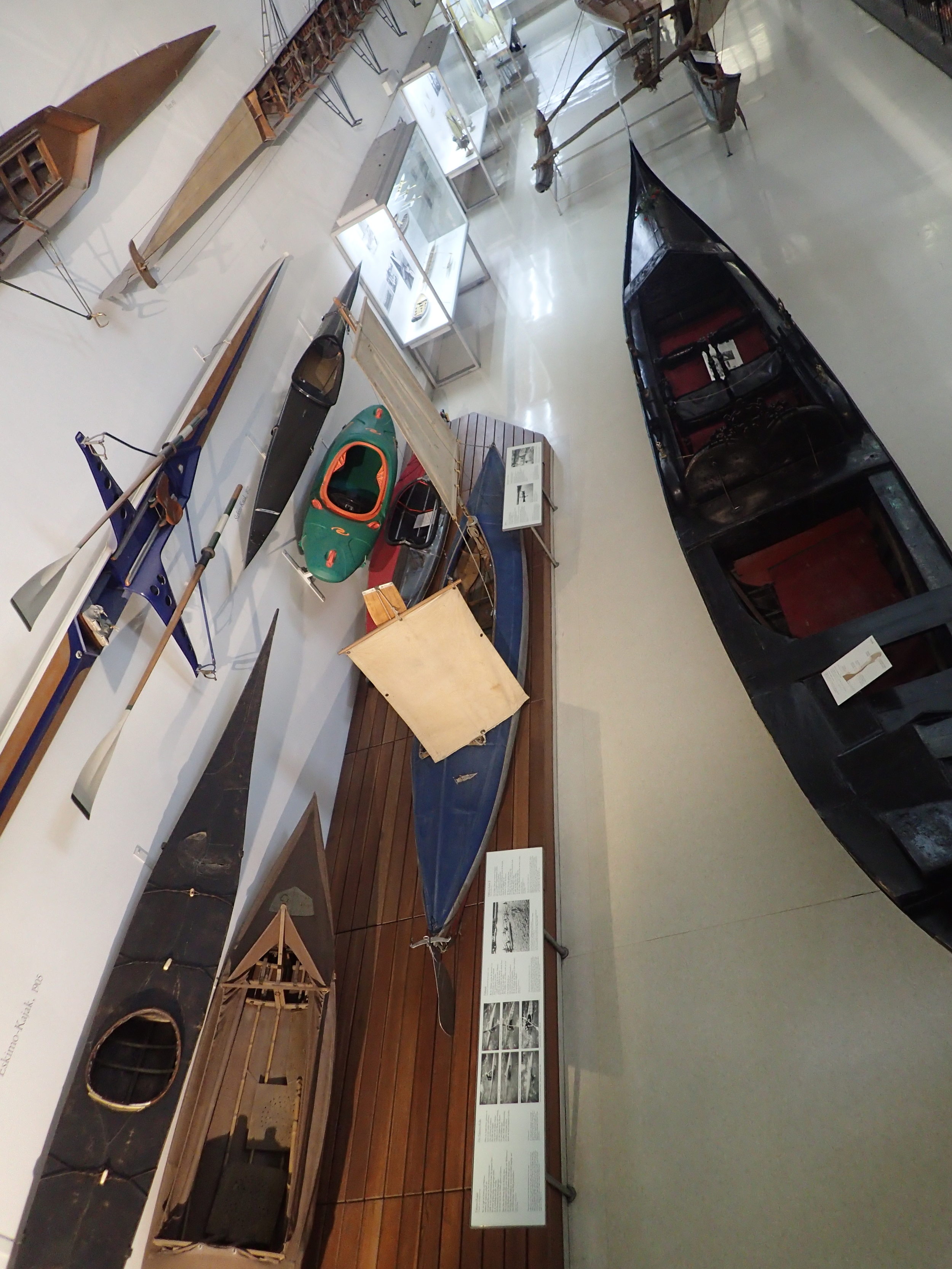
Hannes Lindemann's Klepper Aerius II

It is not easy to find a point to take a picture of Hannes Lindemann's Klepper Aerius II in which he crossed the Atlantic Ocean in 1957. It is exhibited in the "Deutsches Museum" in Munich, and crowded together with other exhibits. You may want to go to the first floor of the nautical section, to have the best view from the top looking down the atrium. I know the Klepper Aerius from kayaking on the rivers in Germany as a teenager. I am not easy with such claims, but it is designed by a genius. The list of world records is a long one and many of them are still standing. The boat gains a lot of its stability from the air tube around the upper body. The moment this tube dives into water, it pushes the boat back and prevents a deeper dive. Hannes Lindemann (1922-2015) was a medical doctor in Bad Godesberg and a man who liked self experiments. His experiences from the Atlantic crossing are described in "Allein über den Ozean" (Alone at sea). I met him twice in events on autogenic training in Bonn, a field he was very active in. It is a relaxation and body awareness exercise, which is not very popular outside Germany. In principle, it seems to me a form of meditation. I never really actively picked it up, but found it interesting. Today it is most commonly applied for stress relief. I have no real idea, why people have stress, and what it actually means to have it. But good, that a good old explorer's technique helps even people dwelling in a cubical these days. What ever their adventures may be. 

The Klepper Aerius II in which Hannes Lindemann crossed the Atlantic ocean in 1957. Exhibit in the Deutsches Museum (Munich).

The Klepper Aerius II in which Hannes Lindemann crossed the Atlantic ocean in 1957. Exhibit in the Deutsches Museum (Munich).

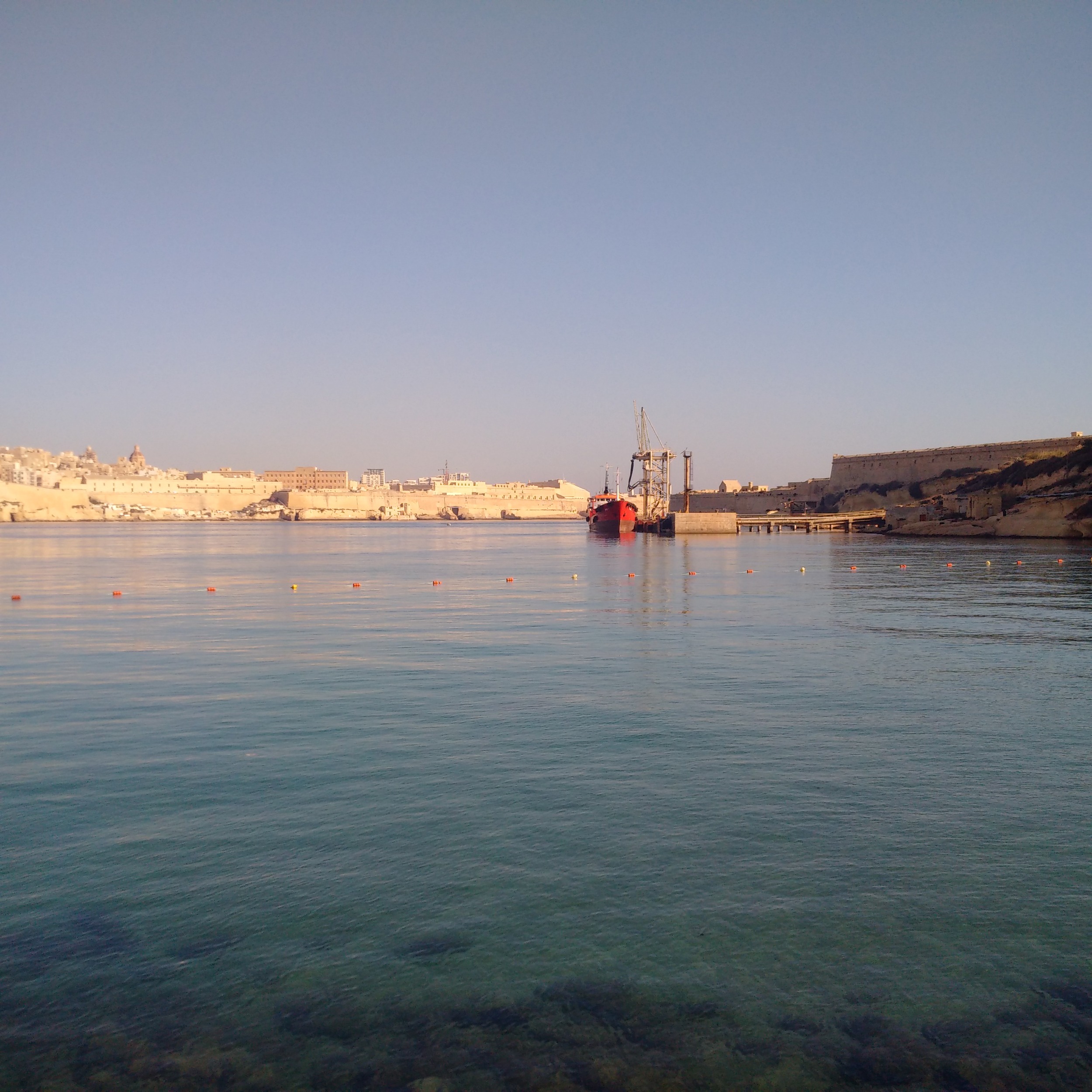
Rinella Bay after Sunrise

Rinella Bay is one of the few sandy corners in the mainly rocky coastline. It invites for a swim, and is on my morning path. On summer weekends, it is a gathering place for families from Kalkara. Also, beach parties are not unknown. But in the early morning all is quiet again, and the view is clear, over to Valletta.

Rinella Bay (Malta) on an early morning in June 2016

Rinella Bay (Malta) on an early morning in June 2016

Turing Test for Hubots

When Alan Turing developed his test in the 1950s, to measure the extend of machine intelligence and to distinguish between humans and machines, there was still such line of distinction. Since then, not just machines became more human, but also some humans became more like machines. You could even argue that a new class of creatures emerged: a human-machine hybrid. A form of Siri on a biological host system. Let's call them "Hubots". In them, large parts of the Neocortex has been taken over by electronics. Natural sensors, intellectual and social capabilities are heavily reduced. Don't expect a conversation with a Hubot beyond pure functional exchange of data. Hubots are mainly digital: ones and zeros. Any poetry will be a wasted. The best thing is, to talk to them like you talk to an automated call center. They have the intellectual capabilities of an online banking platform.

There is no Turing Test for Hubots. Alan Turing himself, with all respect to his genius, did not anticipate the Hubots coming. But you can use a few indicators which help to distinguish humans from Hubots:

  1. Hubots need computing power and data connection to perform very simple administrative tasks (like looking at their calendar, basic calculus etc.)
  2. They have to google the answer to most questions, because they only keep a very small on site memory.
  3. They prefer electronics also for short distance communication.
  4. They maintain multiple and redundant electronic channels ‎to exchange irrelevant information with other Hubots.
  5. The electronic narrative of what they do is more important than doing it.
  6. They feel "Nomophobia", which is a form of stress symptom when the electronic brain is not available.
  7. They care more how they appear in the electronic world than how they appear at the dinner table.

‎Hubots are not machines. They deserve respect of humans, even they might treat you rather disrespectful. Don't be surprised, when they send you birthday greetings by an e-card or message. They actually mean well. Even it is not clear to me, what "meaning" is for them. You can't educate them. They are rather hard wired. You have to train them. Just a form of "upload" will do. That's something they can cope with. Don't try metaphors. It will cause confusion and a complete system breakdown. Same to humor. Don't tell them a joke. They won't understand. Show them a funny clip on Youtube. They will enjoy that much more. You also can't care for them. You can only feed them. Buy them a data flat rate and they are happy. And there is nothing better than to have happy Hubots.

What the heck is 'Time Management'?

Every idiot can drive around the Nürburgring race course (or any other of these sites). To make it complicated, you have to do it fast. Not every idiot can go to the South Pole, or fly to Mars. It does not matter how fast you do it, as long as you make it at all.

I normally would not even think about 'time management' as anything special. Time is just one of the dimensions we move in.  But today I rejected a very kind invitation to give a lecture on this subject, which I honestly have never really thought about. Somebody must have had the impression that I am doing it very well. Thank you. And there seem to be a lot of people who want to know about it. Puzzles me. I would rather listen to a mountaineer talking about moving in z-direction above sea level (climbing), or a diver doing the opposite below sea level (diving), than to somebody talking about behaving on the time vector. How boring!

You can build a ratio of many things by time. For example speed is distance by time, and power is work by time etcetera. These ratios are often perceived as measures of performance. But when you are in the business of doing complicated things, then the real point is whether you can get something done at all. Ever! How fast? Who cares? In your lifetime, if you are lucky. Sure, sometimes it is good to be first, because of 'Intellectual Property Rights' or fame and other ways to capitalize your findings. But in the end, if somebody else can solve the problem before you, you were not too slow but your problem was not hard enough.

Okay, timing is important. You don't want to go to the South Pole in the stormy season. Time is a useful dimension to synchronise with your environment and the  society. But how could I give a lecture on that, when not even knowing the overall problem to solve? Are we flying to Mars, programming a website, or cooking lunch?

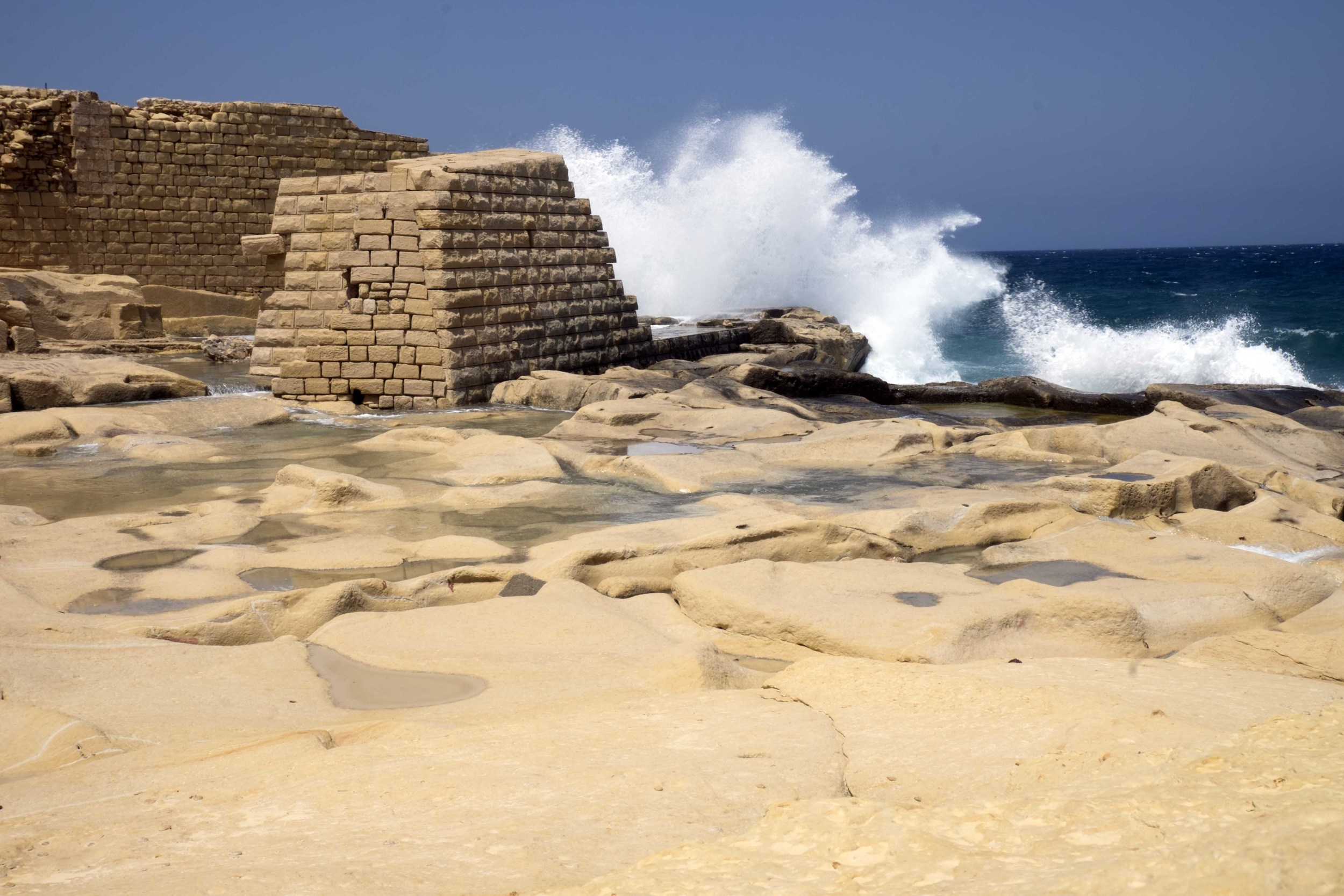
Salt Pans around Fort Rinella

It is a short walk from Kalkara across Rinella Bay, passing the obsolete radio antenna masts. They once served as a relay of the BBC to Libya. Under one of them is a small restaurant, where some taxi drivers have a few beer before work. Turn right, up the hill. Then before reaching Fort Rinella, turn left. There is a chapel and a cemetery. Behind them is my favorite place to watch the sea.

View North from one of the pillboxes at the Eastern coast, North of Fort Rinella.

View North from one of the pillboxes at the Eastern coast, North of Fort Rinella.

From close the salt pans are a very sophisticated terraced system, in which fresh water splashes in on days like this and then the basins are drained to the best level for evaporation of the sea water. What's left on a hot day, is the salt. 

From close the salt pans are a very sophisticated terraced system, in which fresh water splashes in on days like this and then the basins are drained to the best level for evaporation of the sea water. What's left on a hot day, is the salt. 

View on a salt pan behind the ruin of the observation tower.

View on a salt pan behind the ruin of the observation tower.

Julie Zahra and the Trio Lakota

We went to the recital in the Robert Sammut Hall yesterday. It is a venue where they offer frequently nice and short performances of about an hour. It is a nice way to start an evening with friends. So, we did. Julie Zahra sang a mix from Scarlatti, via Mozart, Puccini, Franz Schubert to Richard Strass, and also three pieces by the Maltese composers Joseph Vella. At the piano was Charlene Farrugia. The Trio Lakota played three pieces by Alexey Shor. Back in 2004 Julie Zahra represented Malta in the final of the Grand Prix Eurovision de la Chanson (for some also known as European Song Contest), and as a result was a very known pop singer in Malta and beyond. Given that, I was actually very surprised by her versatility and we really enjoyed the evening.

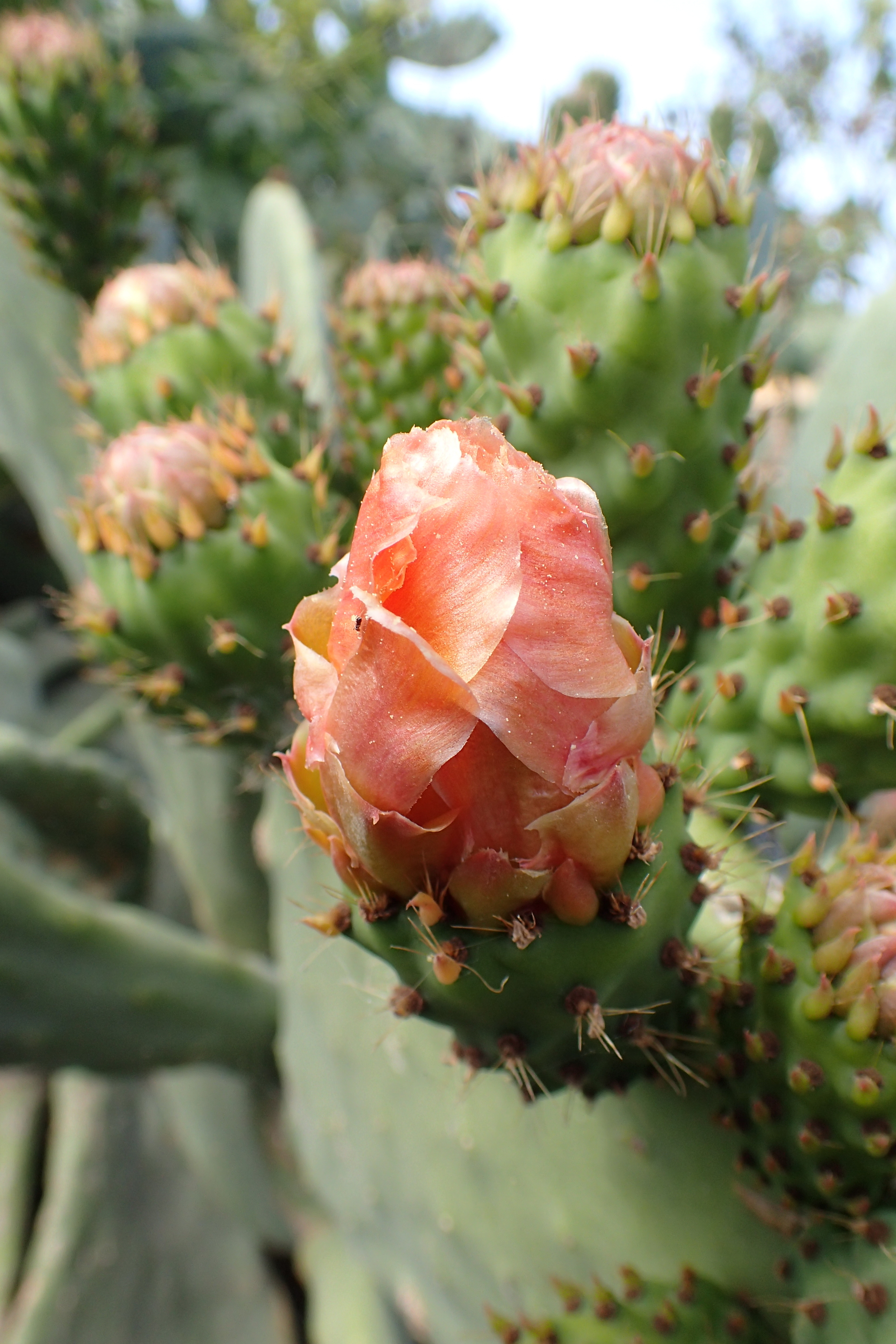
Prickly Pear

The "Prickly Pear" is not a pear but the fruit of the cactus Opuntia ficus-indica which is very common in the Mediterranean. Its origin is from Mexico though. You can eat it with its stones, and I was told in Morocco by a Berber that it helps when suffering from diarrhea. But I never confirmed that. He also told me that when I get bitten by a scorpion, I have to catch the animal, burn it and scratch the bite with its ashes. This advise also puts the diarrhea treatment into perspective. Back to the Prickly Pear, be aware of the little thorns on the fruit when you pick and peel it. They will stick in your fingers for quite a while, and they will break if you try to remove them. You can also make a jam from the fruit or even distill it to a spirit. Now in Malta, the cactus starts blossoming, which is a very nice sight. I enjoy every flower these days, because soon the island will get very dry and hot.

"The Pen is Mightier Than the Keyboard"

With all the praise of technology (meaning digital media) I was always wondering how students manage to take meaningful notes with a laptop of my blackboard elaborations. I need to draw to think. For mastering the blackboard I specially remember Bruno Fautz at Cologne University, who was able with a box of coloured chalk to develop explanations of complex problems in front of my eyes. He was an artist, even in a science classroom. You would get it, and never forget it. And then there were the ones shooting satellites into space, and the most sophisticated media were USENET and the blackboard again. That's why I personally never fully understood the purpose of Microsoft Powerpoint in a University, if it is not about delivering work to a client or at a conference.

Today I came across an interesting paper of Pam Mueller and Daniel Oppenheimer from Princeton and UCLA: "The Pen is Mightier Than the Keyboard. Advantages of Longhand Over Laptop Note Taking", published in Psychological Science, 2014. I was not too surprised about their findings. They did not look into quite commonly known  issues of distraction and multitasking and their negative effects on attention, understanding and memorization. Their research suggests that, even distraction is eliminated, laptop note taking is still "impairing learning because their use results in a shallower processing". It seems that laptop note takers are occupied with a transcription mainly and not with making the thought their own.

I noticed for myself, that if I transcribe and type during a meeting, my memory and understanding of the event and topics discussed is much worse. In some cases, I really had to re-read my notes to remember what I was typing. And aside cognitive effectiveness it is of course very rude manners to sit in a meeting or lecture and type on a laptop. So, I decided already early that this is not for me. When you look allocation of brainpower to different body parts you will find that hands and the visual cortex are so dominant, that I thought it might not be a good idea to cripple them by a keyboard and a display. Tablet computer note taking, I tried a few times. But it always felt like being an ape who writes with a banana in the sand. Perhaps that will be changing with the next generation of tablets and laptop hybrids. Let's see. I still enjoy my pencils and sketchbooks most.

Photo taken at the exhibition Thinking Tools at the Museum für angewandte Kunst Frankfurt (Museum of Applied Art), which was sponsored my the pen manufacturer and brand Lamy (27th of November, 2016)

Photo taken at the exhibition Thinking Tools at the Museum für angewandte Kunst Frankfurt (Museum of Applied Art), which was sponsored my the pen manufacturer and brand Lamy (27th of November, 2016)

Amphibious

Please don't think that I would be looking into the neighbor's garage to benchmark my ego. Not at all. I always found cars rather boring, and my neighbors also. But this thing here caught my attention: a two seat Hovercraft. Of course, you remember larger versions your former Channel crossings, military landings or search and rescue operations. On top of that, I recall that I once wanted to build one as a teenager. I already had the drawings, but not the budget. And as "Business Angels" (neither did I know what business was, nor angles) have not been invented back then, I opted for building a remote controlled submarine, for which I used utrasound instead of radio waves. This is by far superior for deeper dives.

But now the Hovercraft is back on my mind. Regulators don't know exactly what to do with it in terms of "driving" licence and such stuff. And when you search for drawings, you will first run into toy models. But the electric car was also a toy, before it became a life size possibility. So, I will keep looking. Specially in Malta, where the roads are bumby and congested, taking a seamless shortcut over water could be an interesting choice. The picture below shows a Hovercraft, made by "Universal Hovercraft" (click here to see what it can do or here). It is a Renegade IQ distributed by www.nauticalventures.com. And now I am off to the engineering library. Let's see what they have.

A Renegade IQ Hovercraft in the marina in Cospicua.

A Renegade IQ Hovercraft in the marina in Cospicua.

Fujifilm RAW and Windows 10

Just installed a new desktop computer running on Windows 10. Unfortunately, the Codec does not support by default the RAW formats of my Fuji cameras, namely Fujifilm X-E2 and Fujifilm Finepix X-100. For example, it does not generate thumbnails in the file explorer. There might be different ways to fix this, but I decided to install a copy of the Codec of www.fastpictureviewer.com. I already ran this on my Windows 10 laptop and it works perfectly with my camera formats. The current Codec is version 3.8.0.96 (click here to download and purchase a license code). Fully recommend it.

Organ Recital in the Robert Samut Hall, Floriana

The Robert Samut Hall (35°53′30.8″N 14°30′11.8″E) is the former Floriana Wesleyan Methodist Church, which has been handed over to the Maltese Government and converted into a cultural centre in 1975. It is a neo-gothic architecture, built by the architect, illustrator and poet Thomas Mullet Ellis, which has been originally completed in 1883 and was the first building in Malta using electric lighting. It is equipped with manual pneumatic Willis organs from 1950. We went to a recital, but it was unfortunately performed on an electronic instrument. Roberta Bugeja played a mix of pieces from Buxtehude, Guilmant, Messiaen, Bossi and Gigout. 

Willis organ in the Robert Samut Hall. Not well maintained though.

Willis organ in the Robert Samut Hall. Not well maintained though.

New neighborhood in Kalkara

I have been offline for a while, and I did (!) read Die Enden der Welt since then. It is a little better than Deutschlandreise, has its nice stretches, but is not impressive. Fair enough, it is written by a young Roger Willemsen, who has not seen much. It is more that for him travel is a medium to explore himself, than to explore the place he actually goes to. For those who don't know him, perhaps it is fair to say that he is more an Alain de Botton than a Paul Theroux. I have a third book of Roger Willemsen which I brought from Germany. It is Momentum. But given the first two I read, I will put it aside for a while. 

The reason for not posting was that we moved into our new home in Kalkara, and that there was quite a bit of construction work to be finished off, utilities to be installed, and Internet came very much at the end. The result is very nice, and I enjoy to start the days with the view over the harbor and Valletta on its other side. I can already put aside the power drill for some times, but there are still a lot of things waiting to be screwed up. We also explore our neighborhood. It is a very nice little community, and just a ferry trip from Valletta. A swimming bay in the crystal clear Mediterranean water is just a short walk away. Now it just needs to become a little warmer and the swimming season will begin.

Sea view on a walk in the neighborhood.

Sea view on a walk in the neighborhood.

"Deutschlandreise"

As I am on a trip to Germany, I took Roger Willemsen's "Deutschlandreise" as my pocket book of the week. Roger Willemsen, passed away recently and far too early. This is why the publisher, reprinting in a haste, forgot to print the title on some of the book covers and fixed this in the post production with a sticker (I bought them as paper versions for reasons of nostalgia and even overcame my aversion to contemporary bookshops for half an hour). I really like the author for his interviews and other productions. But "Deutschlandreise" I found shallow. Perhaps it is, because his observations in Germany were too common for me. Two more of his books I have in my bag though: "Die Enden der Welt" (The ends of the world) and "Momentum".

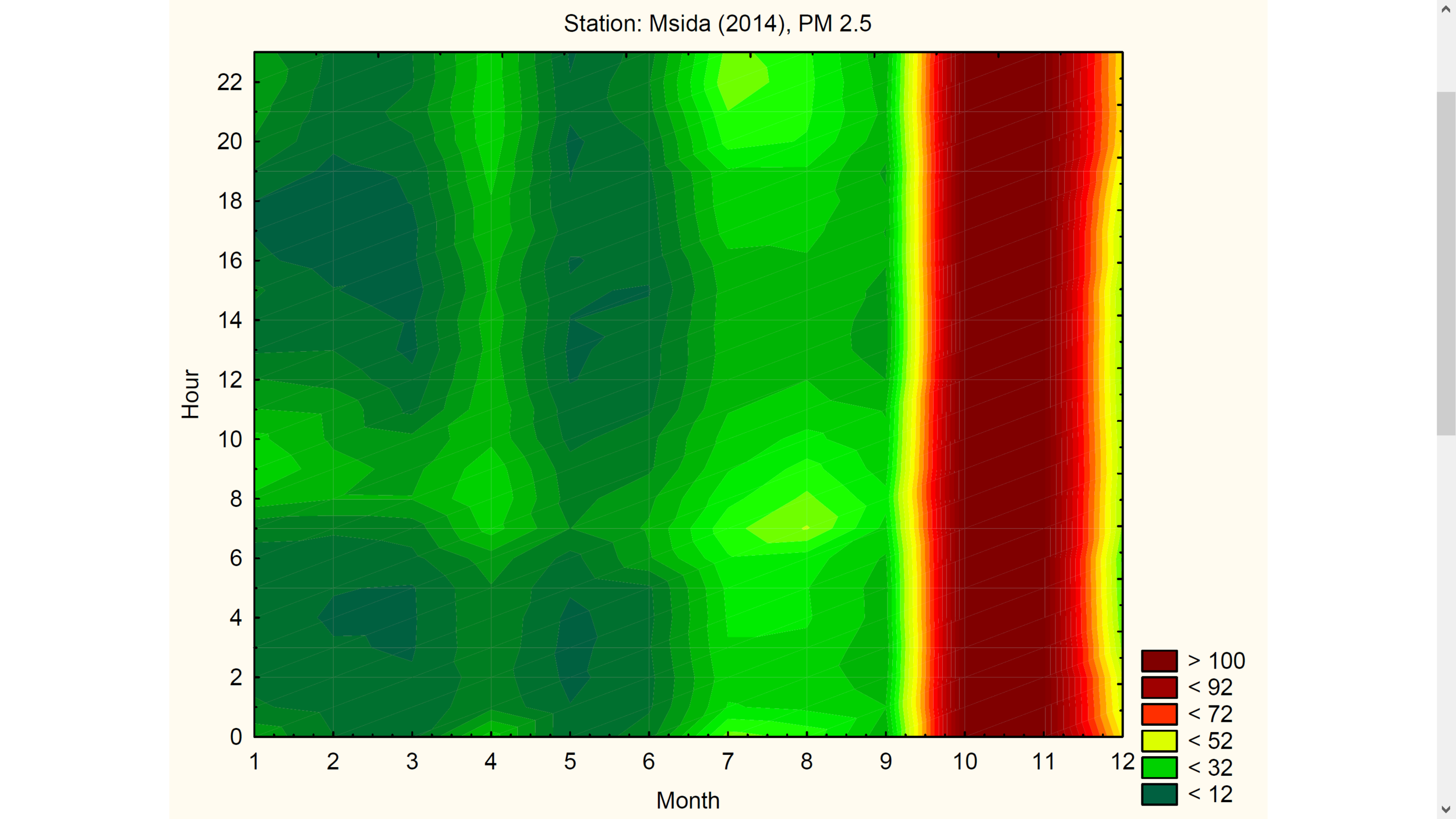
Particulate Matter Island Models

Islands often served for the development of models. May it be a social one, like Thomas Morus (More) Utopia, or about agricultural economy in Heinrich von Thuenen's The Isolated State (1826). Islands allow simplification and neglecting outside influences, like in a laboratory. Not a surprise, that analyzing air pollution data in Malta is leading to similar thoughts. Even though Libeccio winds sometimes carry particulate matter from the Sahara over, still we are in the middle of the Mediterranean Sea and the masters of our little island environment. So, let's see what the world can learn from us.

Rush hours and seasons in an urban location.

Rush hours and seasons in an urban location.

Tuition fees need to be paid in Homa Bay, Western Kenya

During my last few years of visiting Hong Kong, I became friends with a young lawyer completing his PhD successfully at The University of Hong Kong. We shared not just ideas, but also the same accommodation at the Robert Black College. Dr. Erick Komolo (PhD) now returned to Nairobi, where he joined the faculty of the University. But Erick told me about another mission which is very close to his heart: supporting the education of girls in his home village. For that he has founded maklweta.org chaired by Mrs Margaret Greene. Erick is now raising funds to finance tuition fees for school education for girls in Homa Bay, Western Kenya. Feibai and I support his work financially to cover fees for the coming year. Please visit http://www.maklweta.org/ and consider a donation or any other form of support. Any amount will be a big contribution.

Dunning-Kruger Effect

Charles Bukowski for example, put it like this: “The problem with the world is that the intelligent people are full of doubts, while the stupid ones are full of confidence”. I guess, everybody who deals with confident people, will have an opinion on this phenomena. Only in 1999, the researchers David Dunning and Justin Kruger have described this scientifically in Kruger, J & Dunning, D. (1999), Unskilled and unaware of it: How difficulties in recognizing one's own incompetence lead to inflated self-assessments. Journal of Personality and Social Psychology, Vol 77(6), Dec 1999, 1121-1134.

Basically, they describe two effects, and let me put it a bit into my own words which are scientifically highly inaccurate. First, if you are dumb, then you are also likely to be too dumb to know that you are dumb and you end up confident about your abilities. Just think of the stereotypes of a teenager, a stock trader, a management consultant, or an American Republican President. You know what I mean. In this case there is also no reflection on abilities, which protects the subject from hitting the wall. They tend to go for a "Blitzkrieg" and have the advantage of surprise, without thinking through what made them successful in the first stage and how to sustain it. But not all dumb people are like this. Most of them are lovely, and many of them very lazy and end up as a couch potato. Laziness might be even a protection mechanism for them, without which stupidity would have already extinct itself. The majority might be hanging happily and confident with their smart phone or tablet computer over a pizza box. Only those who are dumb and ambitious become a nuisance. The smartest way to deal with that, is not to compete, but to give them the chance for self destruction in a controlled environment through further encouragement.

The second phenomena described by the Dunning-Kruger Effect, is that very talented and capable people might have the tendency to underestimate their abilities. And while the dumb and confident ones might be a nuisance or economic waste, the talented which do not dare to try something are a real tragedy. They could bring mankind forward, but they don't. Sometimes, they choose not to try, because they compare themselves with the real geniuses of all times. And of course, while they don't try, they don't develop their talent. And the less they do that, the bigger becomes the barrier in their mind. To break this cycle, it does not help to introduce new KPIs (Key Performance Indicators) or talk about ROI (Return on Invest) and "benchmarking". Smart people know very well, what really good means and they also need no target setting by some technocrates. They need just the opposite: encouragement not to think about it.

New neighbourhood in Ħaż-Żabbar

Ħaż-Żabbar was the summer residence of the knights of Malta, and received city status under the 71st Grand Master of the Order of St. John of Jerusalem, the German Ferdinand von Hompesch zu Bolheim. He was unfortunate enough to only allow Napoleon's ships to enter the port in groups of two, which was received as a provocation and responded by the French invasion of Malta. But only shortly after, when the secular French started to loot the churches, Ħaż-Żabbar became a base for Maltese insurgence fighting the French. During the subsequent British era the region was heavily fortified and also the batteries close to our future home, in Fort Rinella, were installed.

We moved here for a month, and do only have a 20 minutes walk to our construction site in Kalkara. Also it allows us to experience Maltese village life and a so-called "house of character" for some time. The point of my new year resolution, not to eat food which comes with a bar code, is rather easy to fulfill here. There are vegetable and fruit traders which sell their goods from their trucks, small groceries, and driving bakeries. That's it. No rubbish sold. No barcode needed. Actually, I do have to confess sometimes not to care diligently about the bar code. For example, I was eating some chocolate recently which was also traded in more modern forms of retail. But as long as nobody beeps at you at the cash out, I am flexible. Our impression, that Maltese are very friendly people, is even topped here. They are wonderful. You ask for something at the vegetable truck and all the shopping women around will give advise, recommend modifications in the cooking style, and clarify the superiority of local Maltese products over anything else. And they are right.

The house we are living in, is an about 300 year old limestone building. In summer, it must be a perfect adaption to the hot season. In winter, which we are now in, it is damp and cold. These buildings need huge efforts to renovate. Well done, it is worth it. But when we were looking at real estate in Malta, I was hesitating to go that direction. And now I am sure, this was the right decision. It would need a complete rebuilt behind the outer walls, and that needs a much larger commitment than we have time at the moment.

Nine minus two

We are moving to Ħaż-Żabbar, after having stayed at the University Residence in Lija for 6 weeks. Just changing neighborhoods. No big travel this time, no big packing, no jet lag, no friends to say good bye. We just change quarters. After over a year on the road this is a nearly forgotten experience. Only one little friend we have to leave behind: the small cat at the olive trees. We won't see each other again. But it can't see me anyways, as it is blind. They have nine lives I was told, out of which this one already used two of the quota. First, it nearly died after birth, and was found by a kind person lying in the rain. He brought it into the restaurant he was working, and took care until it recovered. Second, we found it with a bad eye infection, and starving as it could not find food. Two days more and that would have been it. So we fed it antibiotics for 10 days, and brought is back to weight. Now its fine, but blind. Seven more lives to go. Sounds a lot, but I would use them more slowly. Not easy when you are blind, I guess. And remember: cars don't count the normal way. They can easily take them all in one go. They have two ways to kill: pollution (works slowly) and impact (very fast). So, watch out! - just joking. Good luck!

Farewell lunch at the sunny place under the olive tree.

Farewell lunch at the sunny place under the olive tree.