A Streetcar named 501 QUEEN
Toronto’s Streetcar 501 QUEEN is the world’s longest streetcar line. It spans Toronto’s East and West by reaching from Neville Park Loop to Humber Loop, and taking the 24.8 km (15.4 miles) ride along Queen Street is a good way to get an impression of the city along this profile. Today I did it, starting from the East, passing through The Beaches first, which is the nice and lively residential area we live. From Leslieville …
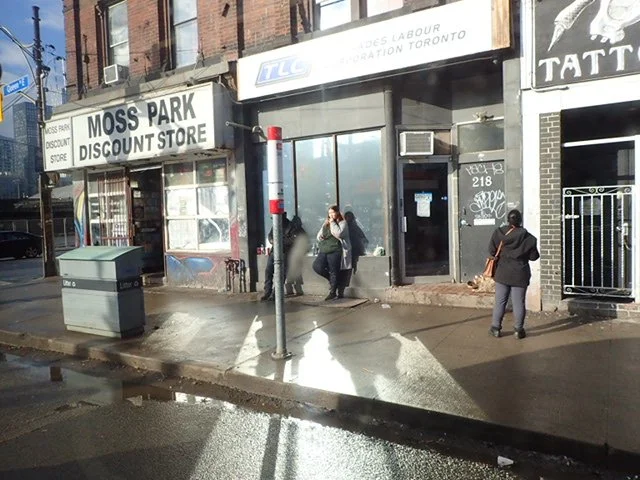
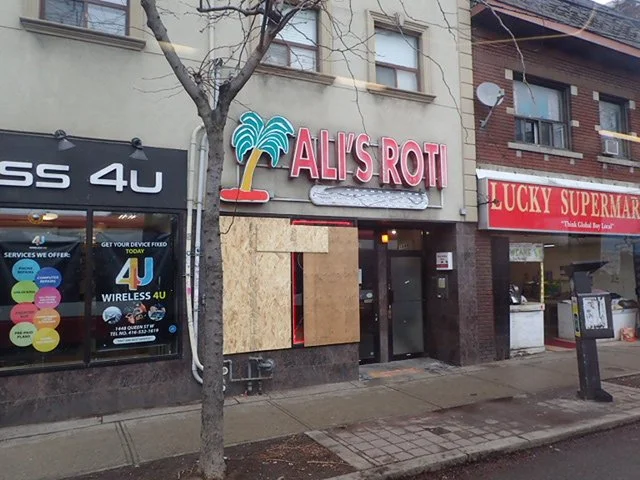
Toronto’s Streetcar 501 QUEEN is the world’s longest streetcar line. It spans Toronto’s East and West by reaching from Neville Park Loop to Humber Loop, and taking the 24.8 km (15.4 miles) ride along Queen Street is a good way to get an impression of the city along this profile. Today I did it, starting from the East, passing through The Beaches first, which is the nice and lively residential area we live. From Leslieville to crossing the Don River (not the Russian) looking out of the window on a rainy day, always reminds me of the opening scene of the Jim Jarmusch Movie “Down by Law”, just in a Nordic Climate. Then approaching Church there is unfortunately a lot of drug abuse on display, and the travel companions change until the stop close to the Salvation Army. Further, there is a little detour due to construction, passing through the CBD and then some nice and busy shopping parts with an impact of Chinatown up to Spadina. The following Western lag, starts with a lot of broken windows and run down shops. About a month ago, there was a large fire fight between gangs here in a recording studio. Over 100 shots were fired, an unmarked police vehicle was hit, but nobody was hurt. I frequently mentioned that I perceive Canadians as very friendly. And I even extend this compliment now to the mafia, for the unexpected act of kindness having a major gun battle and hurting nobody. After leaving the area still attached and shaped by the city, comes a residential area again, High Park and then the final stretch to Humber Loop. Just before that the streetcar gets an extra track, separated from the car traffic and moves a little faster. The average speed of the ride was 10.1 km/h. That’s half the speed of a bicycle, but double the experience.
Queens Road West. A lot of broken windows.
In summer of 1875 the Kensington Road Tramway service was opened to carry gravel and building materials on horse drawn carriages by the TRC (Toronto Railway company). The extension went stepwise and was first containing two stretches: one from downtown to Woodbine and another connection along Queens Street to Muro Park. There were various phases marked by conflict between different stakeholders and in 1921 the Toronto Transport Commission (TTC) took over the responsibilities of TRC and operated a line similar to today’s 501 QUEEN. The line has a long history of unreliable service. Of course the longer a streetcar line gets, and with all uncertainties of an urban environment (e.g. parking on the tracks or any kind of technical failure), these problems get amplified to the ends of the line. So, there were attempts to split the line into smaller, overlapping units, and experimentation until 2019. In any case, if you ever get nostalgic about the 1970s, come to Toronto. And that’s not just the streetcars. I personally like it. It’s style. You can’t afford being in a hurry. Because it won’t work. So, where ever you get stranded: just go to the next Tim Hortens, get your Double Double and see what happens.

GPS Plot of 501 Queen. Pretty much a straight line.

Speed plot of 501 Queen, averaging 10.1 km/h.
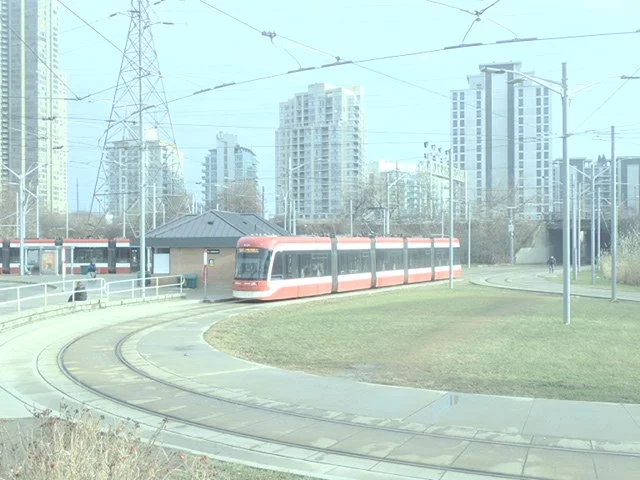
Humber Loop Terminal of 501 QUEEN. My Olympus Though camera had a problem with the lighting. I think it needs a software update. But like this, it looks vintage and is a good bridge to older photos below.


How to prepare if you have to use the German Railway
I embarked a train trip from Germany to Switzerland and unfortunately there was no Swiss train matching my schedule. So, there was no other choice than using a connection supplied and operated by the German Railway Company, called Deutsche Bahn. I really like travelling by train, and I did so in many parts of the World. But it’s always important to know what to expect …
I embarked a train trip from Germany to Switzerland and unfortunately there was no Swiss train matching my schedule. So, there was no other choice than using a connection supplied and operated by the German Railway Company, called Deutsche Bahn. I really like travelling by train, and I did so in many parts of the World. But it’s always important to know what to expect so you can best prepare for the journey. And in the case of Germany, you may go in with the misconception, that you can experience a certain standard in one of the world’s richest countries.
I better give you a few tips below.
Plan direct connections where you don’t have to change trains on the way. It is likely you will miss your connection and get stranded somewhere in a filthy train station for hours.
Have nice words ready for the train staff. They are mostly very friendly and take any situation with good humour trying to keep the spirit high. They often go more than the “extra mile” to help, whatever happens. And it’s always better, to crack a few jokes together than complain.
If you still have hand sanitiser from the Covid times, take it with you. For example, this journey started in Wiesbaden with a drug addict vomiting all over the place.
When you wash your hands in the bathroom, always check first whether the water is running before using soap. Otherwise, you may find yourself with soap in your hands and no way to wash it off. Anybody who travelled in developing countries knows the situation.
Don’t wear light colour clothes, because the trains may be really dirty. Perhaps even consider bringing something to cover the seats. People eat, drink, crumble and spill everywhere. I even developed a theory of why Germans like to travel with backpacks. Then they still have both hands to keep eating Chicken McNuggets while they walk. At the same time, they will jam their backpacks into your ribs.
In summer, the air conditioning notoriously malfunctions. So, carry a small hand fan. I got used to this when I travelled on the Columbo-Kandy train in Sri Lanka. And it comes in handy in Germany too.
There are actually quiet compartments where passengers are not supposed to use their phones. But some people don’t care and yell into their phones. Take some noise-cancellation earphones not to be forced to participate in their conversations. Here it comes in handy if you don’t understand German because at least the dull content will not bother you, and it’s just noise.
Some fellow passengers may watch movie clips or listen to music without headphones. Or, in the worst case, they blast you with a computer game. What helps here is a Wifi and GSM jammer, which interrupt the internet connection. You can buy these Shenzen. As a result, your fellow passengers will get very upset for a few minutes, because they first have to develop an alternative to what to do with their little lives in the time to come. Then they order alcohol, gaze out of the window and fall asleep. Job done.
Should you plan to work with a Laptop, synch your files and Outlook client to a local drive. There is wireless internet, in theory, but it’s patchy and slow.
Last but not least. Most of these tips refer to long haul trains which are relatively safe. But should you ever come into the situation that you have to take a local train (e.g. “S-Bahn”), you also have to consider repelling real troublemakers. Of course, de-escalation is the best first response. But even if this is successful, still consider informing the police. People who are really looking for trouble, will continue harassing others who maybe even more vulnerable. Should it come to the worst, in such confined spaces the application of teargas will cause more harm than good. Also, I learned recently that CS does not stop effectively somebody who is on drugs. So the methods of choice pacifying a Zombie are electroshock, stun grenades and cable binders for the aftermath. Besides the omnipresence of drugs, also knifes make such incidents really dangerous. On the positive side, luckily, Germany has relatively strict regulations for firearms and they are usually not involved. But better stay away from local public transport and take an Uber or rent a car.
The Deutsche Bahn has announced that they will fix all these issues by 2070. So, not in my lifetime. For me, should I have to procure the services of Deutsche Bahn again, I will take it as an adventure and with a smile, a backpack, Chicken McNuggets in one hand and a stun grenade in the other.

Silkroad explained - Facts and Commentaries on the One Belt, one Road Initiative
We started a new initiative in a network of academics, researchers and practitioners committed to explaining the implications of the One Belt, One Road Initiative. Since 2013 a number of infrastructure projects have been funded, constructed and built on the back of Chinese government funding, including lending to governments along the New Silk Road. These provide a foundation for new commercial and cultural exchanges between countries along the route, and new business opportunities to both transnational and SME companies.
Our team consisting of academics, policy experts and management consultants are offering information, views, news and analysis of developments in the New Silk Road area. This is backed by links to a variety of databases and opinion pieces. Our advice can be found in a range of publications, events, and opinion pieces. We also provide bespoke projects to clients on a confidential basis. Our group is independent and neutral with a commitment to providing accurate information and views.
Events and further publications are in the making. Please visit our newly launched website and sign up for the mailing list: www.silkroadexplained.com
We are committed to growing this network for the benefit of a wider audience of researchers and executives. Please get in touch, if you are interested to explore collaboration.